
An ordinary number, short code and alphanumeric sender label describe different address or display forms. Their appearance alone does not prove identity or establish reply and callback capability.
Different address forms have different conditions
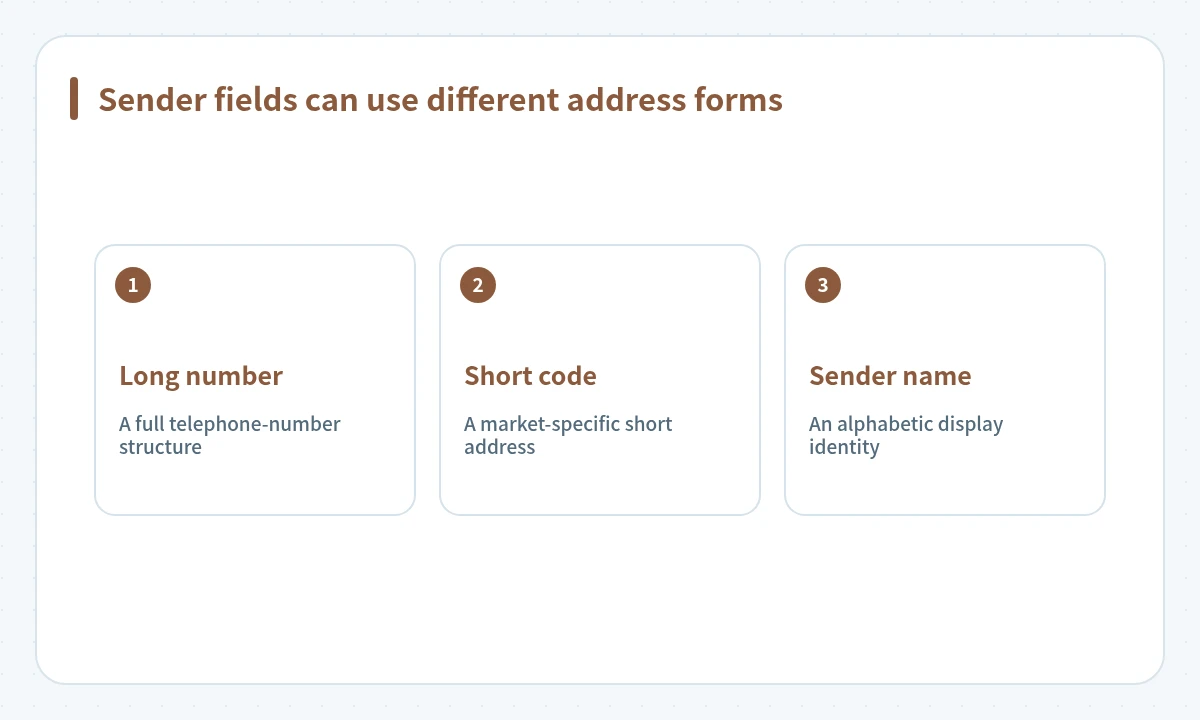
A long number has a familiar telephone-number structure. A short code has a more limited digit sequence and needs to be understood within its relevant market and service. An alphanumeric sender can display a name instead of a diallable number.
Twilio’s sender-type documentation distinguishes capabilities and setup requirements across these options. Its alphanumeric sender arrangement is an outbound identity rather than an ordinary reply destination. Other details depend on the specific provider, market and supported product; a type available in one place should not be assumed to work identically elsewhere.
This is a way to interpret received fields, not a statement that this site supplies those sender types. Do not infer current inventory, registration approval or two-way capability from an article about the format.
| Visible form | Conclusion to avoid |
|---|---|
| Familiar alphabetic brand | The name alone proves the business identity |
| Short digit sequence | Adding a country prefix creates a normal callback number |
| Complete phone number | Replies and voice calls must both be supported |
Separate the original field from a local label
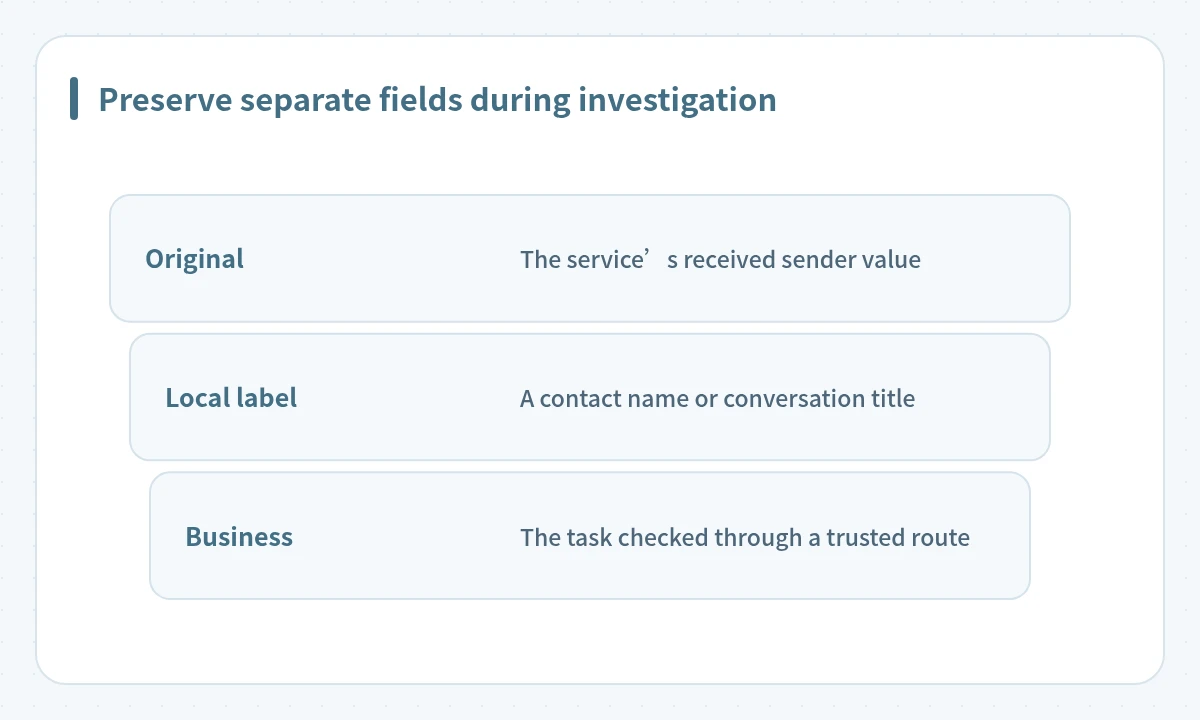
An inbox may show a contact nickname, conversation title or processed display label. Those are not necessarily the original sending address. Use the normal detail view, where available, to distinguish sender, contact note and any number mentioned in the body.
If the interface does not explain a field, ask what it represents. Do not merge several values into one reassuring identity. A message can include a familiar signature while requesting contact through a different address that still needs independent verification.
For a login, payment or account-change message, use the known official business entry point to check the task. Matching a displayed name is insufficient reason to follow an unexpected link or disclose a code. These checks remain useful whatever address format the message uses.
Preserve received values during troubleshooting
On an authorised test resource, record the recipient, sender type, time and whether the expected ordinary text appeared. Before testing replies, confirm permission, supported outbound capability and applicable costs. An active customer code is unnecessary for a format demonstration.
Do not add a prefix to a short code or replace a sender name with a guessed telephone number to standardise the display. That destroys the distinction the provider may need to investigate the actual route.
Keep the recipient field separate too. A short sending address does not change which of your receiving resources was addressed. When several numbers share an inbox, identify both directions before asking the provider to investigate a display or routing discrepancy.
If the list and detail disagree, report both field labels and a harmless example. Include whether a local contact nickname was involved. A clear description of which value changed is more useful than a broad report that the sender looks wrong.
Keep routing, display and authenticity as separate questions. Correctly recognising an address type helps you ask the right next question; it does not certify the contents of the message or guarantee a response path.
Reference: Twilio: choose a number or sender type.
