
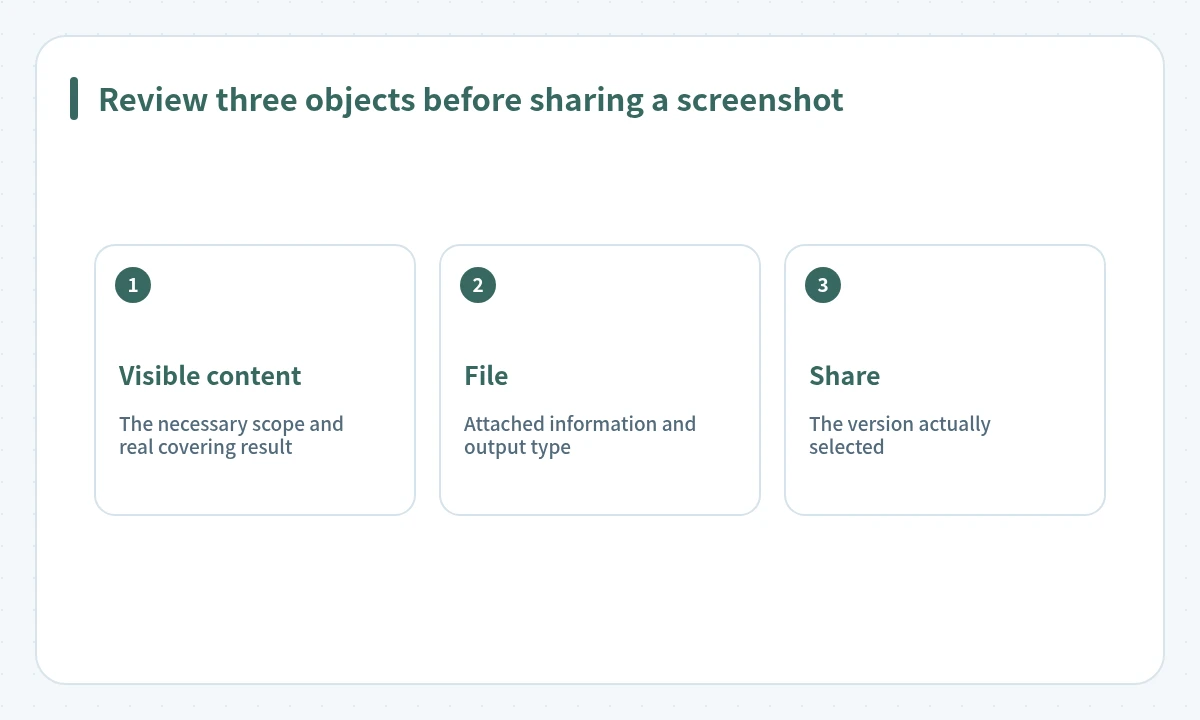
Covering visible text in a screenshot does not establish that the exported file's other information has been handled. Review the visible content, attached data and actual version selected for sharing separately.
A screenshot is also a file
A private online sms service support workflow may accept images as evidence. Image formats can carry information beyond displayed pixels. W3C's PNG specification includes relevant data structures; the particular file and tools determine what is present.
Do not claim that every screenshot contains location information, or that screenshots never contain additional data. Capture, editing and export paths can differ. Inspect the real approved sample rather than infer its contents from an extension or a preview alone.
Verify the exported result
Check which file the editor actually produced and whether it retains other recoverable content or unnecessary attached information. An editable source file can expose more than the current covered preview. The intended recipient should receive the approved output, not whichever similarly named original is easiest to select.
- Keep only the visible scope needed to explain the problem.
- Inspect the actual export rather than the editing canvas.
- Use approved tools to review relevant attached information.
- Check that the sharing step did not select the original private file.
Do not upload genuine codes to an unfamiliar cleaning website. Harmless demonstration images can reproduce many issues. Necessary private evidence should use the formal support process and the limited scope appropriate to that task.
Account for thumbnails and copies
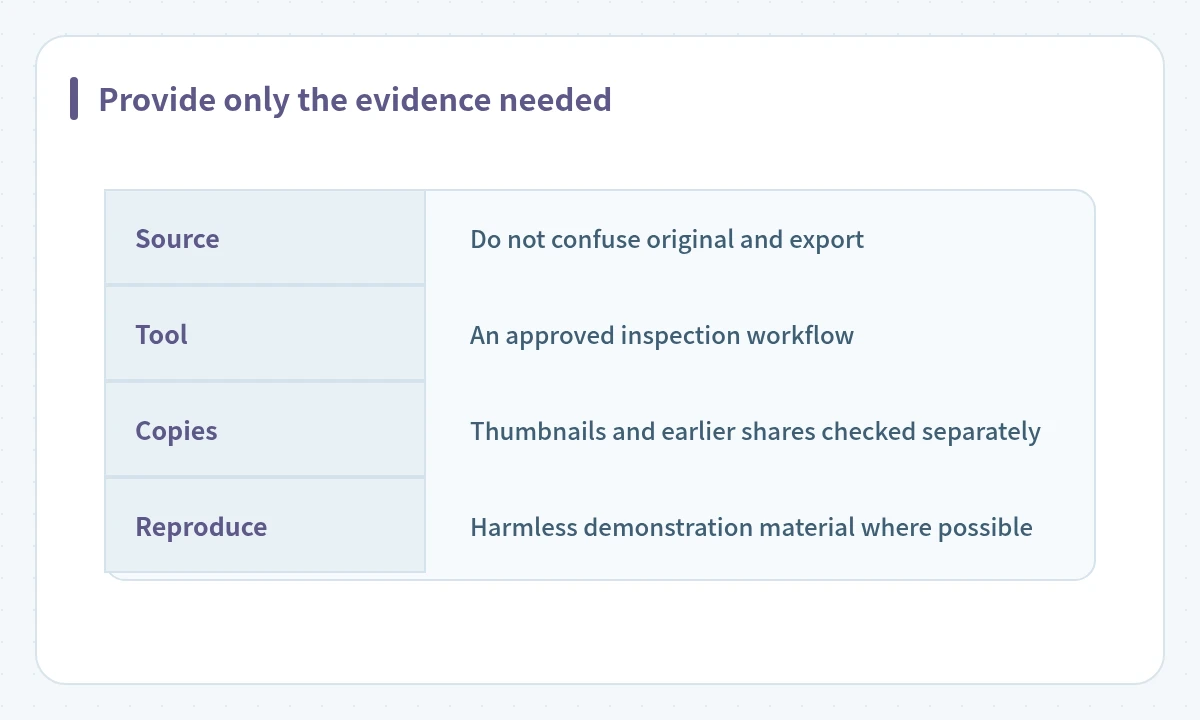
A drive, chat or ticketing service can produce other representations under its implementation. Establish the actual retention and sharing behaviour rather than claim that changing one local file withdrew every earlier copy. Keep that limitation distinct from whether the newly exported file is suitable.
When an image needs correction, identify the affected attachment through the authorised process. Do not broaden distribution simply to ask several unrelated people which version they can see. Limited references and a non-sensitive fixture can often establish the path first.
Where an editor uses layers or annotations, verify the intended output type before sharing. A screenshot of a covered preview, a flattened exported image and an editable project can be different artefacts with different contents. Check the actual file selected in the receiving workflow using a harmless rehearsal first. If the support task does not require an original, do not distribute it merely because it preserves more diagnostic detail. Record which limited version was provided through the approved channel so a later correction can identify the right attachment. This keeps the evidence relationship understandable without claiming that a single export setting controls every thumbnail or earlier copy produced by another service.
Minimise the evidence before processing it
Many investigations need the error wording, relevant steps and a limited reference instead of a full account screen. Decide what is necessary first. If an image is genuinely needed, handle the remainder according to the approved workflow and verify the result.
Rehearse export and sharing with fictitious material, recording the tool and limited outcome. The goal is evidence sufficient for the problem without accidentally including off-screen data or the wrong file. A cover icon in an editor should not become the whole acceptance test for what the recipient will actually receive.
