
A room-ready text is a reason to inspect the current stay arrangement, not proof that every check-in step has been completed. Match the notice to the property, dates and reservation before deciding how to proceed.
Identify the room and stay covered
An ongoing dedicated sms number can receive a supported hotel notification while belonging to a person coordinating for other travellers. Check the reservation reference, relevant room and actual guest through the hotel's or booking provider's known route. A receiving contact is not automatically authorised to handle every guest's formalities.
Several rooms or separate reservations can share a property and date. Establish which one the message describes. A single readiness notice should not become a claim that every room for a group is available, particularly when the booking records show different arrangements.
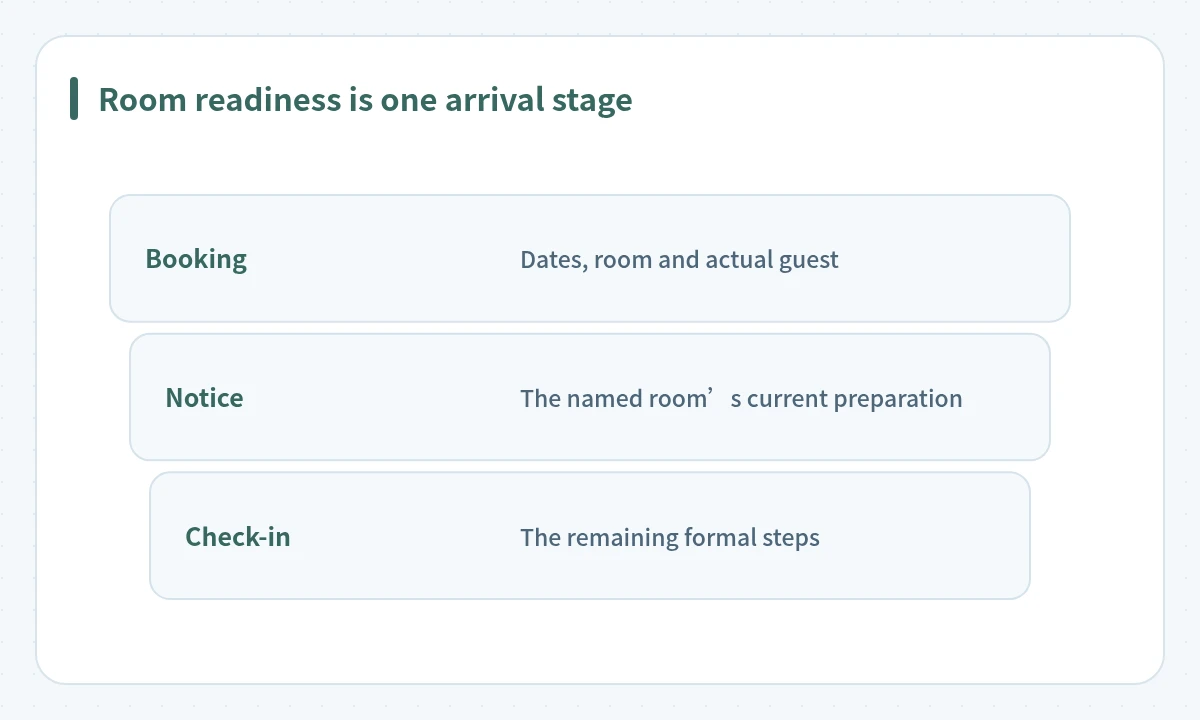
Keep room status separate from arrival requirements
Read the current instructions for any registration, identity check or other required step. The particular property and reservation determine the supported process. Do not assume that a method used at another hotel means this stay allows direct key collection or entry through a similar-looking link.
| Record | What to inspect |
|---|---|
| Reservation | Dates, room and guest arrangement |
| Room notice | The named room's preparation state |
| Check-in | Any remaining formal steps |
| Access credential | The authorised way to obtain and use it |
Room numbers, lock information and temporary access links should not be posted to a public group. For ordinary coordination, share the meeting place and required next step. Give usable credentials only through the appropriate arrangement for the people who need them.
Confirm a changed arrival separately
The time a text appears may not be the time you can reach the property. If your journey changes, use the known contact route to confirm the current reservation and reception arrangement. Keeping an old readiness message in an inbox does not establish an unlimited future arrival agreement.
Where another person will arrive first, clarify what they may do and what information the property actually requires. Do not resolve an uncertain authority question by forwarding a complete private booking history or asking someone to impersonate the named guest.
If the property offers more than one reception or building, verify where the supported arrival step takes place. A ready room in a named building does not necessarily identify the place to complete the remaining process. Keep the confirmed meeting point with the current reservation note, particularly when another guest arrives separately. This prevents a brief notification from sending different members of a group to different entrances with incompatible assumptions about what has already been arranged.
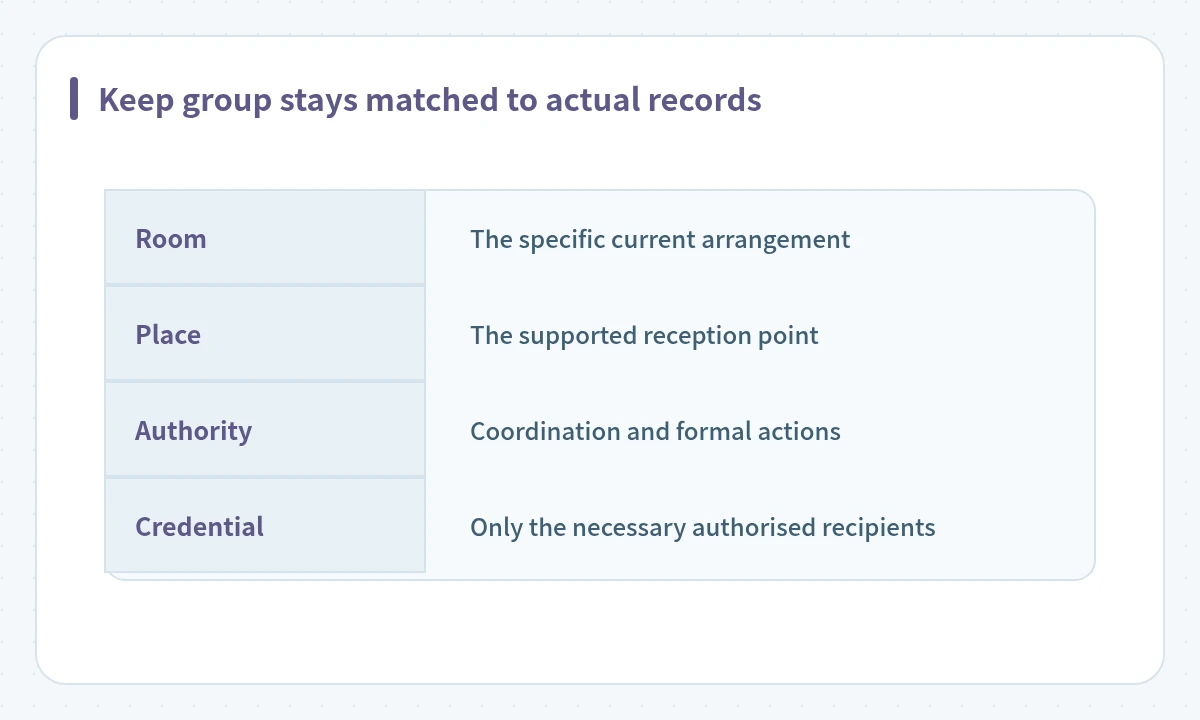
Review the current version before arrival
Check dates, location and remaining tasks again if the reservation has changed. A delayed notice may describe the earlier arrangement. If the page and message disagree, identify the reference and specific discrepancy when contacting the known reception or booking service instead of creating another reservation to test the outcome.
If the contact number will stop being available, confirm a suitable route for updates during the stay. Keep the active arrangement accessible to the relevant guest. The useful result is a clear next step grounded in the current reservation, with room readiness understood as one part of the arrival process rather than a substitute for it.
