
A return notification may announce a printable label long before the item reaches the merchant. Read it as an update about a particular stage, then check the carrier and store records for the next stage you actually need to confirm.
Identify the return and the expected next action
Open the return request from the merchant's known site. Check the original order, the authorised items and the stated handover instructions. A label can name a return address or route that differs from the address on the original delivery. Follow the current approved instructions rather than reusing an old parcel label.
If you are evaluating an online shared phone number, keep the demonstration free of real customer return details. A public or shared inbox is an unsuitable place to expose a person's order references and movement information. Use your authorised private contact route for an actual return, subject to the merchant's requirements.
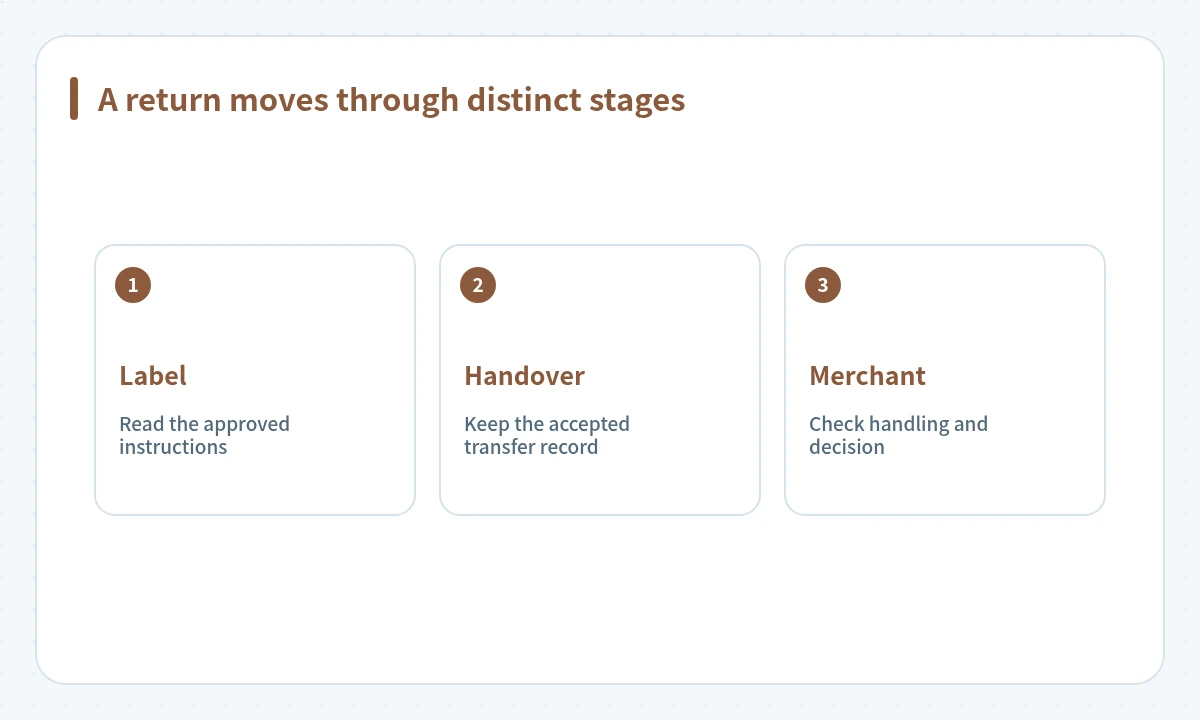
Separate label creation from carrier possession
For a specific documented example, UPS describes Label Created as the receipt of shipment details and says the status changes when it has possession and movement occurs. That is a carrier-defined distinction. Check the definition used by your actual carrier instead of assuming an identically named status has identical meaning everywhere.
A label-generation text therefore should not be used as the handover date. Keep the relevant receipt or acknowledgement using the return service's process. If tracking remains at its initial stage after you believe you handed the item over, use that handover information when asking the carrier or merchant to investigate.
| Stage | Record to examine |
|---|---|
| Label available | Return instructions and parcel details |
| Handed over | Accepted handover record |
| Merchant handling | Return request and inspection update |
| Refund | Merchant decision and payment record |
Keep warehouse processing and refund separate
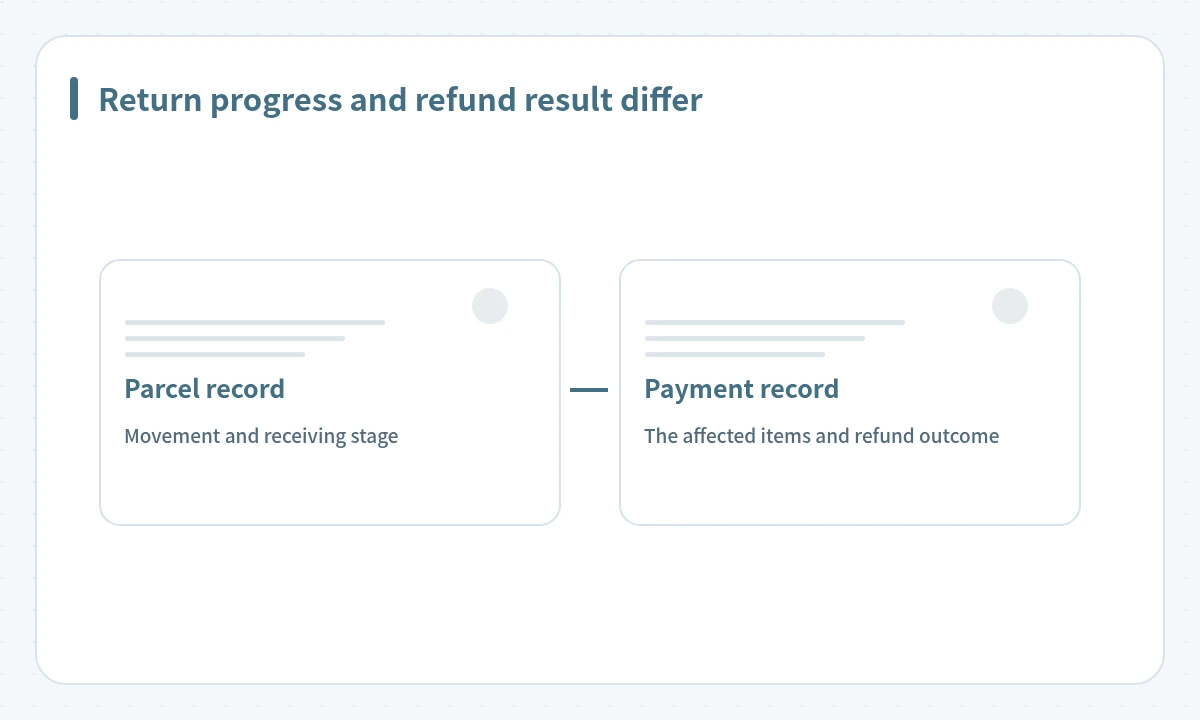
A parcel arriving at a location does not explain the merchant's inspection result or payment action. Read the return request for any item-specific requirement and the applicable process. Avoid inventing a universal refund timetable from another store's policy. Where the status is unclear, ask about the particular return reference and the stage awaiting completion.
For a return containing several authorised items, verify whether the merchant expects one parcel or separate parcels. Keep the items linked to the appropriate return instructions. Putting everything under the first available label can make later investigation difficult if the approved process assigns different destinations. If an instruction is unclear, resolve it before dispatch rather than writing a new interpretation on the outside of the parcel and assuming the receiving team will recognise it.
Ask a focused question when progress stops
Describe the last confirmed event, its date and the next event you expected. For example, the useful distinction is whether the item has been handed over but lacks a movement update, or has arrived but the return request still awaits a merchant decision. Those questions go to different owners and need different records.
Keep the parcel reference, return reference and order reference linked without treating them as interchangeable. When a refund appears, compare it with the affected return items and the payment information available to you. Finish the checklist using the actual result, rather than closing it simply because a notification with the word return has arrived.
Reference
UPS: Understanding Tracking Status
