
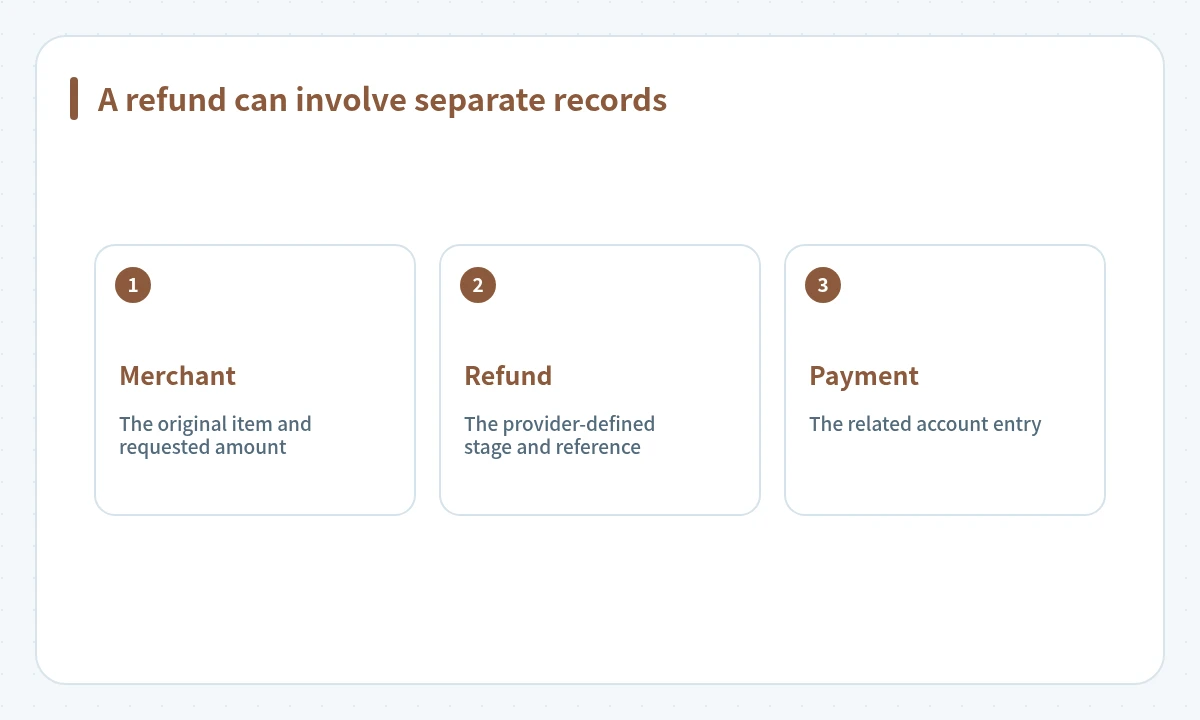
A refund text may describe request acceptance, merchant processing or arrival through the payment channel. Match the order and refund reference to the relevant official record before treating the stages as equivalent.
Find the correct original transaction
Enter the merchant or payment application through a known route. Identify the original order and the particular refund. Partial refunds, separate items and similar orders need distinct references; an incoming amount that looks close does not establish that everything has been resolved.
Keep non-sensitive references for tracking. Do not give an unexpected contact full card details, payment credentials or a live code to investigate a supposed refund. A message using familiar order language does not establish that the sender controls the real transaction.
If the claimed purchase never occurred, verify that fact in the genuine account instead of following a cancellation link in the text. An apparent refund problem can be checked without treating the message itself as the source of authority.
Read each status in its actual system
Providers define their own states and timing. Inspect the relevant service’s explanation of pending, processed and failed results, together with the official lookup route. A period quoted for another payment method should not be treated as a universal deadline.
Stripe’s refund documentation is one example of a provider distinguishing refund processing, failure and other outcomes. It illustrates why a notice needs its actual transaction context. It is not a statement that every merchant or receiving service uses Stripe or follows identical rules.
| Record | Question it should answer |
|---|---|
| Merchant order | Which item and amount are involved? |
| Refund object | Which stage and reference are current? |
| Payment account | What related entry does that channel show? |
Resolve uncertainty without duplicate requests
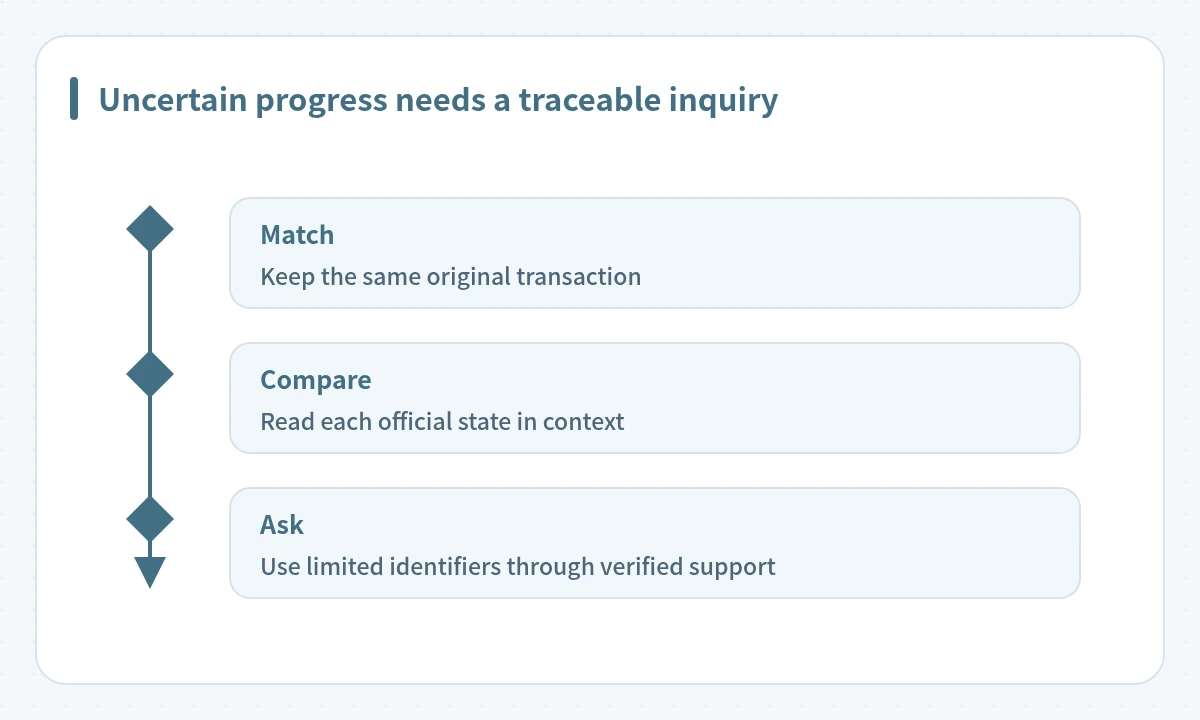
Follow the original service’s stated inquiry process. Repeated refund applications do not clarify the first request and can complicate tracking. Keep a clear account of what each official view currently says.
A text demanding another transfer, remote-access software or a fresh authentication code deserves independent checking. Go back to the original account and verified support route. The receiving number itself does not control the money or require a helper to take over authentication.
If the merchant supplies a tracking reference for the payment channel, keep its label and meaning intact. A merchant support-case number and a payment-network reference may identify different records. Ask which one the receiving support team actually needs before submitting more account material.
Make a limited, traceable support report
Supply the order reference, refund reference, relevant dates and observed states through an appropriate channel. If additional financial details are genuinely required, confirm the purpose and recipient first. Do not publish a complete account screenshot to demonstrate a status difference.
Close only the part actually confirmed. If one item is settled and another remains unresolved, retain that distinction. A successful-looking notification should not erase an outstanding part of the task.
Keep records according to the actual business need and avoid recirculating obsolete messages. The practical goal is an explanation of the same refund across the responsible systems, rather than choosing whichever text uses the most reassuring word.
Reference: Stripe: refund processing and outcomes.
