
Sent or delivered should not be read automatically as read or completed. Interpret a receipt within the actual message, channel and provider contract before using it to decide what happened next.
Establish the status definition
A dedicated digital sms inbox can receive operational information whose states belong to several processing stages. Queueing, acceptance, sending and delivery can be separate observations. Twilio's status-callback documentation is a specific provider example; another service's vocabulary and receipt availability need its own current explanation.
Where a channel provides a reading status, use its defined scope. A missing read observation does not automatically establish unread, and a read result does not establish understanding, agreement or completion of a business task. Keep those later outcomes in the record that actually observes them.
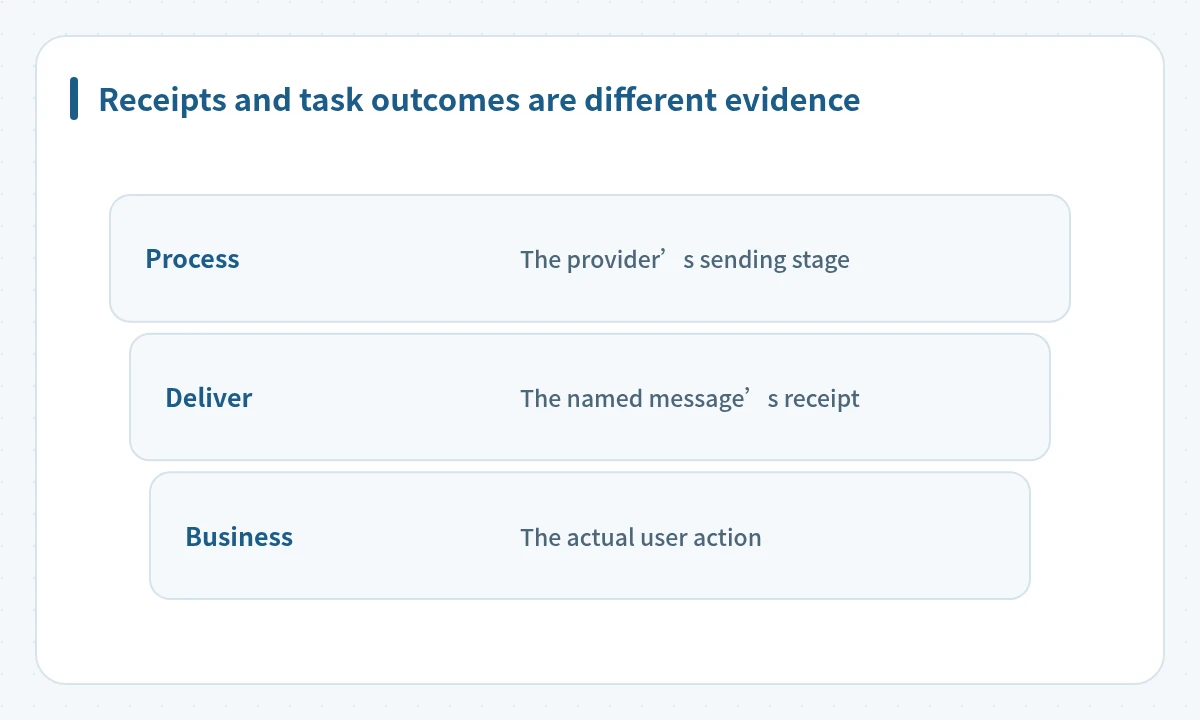
Relate the receipt to the message
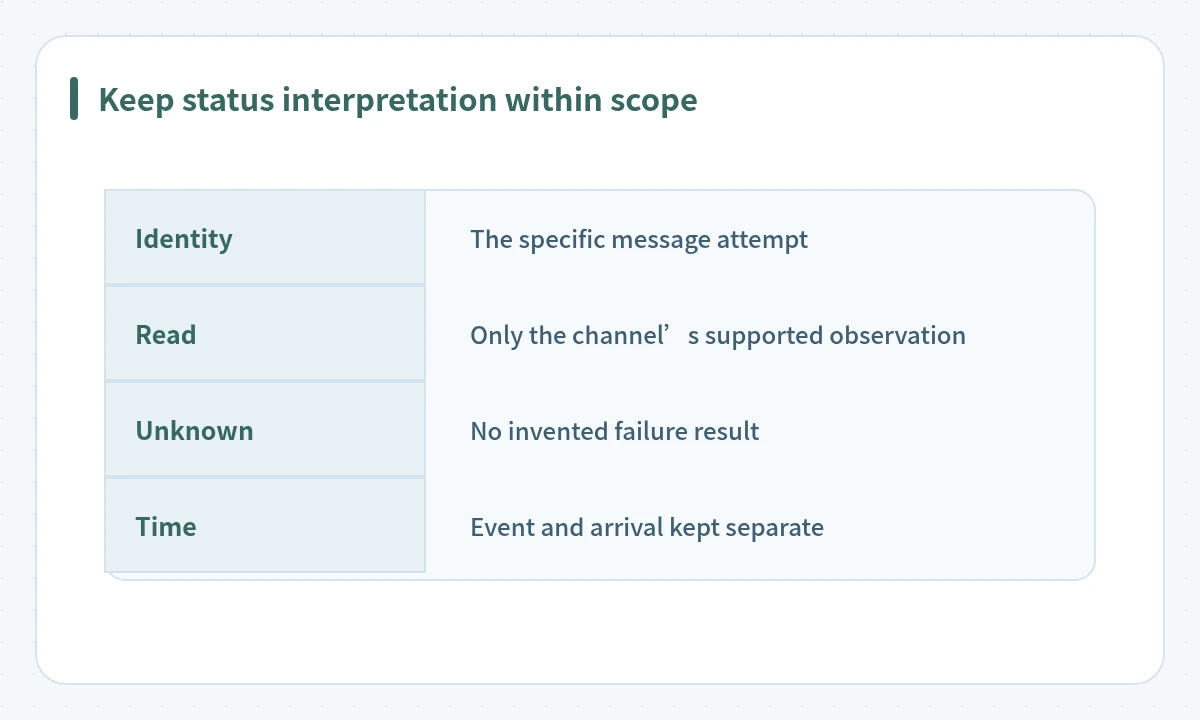
Use a stable message reference and distinguish repeated attempts, separate reminders and other channels. One delivered attempt should not mark an independent task complete. A receiving account or phone number is too broad an identity for that decision.
| Observation | Scope |
|---|---|
| Sending state | The provider's defined processing stage |
| Delivery receipt | The result for the named message |
| Read information | The channel's supported observation |
| Business result | The actual task outcome |
Receipts can be late or unavailable under the service's conditions. Keep an unresolved state and observation time instead of filling every gap with failure. Message arrival order should not replace the provider's supported state relationship or overwrite a later authoritative result casually.
Investigate before repeating contact
When the business needs confirmation, inspect the related task or use an approved contact process. Infinite resending merely because a receipt is absent can create nuisance or repeated valid operations. The recovery action needs the real task's conditions, not just a desire for a complete-looking dashboard.
Keep a retry related to its original intent where supported. A new attempt identifier helps trace transport without proving that the earlier effect never occurred. This distinction makes a delayed receipt easier to reconcile.
Keep provider event time separate from the time a receipt entered your reporting system. A later arrival can describe an earlier stage, especially where an integration retries or delays delivery. Follow the provider’s supported state and event relationship when updating the local record. If the information conflicts or lacks enough ordering evidence, retain the unresolved condition for the approved reconciliation path instead of choosing whichever string arrived last. The report should preserve the actual observation and its scope. That makes a later explanation possible without converting a partial receipt history into an invented story about exactly when a person saw or acted on a notification.
State the counting unit in reports
Define whether the report counts attempts, business events or recipients. A delivery proportion and a task-completion proportion answer different questions. Do not turn limited receipt data into a receiving guarantee for every number or platform.
Exercise late, repeated and missing statuses with harmless fixtures and record the relevant reference and category. Private bodies and active verification codes are unnecessary in a receipt-analysis report. The useful conclusion keeps each state within its evidence, allowing a user to understand what was observed and which later outcome remains to be checked.
Reference
Twilio: Outbound message status callbacks
