
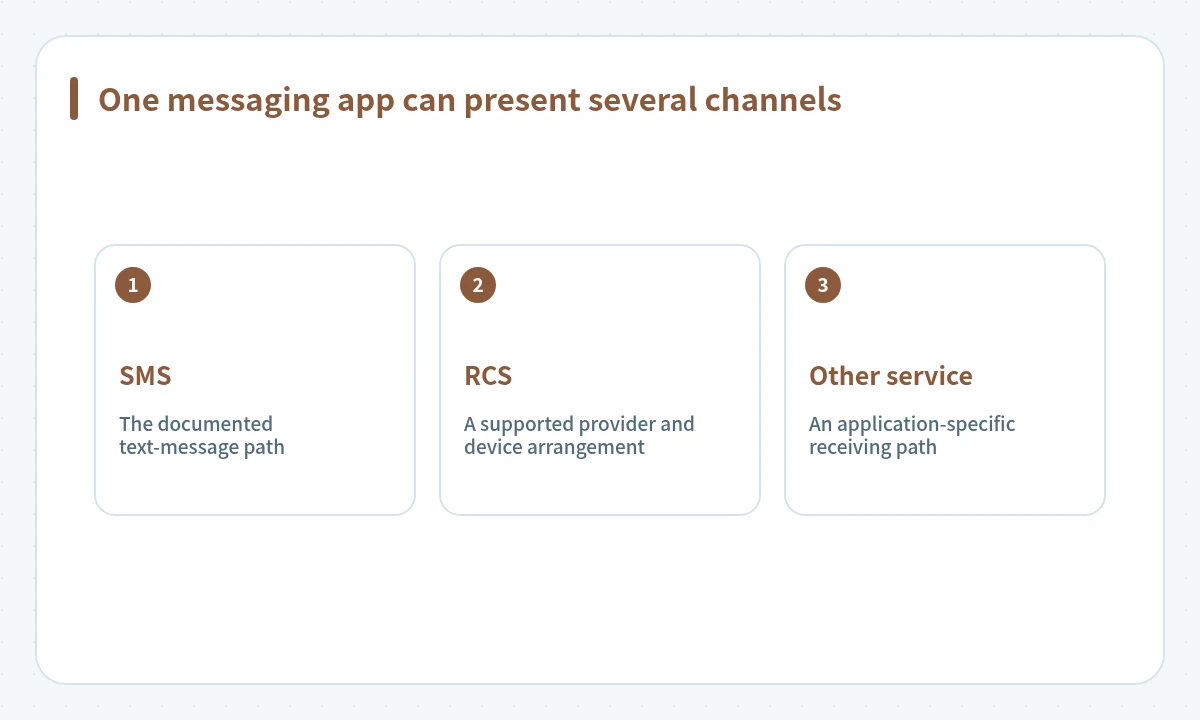
Text in a messaging application can use SMS, RCS or another channel. Check the actual message type and supported receiving path rather than relying on bubble appearance alone.
The app name does not identify every message type
Apple’s message-type guidance explains that its Messages app can use iMessage, RCS or SMS/MMS under the applicable conditions. One application can therefore present communications that travel through different services. Do not identify the channel solely from a familiar icon or an old colour convention.
Google’s RCS guidance describes RCS availability through supported provider and device arrangements. Read the current information for the actual sender’s environment rather than assuming that enabling a feature makes every recipient or browser service support it.
The relevant evidence is the message’s documented type and recipient context. Opening the same conversation on a different device does not automatically convert its previous contents into another channel.
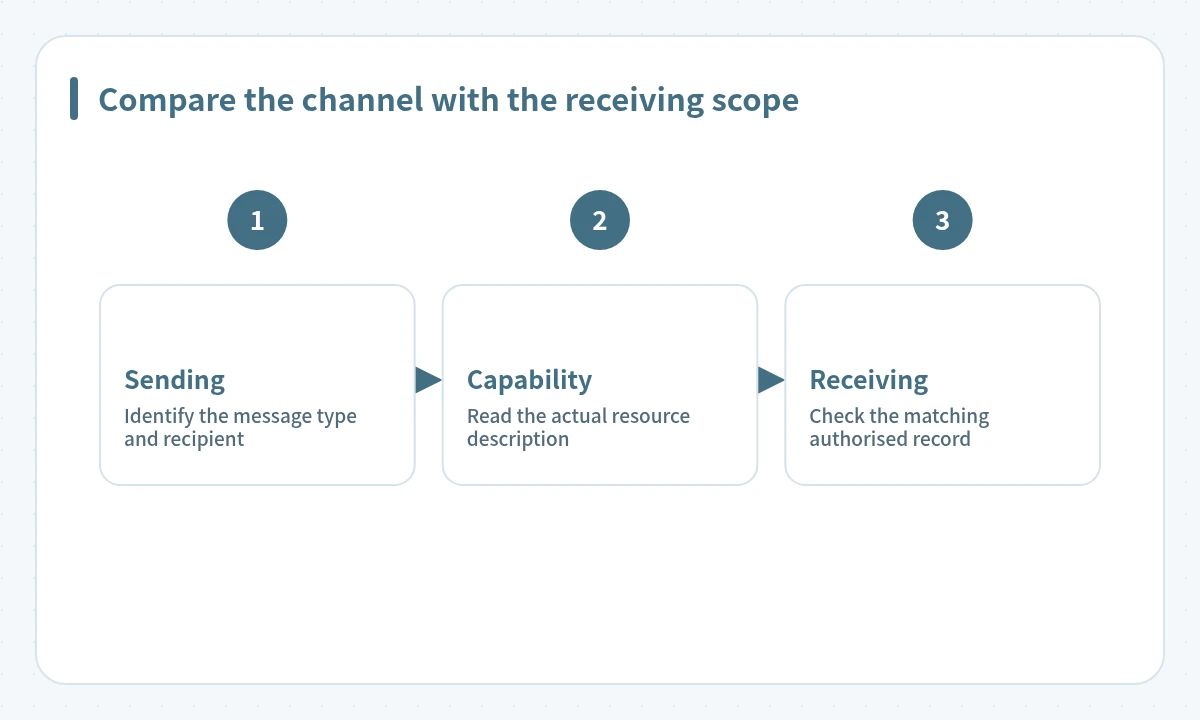
Match the receiving capability to the sending path
A provider’s statement that a number can receive SMS is not a universal claim about RCS, media attachments or every messaging application. Check its current product description and the specific resource you are authorised to use. If the capability is not stated, ask a focused question before relying on it.
Keep that question separate from the target business’s acceptance rules. A service may require a particular verification method or number type even where ordinary texts can reach the resource. Receiving one supported message cannot prove all other workflows will work.
If a comparison is appropriate, use harmless content and a documented, authorised sending method. Establish the intended channel rather than repeatedly triggering real account recovery to discover which route a phone might choose.
Compare records without inventing the missing stage
Record the complete recipient in an appropriately protected note, the sending time with its zone and the visible sending result. Then separately identify the receiving account, resource, date range and successful query outcome.
An empty web list does not tell you which channel the phone used. A sent marker also does not prove that the receiving provider recorded the message or that the target business accepted a verification action. Preserve those observations as distinct facts while the relevant parties investigate.
For a group conversation, identify the individual receiving resource as well as the conversation name. A group title in one application is not a provider-side SMS record identifier.
| Observation | Remaining question |
|---|---|
| The app shows sent | Which message service carried this item? |
| The number advertises SMS | Does that match the channel and resource used? |
| The web query found no match | Was its receiving scope appropriate and complete? |
Choose an alternative within the actual task
If the intended route is unsupported, follow the sender’s or business’s documented alternatives. Do not change message type, recipient or account simply to make an unexplained test appear successful. The new result would answer a different question.
For support, provide the message-type information and masked resource details through a known channel. Neither side needs unrelated conversations or live authentication material merely to establish whether an SMS service was the intended destination.
