
Before delegating collection, check whether the service permits it, what conditions apply and which parcel the code identifies. A collection code can confer a specific action and should not be shared like an ordinary notice.
Establish what the code is for
It might relate to a locker, counter check or another documented step. Its length does not define its authority. Inspect your order and the collection point’s official instructions for the parcel reference, current location, validity conditions and any additional checks.
Do not assume that every courier or pickup system accepts the same delegation arrangement. If the service gives no clear option, ask through a known official route. Trying all the numbers visible in the message is not a way to establish permission.
A public or shared inbox is unsuitable for personal collection material that other viewers could use. The fact that a message is easy to access does not make it appropriate to publish. Keep the receiving arrangement consistent with the sensitivity of the task.
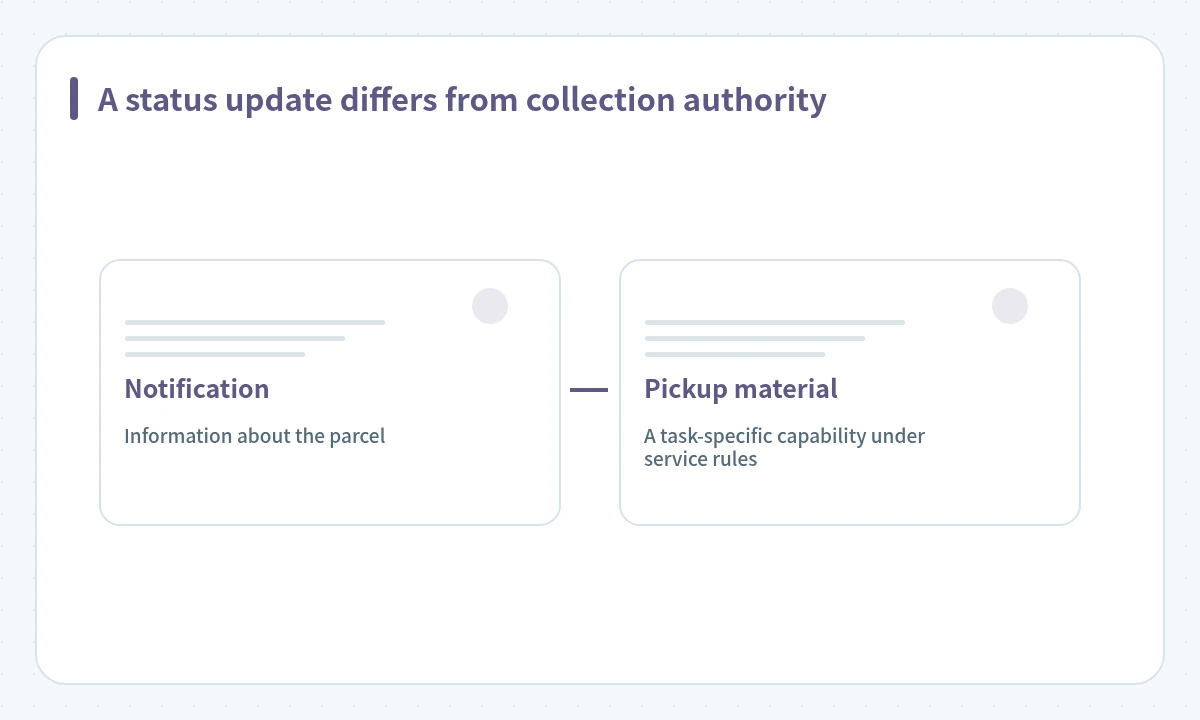
Share only what the permitted task requires
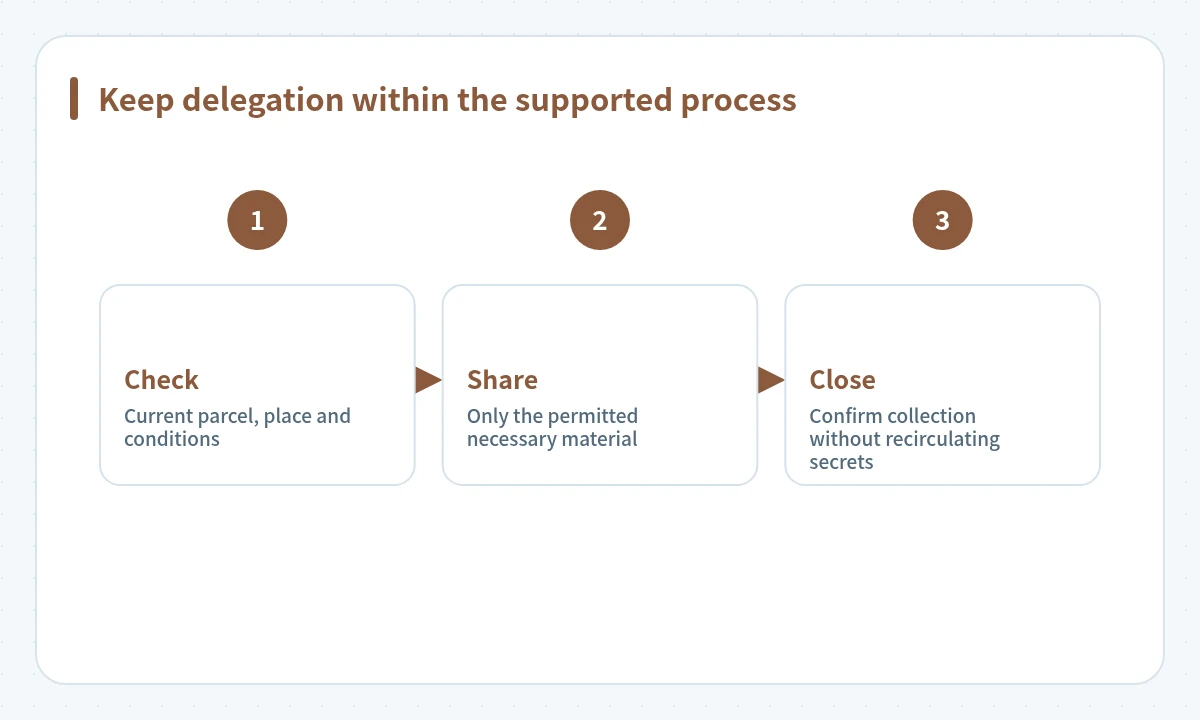
If collection by another person is allowed, agree which parcel and location are involved and what the service requires them to bring. Avoid forwarding a conversation containing unrelated parcels, household details or account links.
Use a supported delegation feature where provided. Giving someone your account password or remote control of a device is not a routine substitute. Any authority should remain within the actual collection process and the person authorised to use it.
Inspect screenshots and links before sharing. A cropped-looking message can still include a QR code, another parcel’s reference or a link that opens a broader account view. Limit the material to this collection rather than treating the entire screen as necessary context.
Check current state before the journey
The parcel may have been collected, moved, returned or assigned another arrangement. A saved text continues to exist after those states change. Use the normal order view before relying on an old image of a code.
| Object | Condition to confirm |
|---|---|
| Parcel | The same reference and current collection state |
| Place | The correct point and relevant opening arrangement |
| Authority | The service’s supported delegation requirements |
Agree how the authorised collector will report completion. A brief task reference and result can prevent another person making an unnecessary trip. That communication does not need to repeat the active code or expose unrelated parcels still waiting for collection.
If the material went to the wrong person
Ask the actual collection service about its supported response, which might involve changing a credential or restricting a collection under its own rules. Do not promise that deleting a chat message invalidated the code or removed saved copies.
Record the mistaken sharing scope and confirmed action without repeating the secret in each report. Once collection is complete, retain the necessary completion reference rather than continuing to distribute the pickup material.
If no corresponding parcel exists, verify an unexpected payment or identity request through the known shopping or delivery account. Do not use contact details supplied only by the uncertain text as your independent check. A notification can prompt investigation without becoming proof of a legitimate parcel or an obligation to pay.
