
An extension should not simply be appended to a main number and submitted as an SMS destination. Establish the field's supported format and the receiving capability of the actual contact route before using it for verification.
A simple online mobile number form may expect a complete external number while a business contact record also contains an internal extension. RFC 3966 describes an extension parameter for telephone URIs. That representation does not establish that an arbitrary SMS API accepts the same syntax or routes a message to an extension user.
Voice contact through a switchboard and SMS reception are separate capabilities. Reaching someone through a voice menu cannot prove that a normal text to the main number reaches the same person. Obtain the provider's actual explanation instead of translating a successful call into a message-delivery promise.
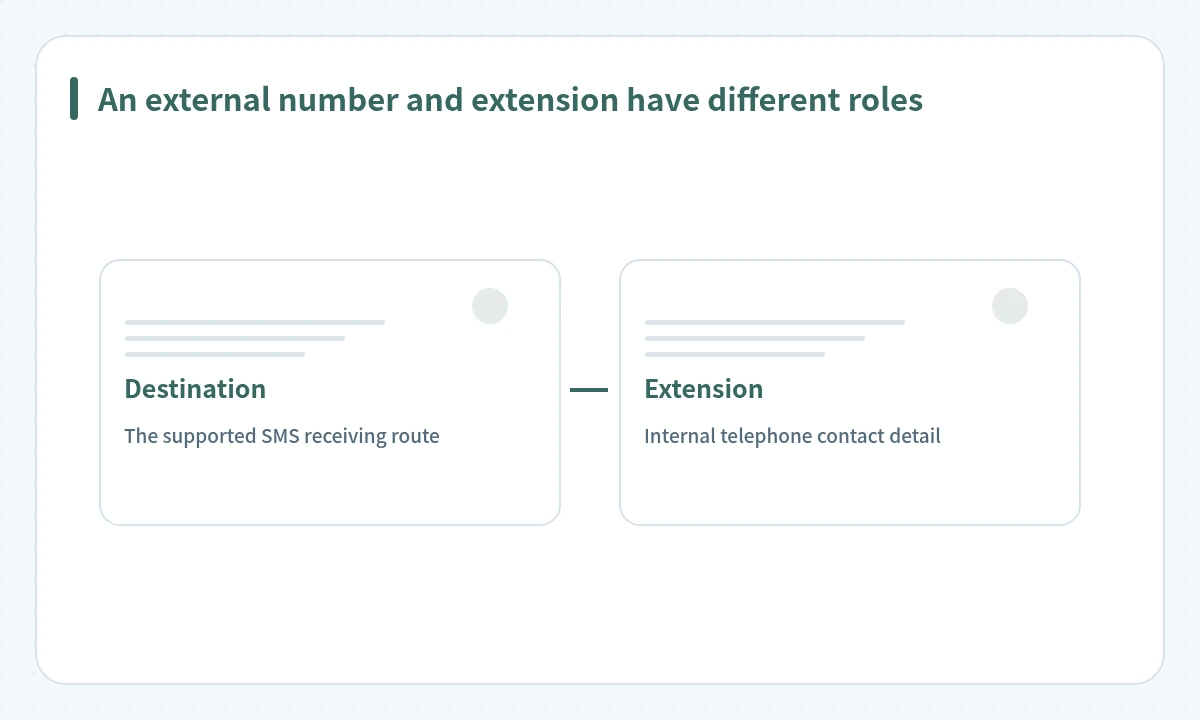
Follow the form's explicit contract
If the service supports separate fields, use their documented meanings. If it accepts only an external destination, do not concatenate digits, strip symbols or keep trying altered strings until validation passes. A syntactically accepted string can identify something different from the intended route.
Keep four questions separate: the external destination, the internal extension, the form’s supported fields and the provider’s confirmed SMS path. Record the answer for each before making a verification request.
Passing format validation is not proof that a target platform accepts the number or that delivery will occur. A rejected input is also not an explanation of every possible capability of the underlying contact. Identify the particular rule instead of using success or failure as a universal classification.
Consider continuing authorised access
Where a verification task requires control of the receiving route, do not borrow someone else's switchboard or shared contact details merely to complete the screen. Later recovery and further notices need an appropriate continuing arrangement under the target service's rules.
A staff contact changing roles can also change who actually receives an internal route. Keep the account's authorised contact process distinct from a directory entry that happens to reach a familiar person today. The ability to make a call is not a substitute for the account's own access conditions.
Check whether a contact record stores a dialling instruction separately from the number. Pauses, menu choices and extension digits can help a voice caller while being inappropriate input for another channel. Preserve those fields for their actual purpose instead of losing useful directory information during cleanup. The SMS destination should come from the supported receiving field, with any unresolved capability question left explicit for the service owner to answer.
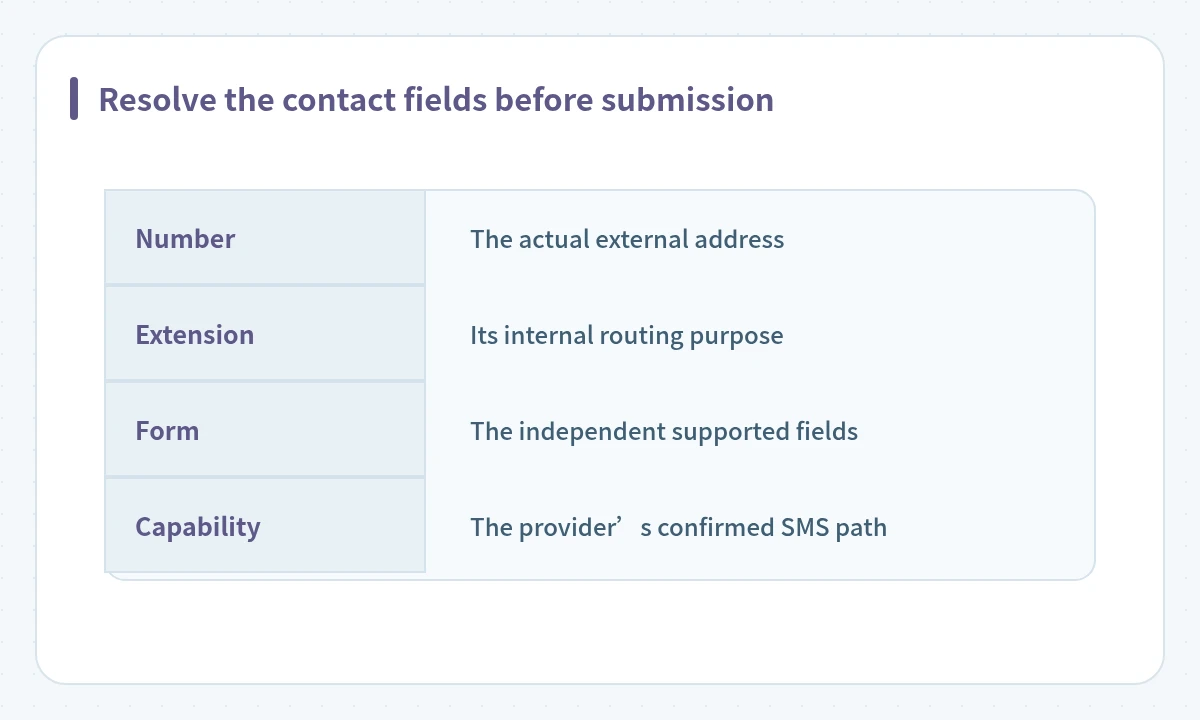
Ask a focused capability question
Describe the task, main-number type and extension requirement to approved support. Real verification codes and a complete internal directory are unnecessary. Use fictitious data when checking that a form keeps extensions separate from the external destination.
Retain the provider's supported format and capability explanation with the relevant configuration. If the route is unsuitable, follow a contact method accepted by the target platform. Changing the number's appearance to evade an input check does not solve the receiving requirement and can leave the account dependent on an address nobody intended to use.
