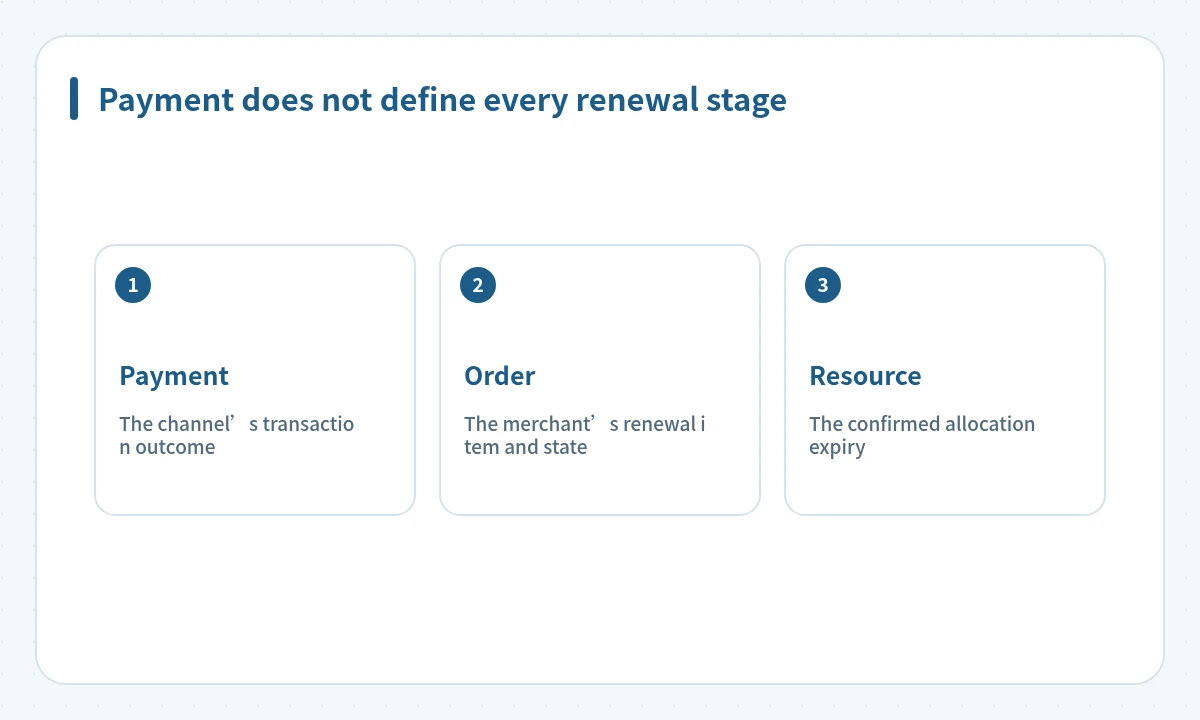
A payment marked pending does not confirm a renewed number. Check payment completion, the renewal order and the resource’s actual expiry separately; adding balance may only complete a top-up.
Check what the transaction was meant to buy
Open the provider’s official order view and identify the resource reference, renewal item, period and order state. Some products separate adding funds from applying them to a number. Others use different arrangements. Similar amounts do not establish that two transactions performed the same action.
Compare the payment channel’s result with the merchant’s order result. If one shows completion while the other is still processing, retain their non-sensitive references and times. Do not send full card details, payment credentials or a complete account screenshot to explain the discrepancy.
Tie the expected extension to one resource
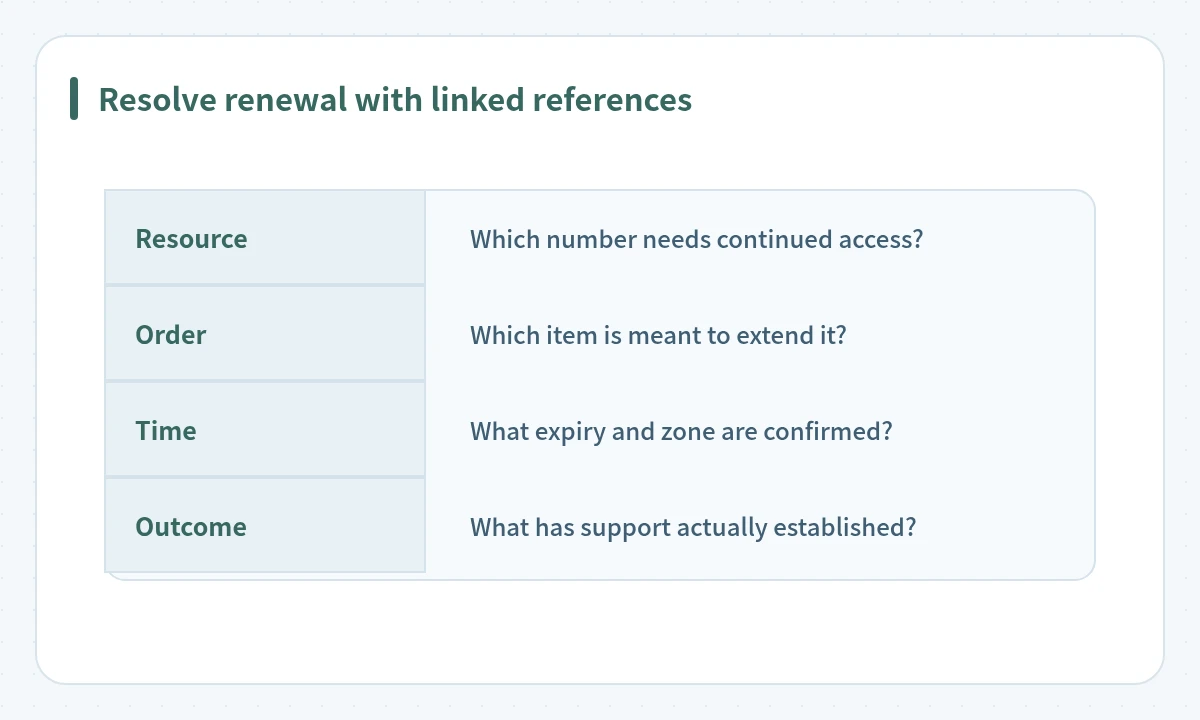
Record the original expiry and the specific number or resource the order covers. In an account with several resources, the latest successful payment may belong to a different item. A completed transaction elsewhere in the account cannot establish continuity for the number you need now.
If the interface displays remaining time, clarify the time zone and counting rule. A stale view can differ from a fresh order query, but repeated payment attempts do not diagnose that difference. They can create additional transactions while the original order remains unresolved.
| Observation | Question to resolve |
|---|---|
| Payment completed; order processing | What is the merchant’s documented processing state? |
| Balance increased; expiry unchanged | Does renewal require another supported action? |
| Order complete; old expiry shown | Is the resource correct, and which state is current? |
Escalate an unresolved state with clear identifiers
Use the provider’s normal support route and its stated processing expectations. Supply the resource reference, order reference, payment time and current displayed state. Ask whether that resource has been renewed and what expiry now applies, rather than asking only whether the money arrived.
If payment appears duplicated, keep each transaction distinct and follow the merchant’s documented resolution process. Do not initiate another purchase merely to force the page to change. A second transaction may not repair the first mapping, and any refund or reversal needs its own confirmed outcome.
Protect tasks that depend on continued access
When expiry is close and renewal is uncertain, avoid starting a concentration of new verification tasks that rely entirely on that route. Use alternatives already supported by the relevant accounts where appropriate. This is continuity planning, not an assumption that the receiving provider offers a grace period or can restore a released number.
An existing code, a historical message list and a pending payment each describe a different condition. None alone proves that future incoming messages will remain available. Do not promise colleagues uninterrupted access until the resource state is actually confirmed.
Once renewal is confirmed, update the maintenance record using the verified expiry and its time context. Schedule the next reminder from that result rather than guessing from the date you clicked pay. Retain the necessary transaction references under the appropriate policy, without keeping unnecessary payment-page personal information.