
Moving a phone number and moving historical messages are separate tasks. Verify what the providers support for records, permissions and settings before choosing a transition date.
Establish whether porting is actually available
Exclusive allocation does not itself promise portability. Ask the current and receiving providers about the number type, market, account eligibility, required authorisation and applicable process. A product that grants limited receiving access may not give its user a porting option.
Twilio’s porting documentation separates eligibility checks and the porting workflow. That is a useful example of why submitting an application should not be described as a completed switch. Do not cancel the original resource or promise an exact completed cutover merely because a requested date was entered.
If porting is unavailable, plan a number change instead. Updating external contact and recovery arrangements is a different task from changing labels on downloaded history. Make the remaining dependencies explicit before the old receiving access ends.
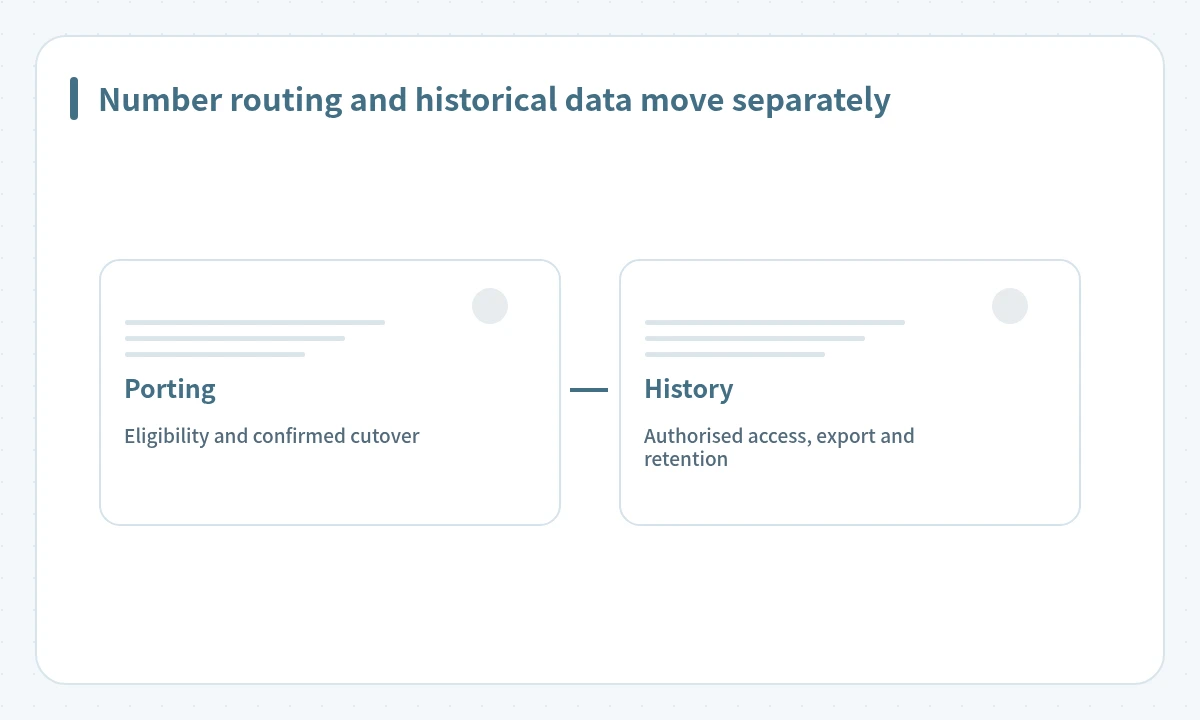
Plan the data work independently
| Object | Separate question |
|---|---|
| Receiving capability | When does routing change, and how is it checked? |
| Historical messages | What can be queried or exported, and until when? |
| Account access | Who manages members, recovery and permissions? |
| Notifications and APIs | Which configurations need to be recreated? |
Retain only records you are authorised to keep and actually need. Use the original provider’s normal export procedure and check file readability, date coverage and resource identity. A successful download does not prove the new platform can import it as native inbox history.
Avoid building an archive of active authentication material simply to make a migration look complete. Necessary business records need their own access and retention arrangement. A local file is not protected solely by the permissions of the old web account.
Verify SMS as well as any voice path
A successful call does not establish that the required SMS route is ready. Where supported and authorised, use harmless text to check receiving under the new account and resource. Confirm that it appears in the intended view rather than relying on the sending device’s status alone.
A normal text test also does not guarantee compatibility with every verification sender. Use a target business’s own supported process for any later account change. Keep test conditions and conclusions limited to what was actually observed.
Check ongoing tasks near cutover separately from new tasks. A request started before a routing change may have its own deadline. Do not use a delayed verification text as the sole indicator of which provider currently controls normal receiving.
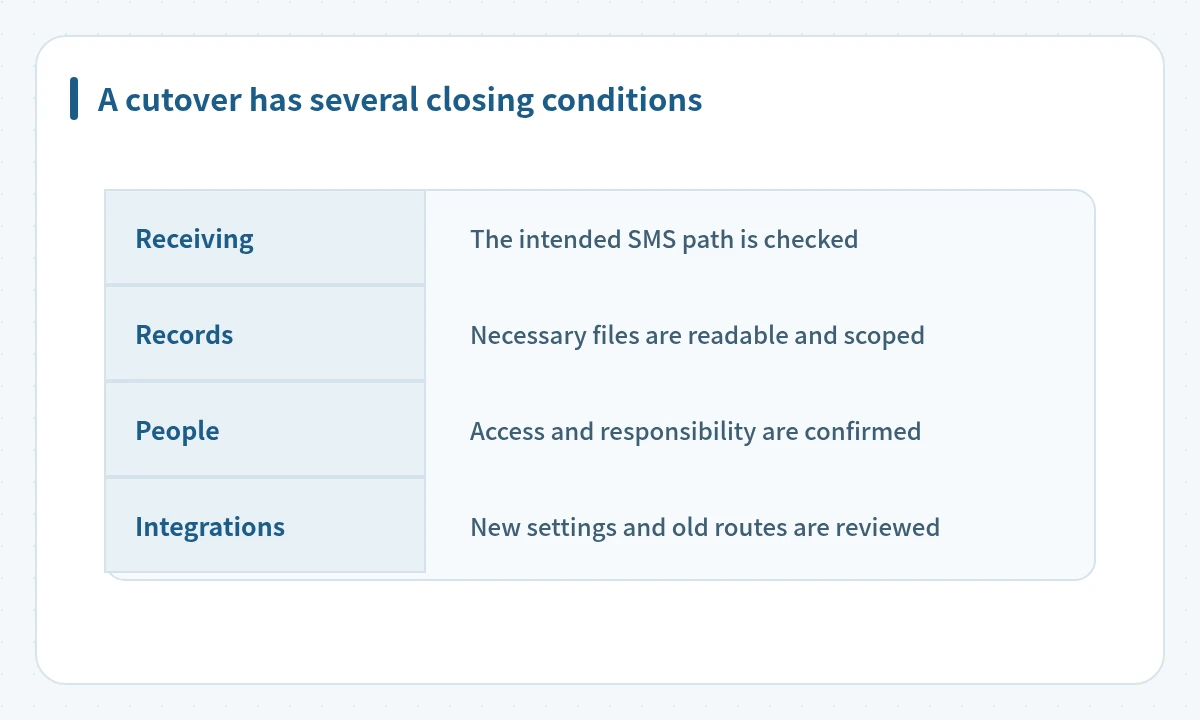
Give the cutover an owner and a closing condition
A team should know who checks the new path, who handles discrepancies and how long the old record-access route remains available. Otherwise the number may appear to have moved while nobody can retrieve the records needed for an unresolved issue.
Review member access and notifications in the new service instead of assuming old settings followed automatically. Stop obsolete integrations through the appropriate provider controls when they are no longer required.
Close the migration note only when number routing, necessary retained records and account responsibilities are each confirmed. Unresolved history access should remain visible even if the number itself is working.
Reference: Twilio: phone-number porting.
