
A maintenance appointment text should identify the task, date, time window, location and expected cooperation. Explain how the resident confirms the arrangement. Notification, appointment acceptance and on-site identity checks need their own defined conditions.
Describe only the arrangement actually established
Use a clear task description and appointment reference. Include the confirmed date, time window and relevant location context. If the assigned worker or precise arrival minute is not known, do not invent it to make the message look complete.
A proposed window should be presented as a choice if acceptance is still needed. Do not ask the resident to choose while simultaneously claiming the visit is already booked. Distinguish work in a shared area from access to a private space according to the real task.
The destination should make the current state available through the normal business route. A text can point to an appointment without serving as a portable authorisation document for every person who sees it.
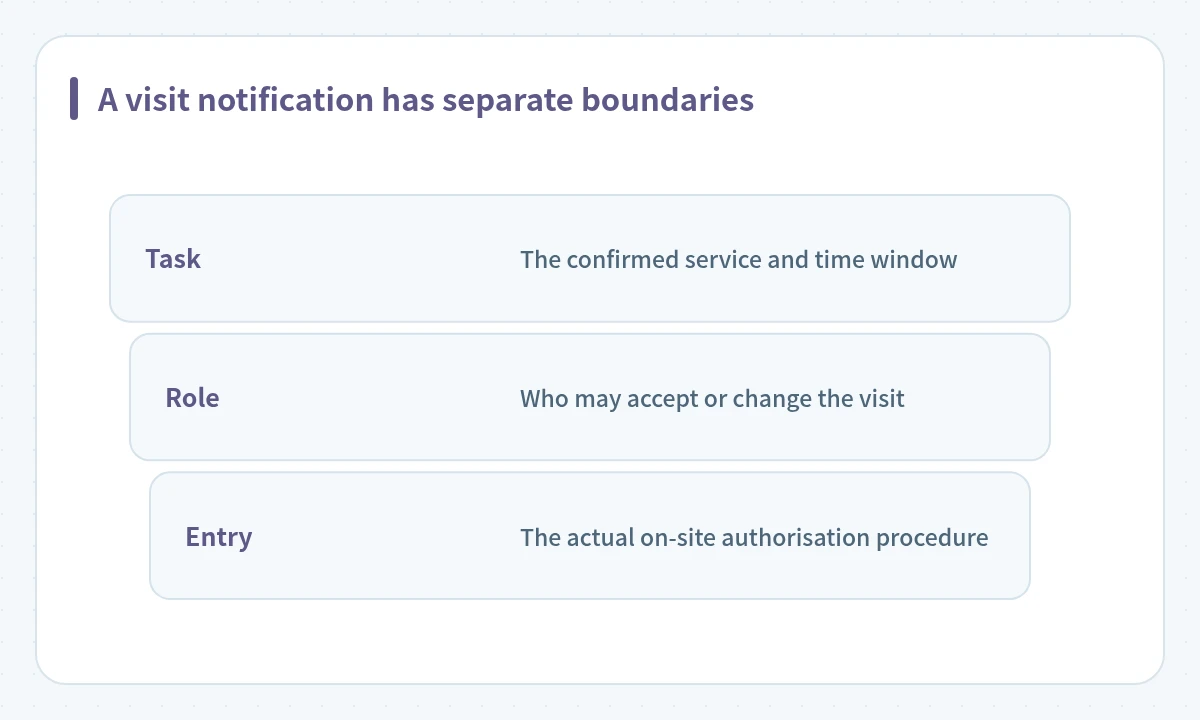
Keep access secrets out of ordinary replies
Door codes, key locations and account credentials should not circulate as routine message text. If the business needs an access arrangement, use its controlled procedure and establish who is allowed to receive the information. Do not assume an SMS product supplies a secure handover feature.
The recipient could be an owner, resident, building contact or another authorised person. Those roles need not have the same decision rights. The responsible operation should establish permission rather than infer it solely from the contact number.
An unfamiliar visitor showing a message or knowing an address still needs to satisfy the service’s actual on-site checks. Use the verified organisation’s procedures to resolve uncertainty. A notification cannot independently certify whoever presents it.
Make changes and non-availability manageable
Provide a recognised route to query, confirm or request a revised appointment. A user should not need to give a login code to an ordinary caller merely to ask for another time. Keep support assistance separate from account authentication.
Operators should inspect old notices after cancellation, duplicate booking or a worker reassignment. Queued work still under their control should use the current arrangement, rather than continue sending a conflicting time window.
For a shared building, check that the message names the relevant service area without exposing another resident’s appointment. The business may need separate notices for common work and private visits. One broad audience list should not replace that distinction.
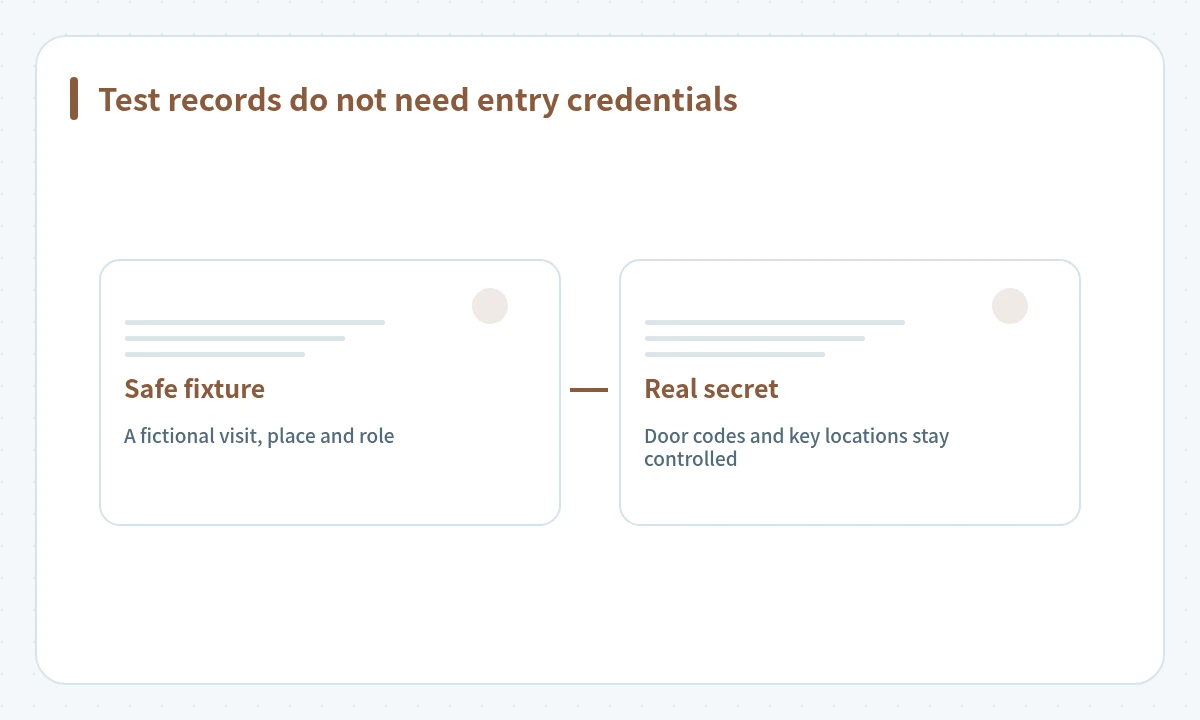
Test task and role together
Use fictional appointments for proposed, confirmed, cancelled and rescheduled states. Confirm that message wording and the destination agree. Include the expected recipient role, and check that another role does not gain broader access merely by obtaining the reference.
Samples need not contain actual home addresses, neighbour information or entry credentials. A clearly labelled test location can demonstrate whether fields and transitions behave correctly. Keep screenshots similarly limited.
After the visit, record the task result and necessary follow-up. Handle any temporary access material according to the actual procedure rather than retaining it indefinitely in inbox notes. When something goes wrong, report the task reference, time and specific issue through verified support. That preserves a useful operational record without turning a general notification channel into the place where all access decisions and secrets are stored.
