
A vehicle-maintenance text should be read against the vehicle's applicable information and actual service record. Establish whether the notice uses a date, mileage or another stated condition before treating its displayed figure as current vehicle data.
Match the vehicle and service item
An on demand sms enabled number can receive a reminder without providing a live measurement from the vehicle. Check the vehicle identifier, model version and named service item. A generic message or appointment record may use an estimate; ask the service provider what information the reminder is based on.
Record when the actual mileage was observed and consult the applicable owner information. A familiar model name is not a sufficient reason to use another person's maintenance interval. Where a specific vehicle condition needs assessment, provide the real observations to an appropriate professional service rather than using the notification as that assessment.
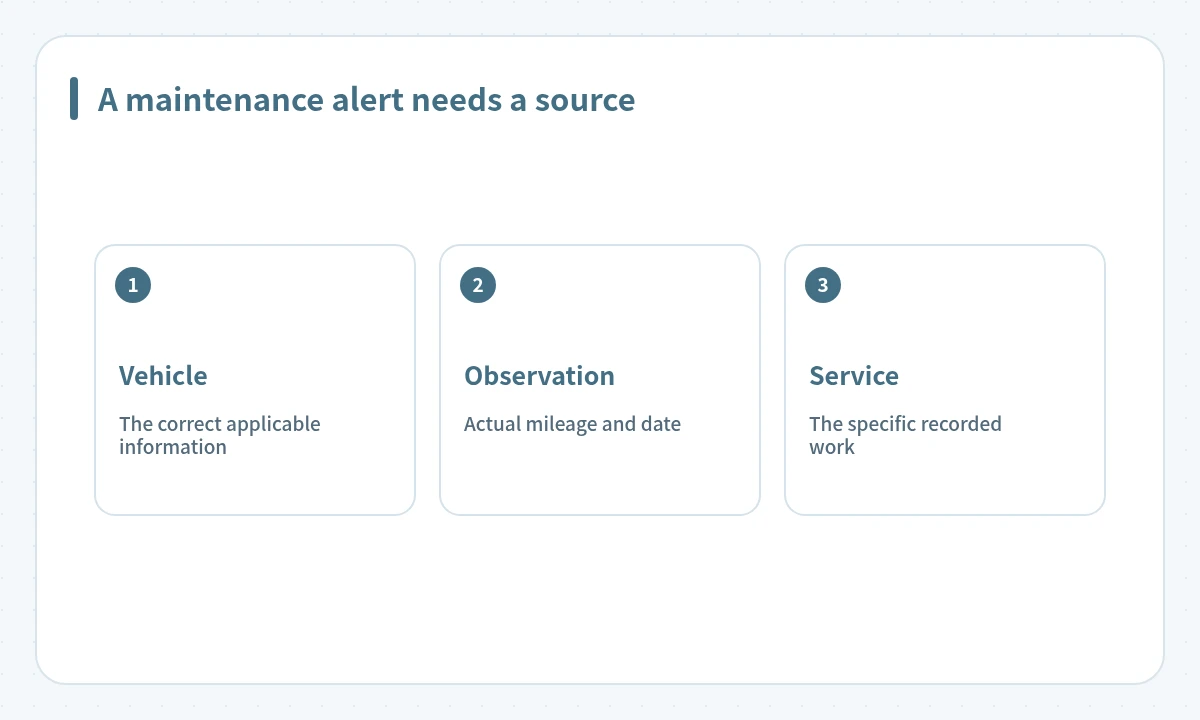
Read date and mileage conditions together
Follow the actual wording of the relevant maintenance information when it combines time and mileage. Do not select whichever condition seems later simply because it is more convenient. Check how the reminder's source data is updated if its figure conflicts with the current record.
| Evidence | What to establish |
|---|---|
| Vehicle | The correct model and applicable information |
| Mileage | The actual observation and date |
| Time | The relevant maintenance or service record |
| Reminder | Its source and any estimated conditions |
An absent reminder is not a vehicle inspection. A promotional service text is also not necessarily a complete maintenance plan for that vehicle. Keep the actual applicable information and professional assessment separate from marketing or coordination messages.
Update the right record after work
Check which service items were actually performed and which record describes the result. An appointment or payment notice does not explain every completed task. When updating reminders, retain the real date and item rather than resetting all maintenance categories because one visit occurred.
If the provider's record is wrong, raise the specific mismatch through its formal correction route. Avoid inventing a replacement date or mileage merely to stop an alert. A quieter notification stream can conceal rather than resolve an inaccurate service history.
If a reminder relies on an earlier estimate, ask the provider how a corrected observation should be recorded. Keep the original service reference and the date of the newer observation together. The objective is to correct the source used for the notice, not simply silence a message. Avoid entering a fictional figure to clear a warning, since that can make a later service discussion depend on information that nobody actually observed.
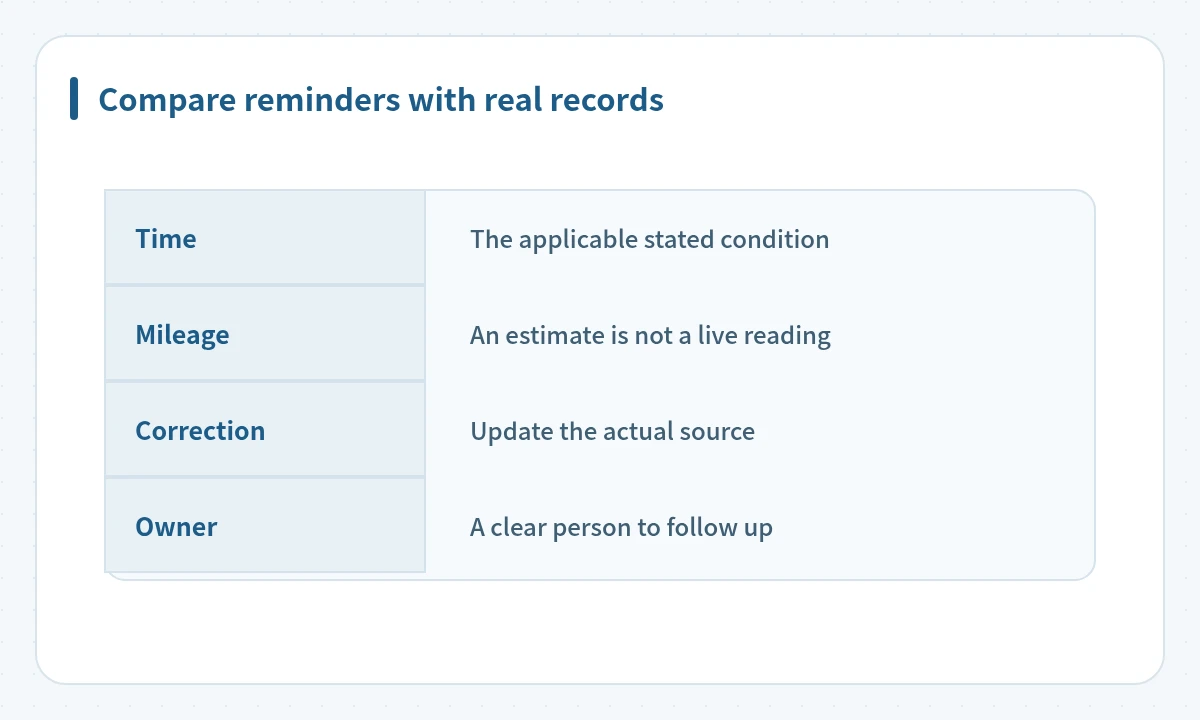
Give a shared vehicle a clear follow-up owner
Agree who checks the current information and who contacts the service provider. If responsibility or the receiving contact changes, update the authorised record so the task does not remain solely in someone's old inbox. Coordination is easier when the next action has a named owner.
Use the relevant service reference and limited supporting information when reporting a discrepancy. Full travel history and unrelated private contact data need not be public. For a concrete vehicle concern, use the applicable instructions and professional advice; waiting for another automated text should not replace investigating the real observation.
