
A lost-item match text is a lead to verify, not confirmation that the recipient owns the item or can collect it immediately. Use the location's known process and keep identifying details within the appropriate private channel.
Establish the source of the lead
An online digital phone number may receive a supported response to a lost-property report. Match it to the location, approximate loss time and your original report reference. Open the organisation's known site or contact route instead of relying only on an unfamiliar address in the message.
If you never reported an item or the description is unrelated, ask the legitimate service whether the contact information was entered incorrectly. Do not use a misdirected notice to inspect another person's private material or claim their belongings. Passwords, verification codes and unexpected payment details should not be offered merely to follow up a match.
Keep distinguishing features out of public discussions
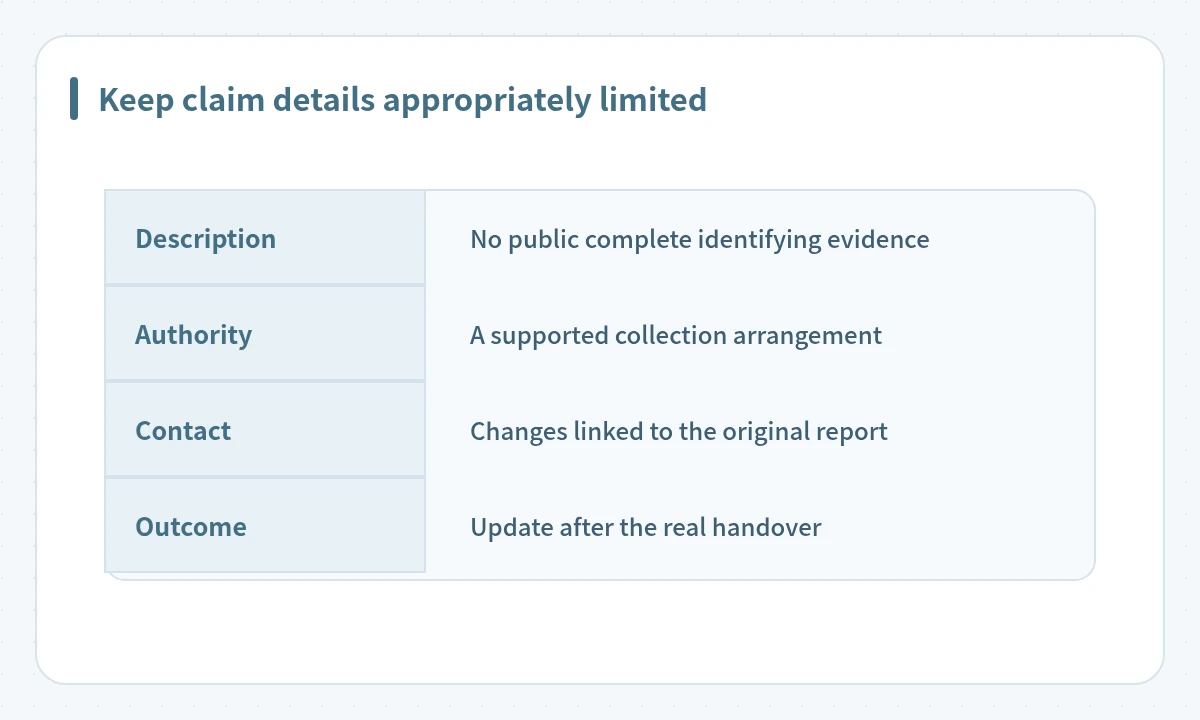
Describe the relevant features to authorised staff using the supported process. Publishing every identifying detail, serial reference or private item content can give someone else the information needed to imitate your claim. A public discussion rarely needs the complete evidence used by the organisation to verify a claimant.
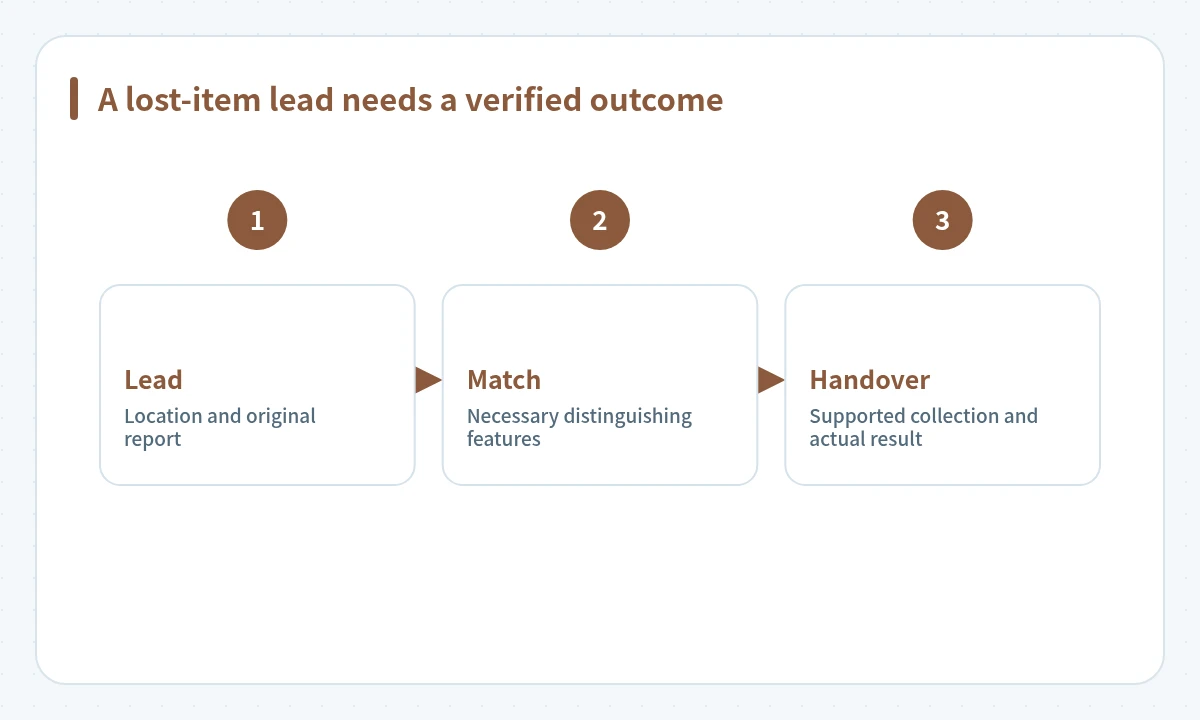
| Stage | Check |
|---|---|
| Lead | The location and original report |
| Match | The necessary distinguishing features |
| Collection | The formal identity or authority requirements |
| Handover | The actual item and completion record |
A similar photograph and permission to collect are different matters. Let the location's formal process determine the required checks. A general guide should not be treated as a substitute for that process or as proof that one description establishes ownership.
Confirm collection or return arrangements separately
If someone else will collect the item, ask which authorised arrangement the service supports. Do not pass a collection credential to an unknown person as a workaround. For a supported shipment, confirm the actual recipient and required information through the formal channel.
Keep an appointment to collect distinct from the item being collected. A scheduling text can help coordinate the visit while leaving verification and handover incomplete. Avoid closing the original report before those steps have actually occurred.
Keep the original report updated if your contact arrangement changes during the search. Staff need a supported way to associate the new route with the same report, not another unconnected claim describing the same object. Follow the organisation’s correction process and retain the existing reference. This helps a genuine lead reach the right person while keeping the matching and collection checks intact, instead of treating a changed phone number as a fresh assertion of ownership.
Update the original report with the real result
At handover, check the item and relevant accessories under the service's process, and raise any remaining discrepancy. Record the outcome using the original reference where supported. That gives later staff a clear relationship between the lead, the claim and the eventual result.
If an old reminder arrives later, consult the current record rather than submitting more private evidence automatically. Before a temporary contact number becomes unavailable, confirm a continuing follow-up route. The objective is to keep the genuine report reachable and the claim verifiable without turning a helpful match notification into public access to someone's lost property details.
