
A log can retain an identifier and timestamp after message content is redacted or hidden. Check the record view, retention policy and field permissions before concluding that the original SMS was empty.
A record has more than one data category
Metadata can help locate a message and explain its processing state, while the body carries the actual text. A service can apply different retention or display rules to those categories. The continued presence of an identifier is not evidence that the content is still retained or recoverable.
Twilio’s Message resource documents a body-redaction operation that leaves other resource properties intact. That is a specific implementation example. It does not mean another provider offers the same operation, the same timing or a restoration path.
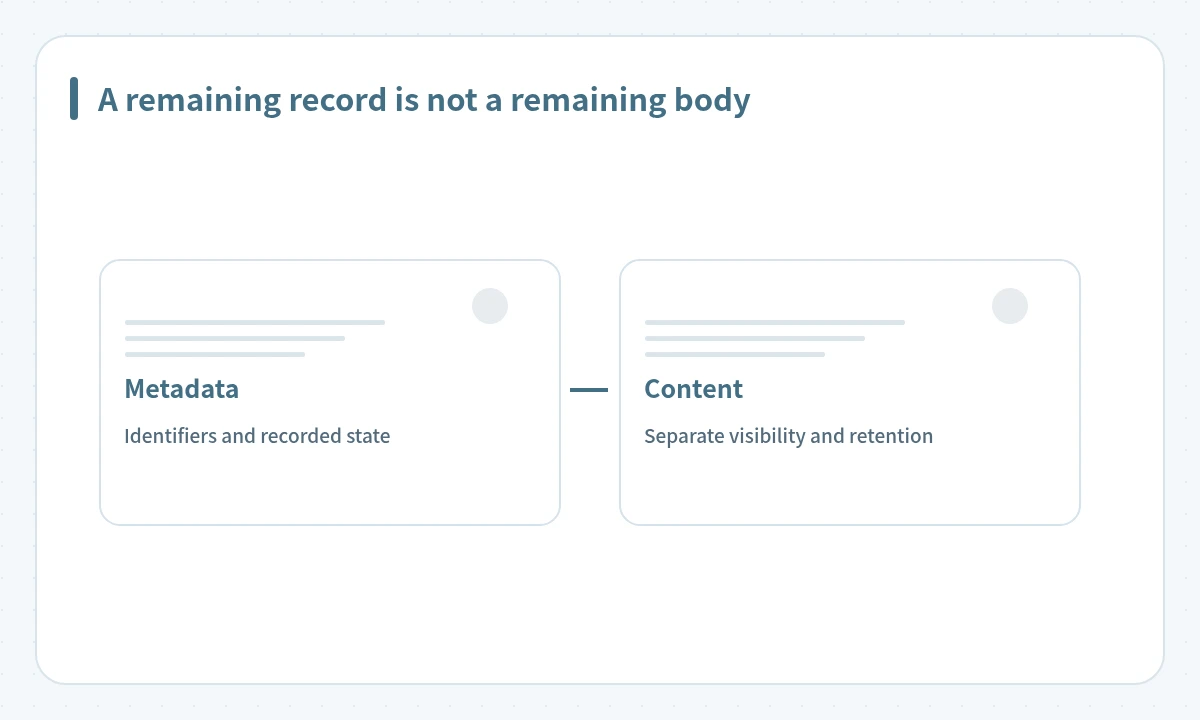
Compare the authorised view with its documentation
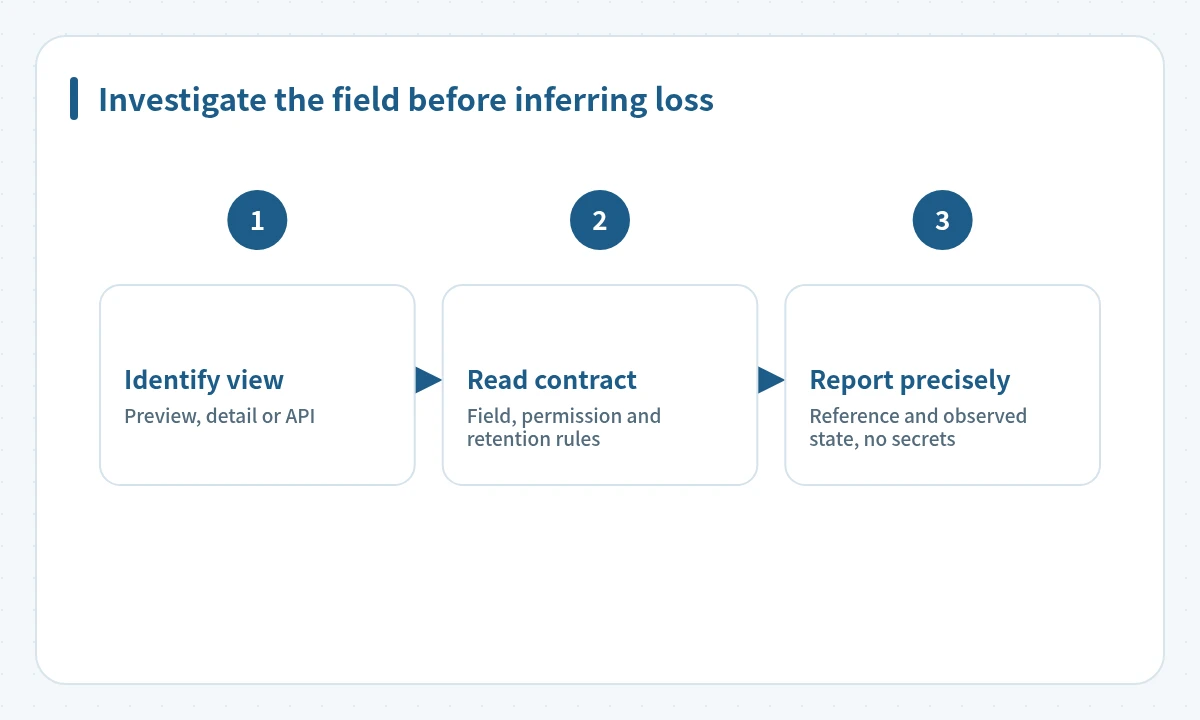
A blank preview can have a different explanation from an empty API body or an explicit redaction notice. Check the same record through normal supported interfaces where you have permission. If one view exposes less information, ask about its field definition and access scope rather than widening everyone’s permissions.
| Observation | Question to resolve |
|---|---|
| Blank list preview | What source field and presentation rule does it use? |
| Empty body field | Does the API document redaction or restricted visibility? |
| History outside the usual window | Which retention policy applies to that category? |
| A redaction indicator | What was removed and is recovery actually supported? |
Do not infer the missing text from neighbouring messages, a shared template label or a similar timestamp. These clues can establish context, not reconstruct an unknown authentication secret. If the question is whether a transaction finished, inspect the business’s own result through its official route.
Retention needs to be planned before content disappears
Where a legitimate task requires a record, confirm in advance what the service permits, how long the relevant fields remain available and what export options it documents. Preserve only necessary authorised information, with its scope and time context. Collecting every live code is not a useful general archive strategy.
A downloaded copy has its own access and retention needs. A provider redacting its body field does not establish that local files, screenshots or other authorised copies have also disappeared. Conversely, do not assume such copies exist if nobody created them. Check the actual workflow.
For support, provide the resource identifier, message reference, query time and observed field state. Keep API secrets, session material and unrelated bodies out of the enquiry. Ask whether the result matches the documented redaction, retention or permission behaviour.
Finally, distinguish body redaction from deleting an entire account’s data. Removing one field does not establish that identifiers, operational records or other categories have been erased. If the scope of data handling matters to the task, request an explanation of those categories instead of drawing a broad conclusion from one blank text box.
Provider example: Twilio: Message resource and body redaction.
