
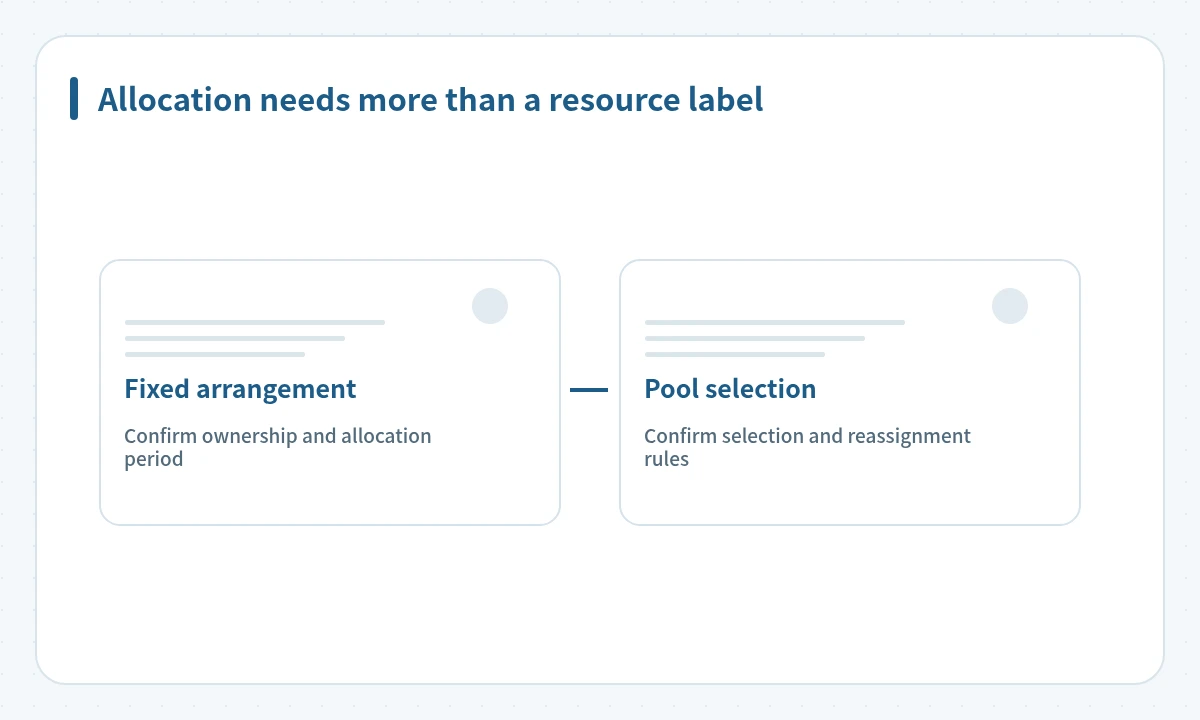
A fixed number and a resource pool describe different assignment arrangements. Confirm task mapping, allocation lifetime and reassignment rules rather than inferring them from the ability to receive several messages.
Ask how a task obtains its resource
For a fixed arrangement, establish the owning account, allocation period and whether later steps continue to address the same resource. For a pool, also ask when selection occurs, how long the selected association remains valid and whether a new request can return another number.
A label such as “fixed” may be an interface nickname rather than a contractual commitment. Use the actual order, resource reference and service terms. Seeing the same digits twice establishes that those observations matched; it does not explain the entire allocation lifecycle.
| Task question | Association to retain |
|---|---|
| Which action is being verified? | The task and its confirmed receiving resource |
| Where should the record appear? | The number, account and authorised workspace |
| When can allocation change? | The period, release and reassignment rules |
A catalogue entry is not control of the number
A resource appearing in a directory or shared list does not mean it has been assigned to you. Confirm the formal allocation state and permitted access. Do not read or use another person’s messages because the digits happen to be visible in a public result.
A catalogue also need not be a live inventory promise. If current availability matters, obtain the provider’s supported confirmation. Do not design a task on the assumption that every listed resource can be reserved immediately or returned to the same user later.
For an account that may ask for verification again, continued control matters beyond the first message. A short task allocation may be unsuitable even if the initial code arrives. Resolve that requirement before binding an important account to the resource.
Keep selection inside the task record
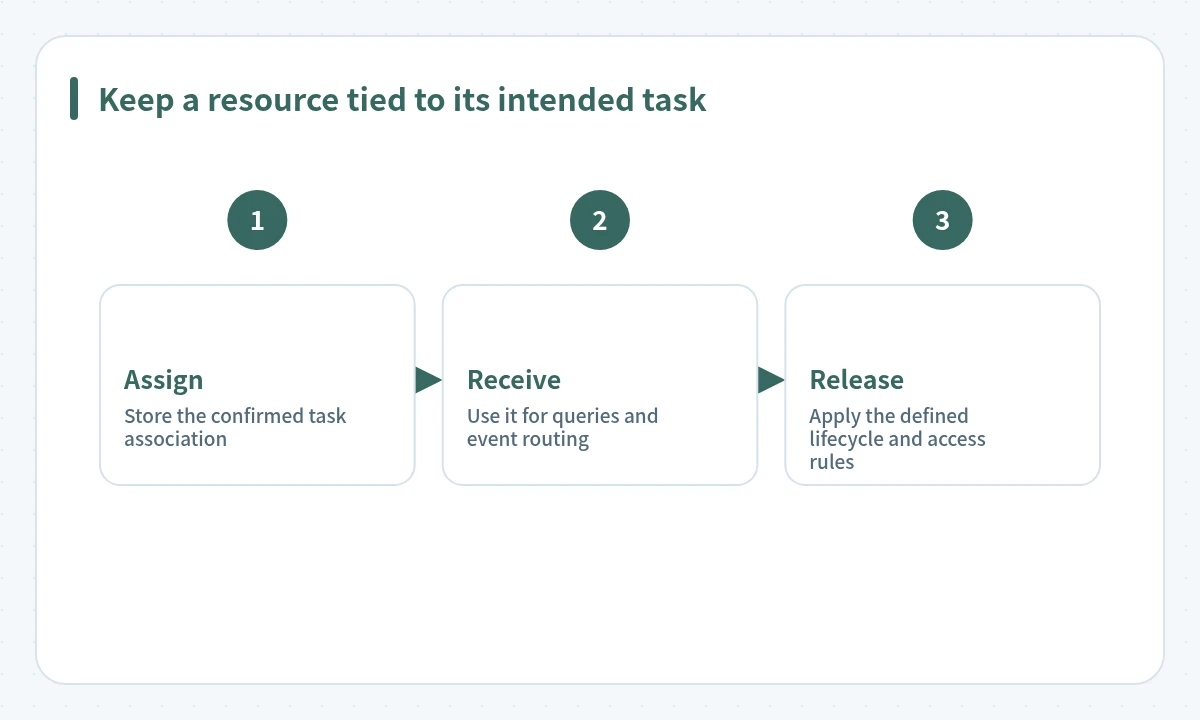
In a technical workflow, later queries and callbacks should use the confirmed association rather than selecting randomly from the pool again. Store distinct fields for the business task, resource and message references. Calling all three a number record makes it harder to determine which relationship failed.
If a resource changes, define what happens to unfinished tasks and delayed events. Do not silently attach old history to a new user merely because the same number has been reassigned. Access should follow the authorised resource relationship under the actual lifecycle rules.
Test the assignment boundary without real credentials
Use an isolated environment with clearly fictional resource identifiers. Assign one to task A and another to task B, then check that queries and events remain associated with the intended task. Include release and reassignment cases if the design supports them.
A test with ordinary sample records can reveal routing and permission mistakes without collecting personal account codes. Record the conditions and limits of the result. This is general design guidance, not a statement that this site offers a number-pool API or particular inventory.
Choose the arrangement according to task duration, later verification needs and confirmed control. The ability to receive several texts and the size of a directory answer different questions from whether one task keeps the resource it needs.
