
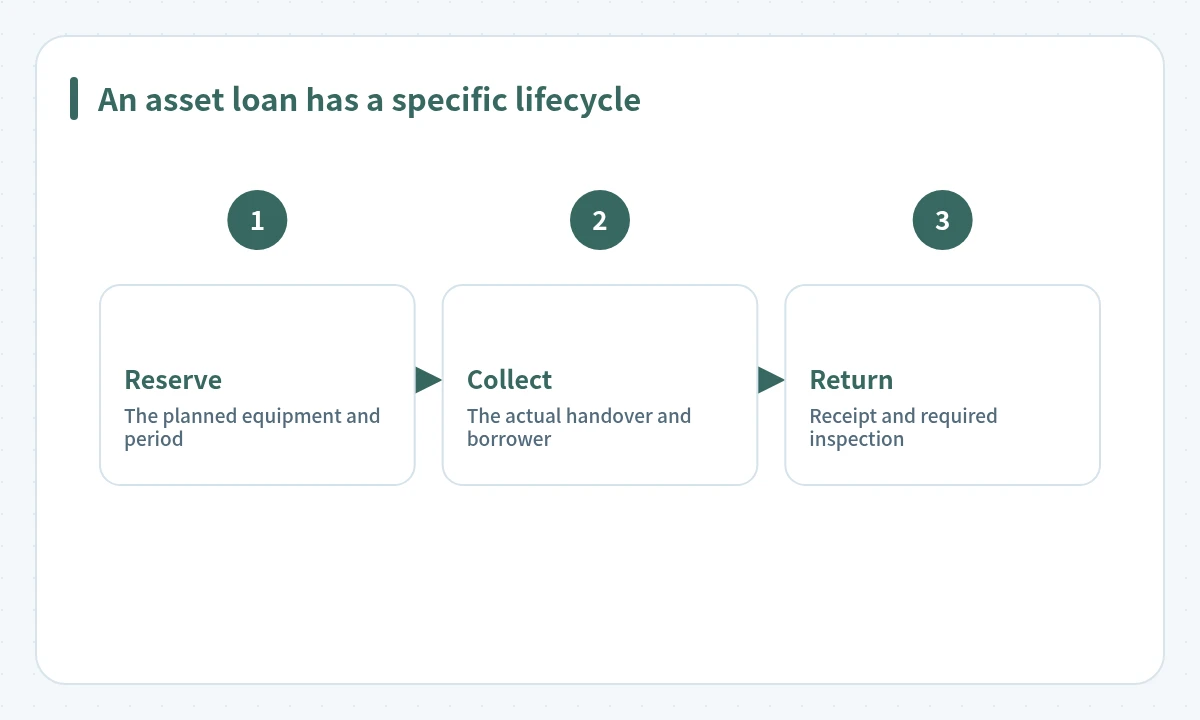
An equipment-loan reminder should lead to a specific asset and loan record. A reservation, collection, extension and return are different events, even when every notification calls the item by the same familiar model name.
Identify the individual asset
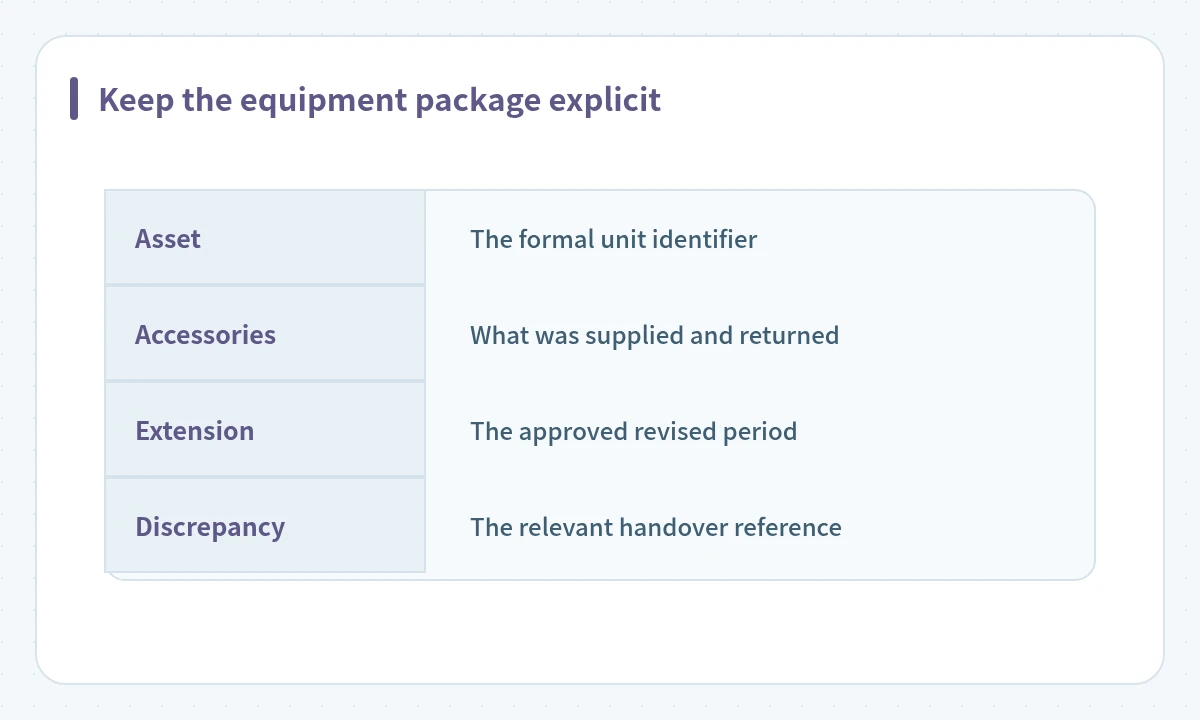
If an sms enabled virtual number receives the notice under the organisation's contact arrangement, inspect the authorised loan system for the asset reference and borrowing record. Several identical laptops or cameras can share a model description. Match the actual assigned unit before arranging collection or return.
A reservation describes a planned allocation. Check the collection record and accountable borrower to establish whether the item was actually issued. If a reservation was cancelled or missed, update it through the supported process so reminders do not keep describing the equipment as already in use.
Keep due dates and extension decisions distinct
Read the complete return date and any relevant time zone. A requested extension should remain a request until the authorised record confirms the new arrangement. Editing a calendar reminder does not itself amend the loan or make a different return date effective.
| Record | Fact it establishes |
|---|---|
| Reservation | The intended item and period |
| Checkout | The actual handover and borrower |
| Extension | The approved revised arrangement |
| Return | Receipt and any required inspection |
Follow the stated return location and handover process. Leaving a device on a desk is not necessarily the same as the responsible administrator receiving it. Where accessories or a condition check are required, use the organisation's actual checklist rather than assuming the main item alone closes the loan.
Read delayed reminders against the current loan
If an overdue text arrives after a return, compare the event time and the current loan record. Do not return another unit of the same model to make the reminder disappear. Equally, the absence of further texts does not establish that the original return has been recorded correctly.
For a discrepancy, state the loan reference, asset identifier and actual handover time through the approved channel. A focused photograph can show relevant condition information without including colleagues' desks, open documents or unrelated asset details.
Check the listed accessories at collection as well as return. A missing component is easier to describe when the original handover record already states what was supplied. Use the organisation’s approved condition checklist and record an existing defect there, rather than relying on an informal text that another shift might never see. The reminder can point to that record, while the record itself explains the agreed equipment package.
Transfer responsibility through the formal record
A change of staff member or contact number should include an authorised handover. Receiving the notification does not by itself grant the recipient permission to borrow, transfer or retain the equipment. Confirm who now owns the next action and which record reflects that decision.
Close the matter using the current authorised outcome, while leaving any outstanding inspection or missing accessory explicit. Keep the necessary references available to the borrower and administrator. This creates a practical history of the actual asset, rather than relying on the number of reminders sent or on an informal message saying that someone believes everything was returned.
