
A received SMS and its forwarded email are separate delivery stages. If forwarding is supported, check task creation and mail delivery rather than using the inbox record as proof that an email arrived.
Trace the copy from its source record
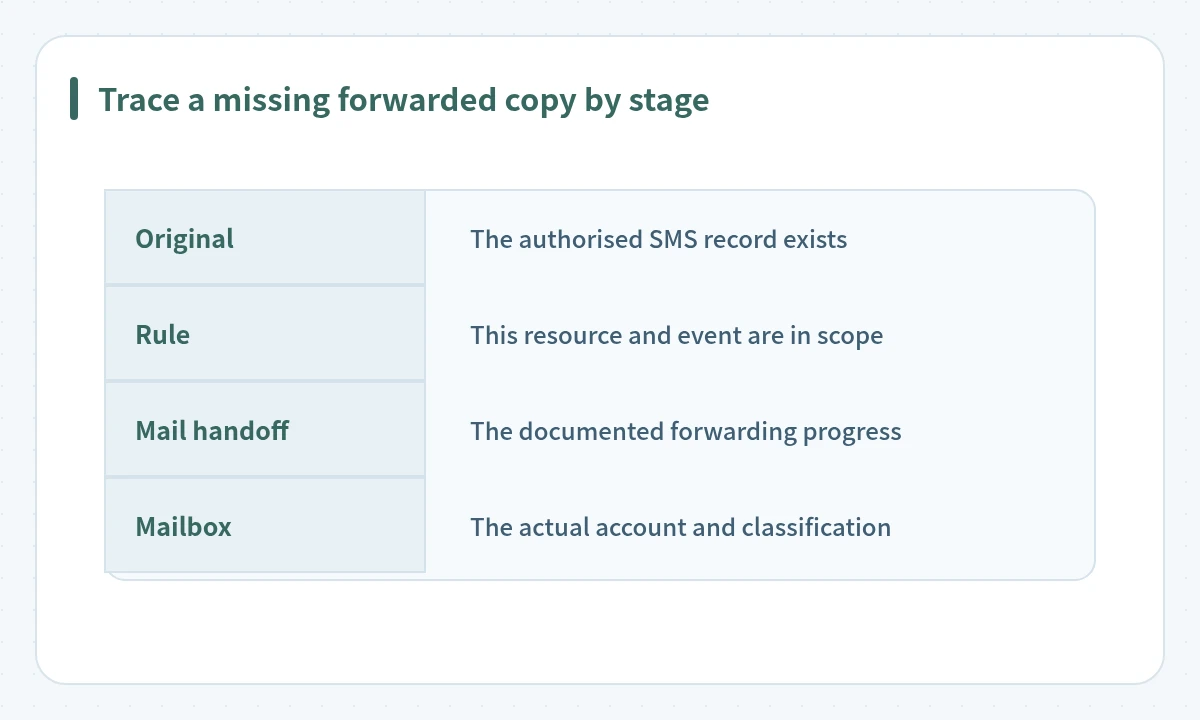
Confirm the service actually offers email forwarding and that the rule applies to this resource. Check the account, number and source-message identifier. A rule might cover only selected resources, particular message types or records received after activation; use its documented scope instead of assuming it reprocesses the entire history.
Where forwarding logs exist, distinguish task creation, handoff to a mail service and later delivery results. Keep the task associated with the source record. An application label such as “sent” needs its product definition before it can answer whether a person should see the email in their normal inbox.
Search the actual destination mailbox
Verify the receiving account, including any alias or shared mailbox arrangement. Then use the mail system’s normal search and filtering controls. Gmail’s missing-mail guide, for example, includes spam, deletion and filters among the mail-stage checks. Other systems need their own current guidance; an SMS provider cannot determine every mailbox display rule.
| Observation | Next check |
|---|---|
| No forwarding task | Rule scope, activation time and bound resource |
| Explicit forwarding failure | The documented mail error and permitted remedy |
| Handoff recorded | Subsequent delivery evidence, if available |
| Email found elsewhere | Mailbox classification or filtering |
Do not change several rules and destination addresses at once. You can end up observing a new configuration while explaining an older message. Retain the relevant change time and the minimum address information required to distinguish the destinations, without circulating the SMS body or a live verification code.
If the mail interface groups messages into conversations, open the individual email and compare its own time and reference. A conversation’s most recent subject or preview can obscure an earlier forwarded copy. Keep the mail item’s identity separate from the source SMS identity while recording how the service links them.
Test the failed stage, not the account’s verification flow
Use one authorised, non-sensitive message with a recognisable test marker. Match the original record, forwarding task and resulting email. A mailbox fault is not a reason to repeatedly request authentication codes: doing so can change the current verification request while leaving the email problem untouched.
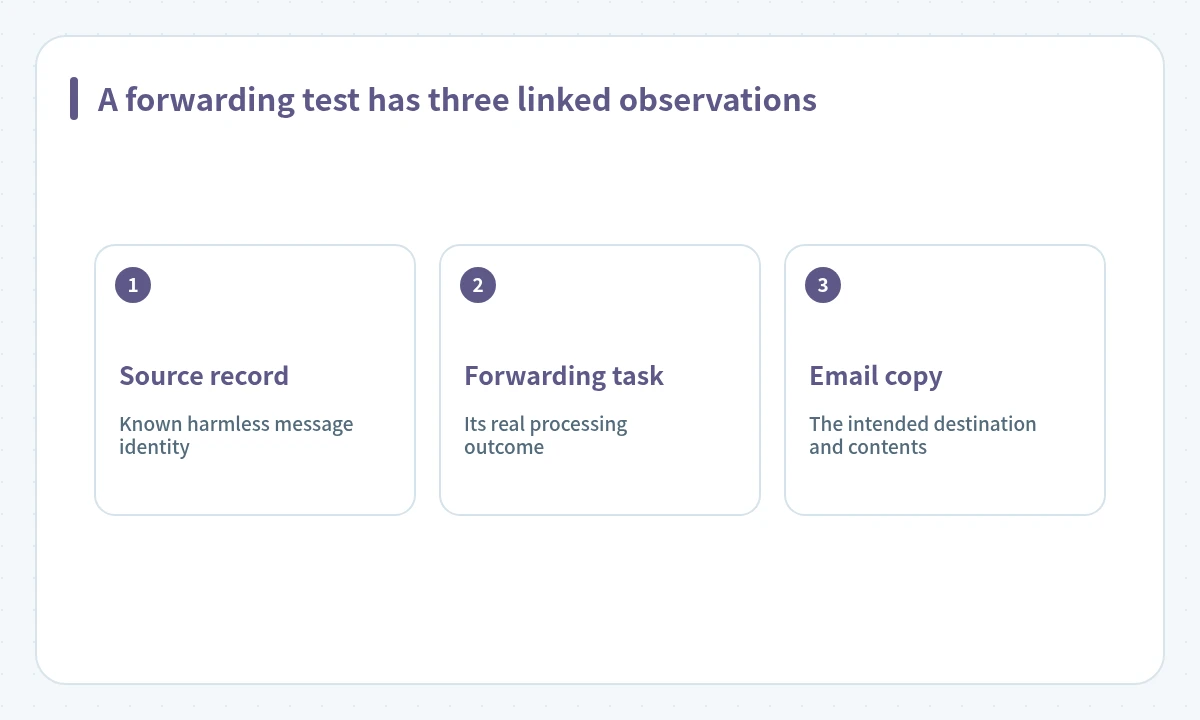
If the service cannot expose delivery details, keep the conclusion limited. “The SMS exists, but onward delivery is not confirmed” is more useful than guessing which mail server discarded it. Give the appropriate support team the task reference, time and observed error through its normal channel.
Forwarded email also has its own access and retention path. Disabling a rule does not automatically recall copies already stored in a mailbox, archive or client. Before changing the destination, confirm who controls the old address and which team tasks depend on it. Any supported historical resend should have an explicit range, so a diagnostic exercise does not become an unnecessary bulk transfer of private messages.
Reference: Gmail Help: missing messages and mailbox-stage checks.
