
A domain-renewal text should lead to separate checks of the registration term, renewal order and current DNS state. A working website does not prove renewal, and a payment screen should not replace the registrar's actual processing result.
Match the complete domain and account
A sim free temporary sms inbox can receive reminders where the registrar supports that contact arrangement. Open the registrar through a known route and inspect the full domain, including its suffix, and the relevant account. Similar names can belong to separate registrations with different outstanding tasks.
ICANN's renewal guidance directs registrants to the applicable registrar arrangements. Use the current domain and registrar information rather than inventing a universal post-expiry period or fee. Do not provide a transfer authorisation code or account secret to an unfamiliar contact offering to arrange renewal from a text.
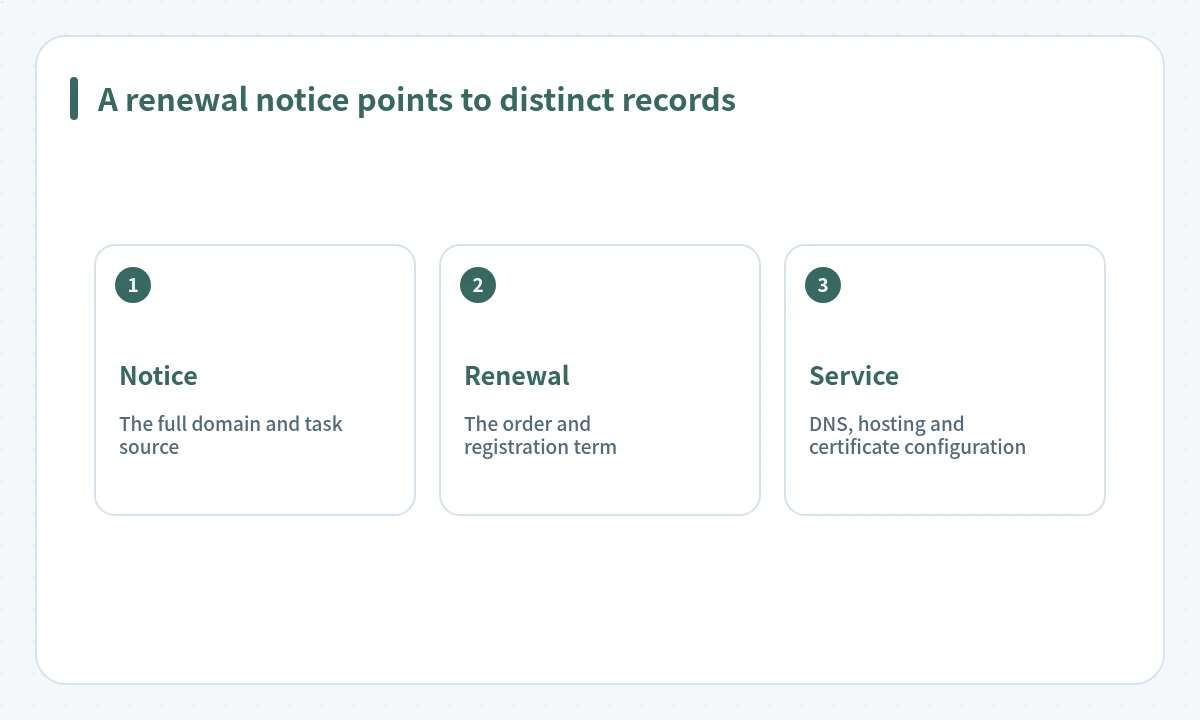
Keep the records distinct
A reminder describes something needing attention. An order describes the submitted operation. The registration record describes the current term. Inspect each relevant outcome instead of making a successful payment page stand for every later processing step.
| Record | Check |
|---|---|
| Notice | The domain and source of the task |
| Order | The actual renewal item and result |
| Registration | The current term in the formal account |
| DNS | The intended delegation and records |
DNS, hosting and certificates have their own configurations. A completed renewal does not imply that all of them changed, and an access failure is not automatically an unpaid registration. Preserve the known configuration while locating the actual failing layer before making unrelated changes.
Track several domains individually
For a portfolio of similar names, record each current term, responsible person and unresolved operation. One successful order in a shared account cannot explain the outcome for every domain. Keep the receiving contact and account recovery route appropriate to the organisation managing the registration.
If a website still fails after renewal, give formal support the specific domain, observation time and relevant result. A focused description separates a renewal question from a DNS or hosting incident and avoids repeated configuration changes made without evidence.
For a domain managed by several people, distinguish the billing contact from the person authorised to change the registration or DNS. Give the renewal task a clear owner and keep other configuration decisions within their approved process. A colleague can receive a reminder without needing account secrets in a group chat. That separation also helps when a payment question and an unrelated website outage occur at the same time: each can have a specific owner and evidence instead of one broad instruction to fix the domain.
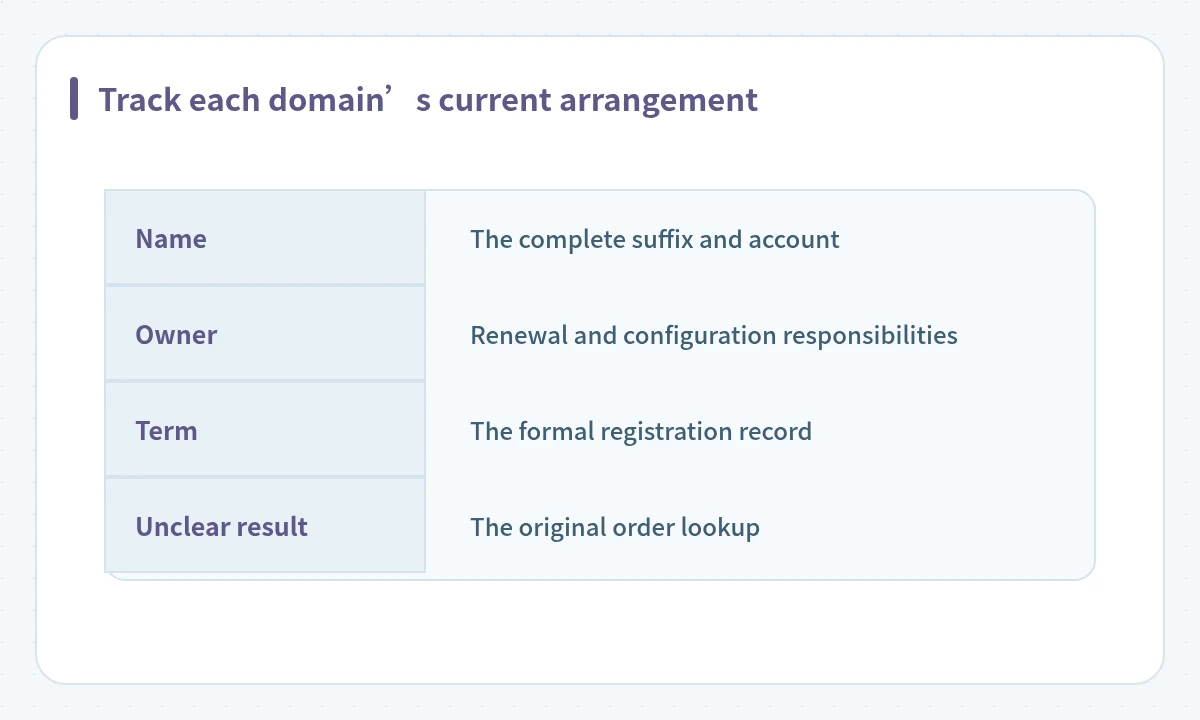
Query an unclear order before paying again
Use the registrar's supported lookup or assistance process when the result remains uncertain. Provide the necessary domain and order reference privately, without posting a complete bill or credentials. Repeated payments are not a useful test of whether the first operation was applied.
Before a short-lived receiving number becomes unavailable, update the registrar's contact and recovery arrangement through its formal process. Once the result is confirmed, align your own reminder with the current registration record. An old text can be a useful historical clue, but it should not remain the authority for a date that the actual domain record has since changed.
