
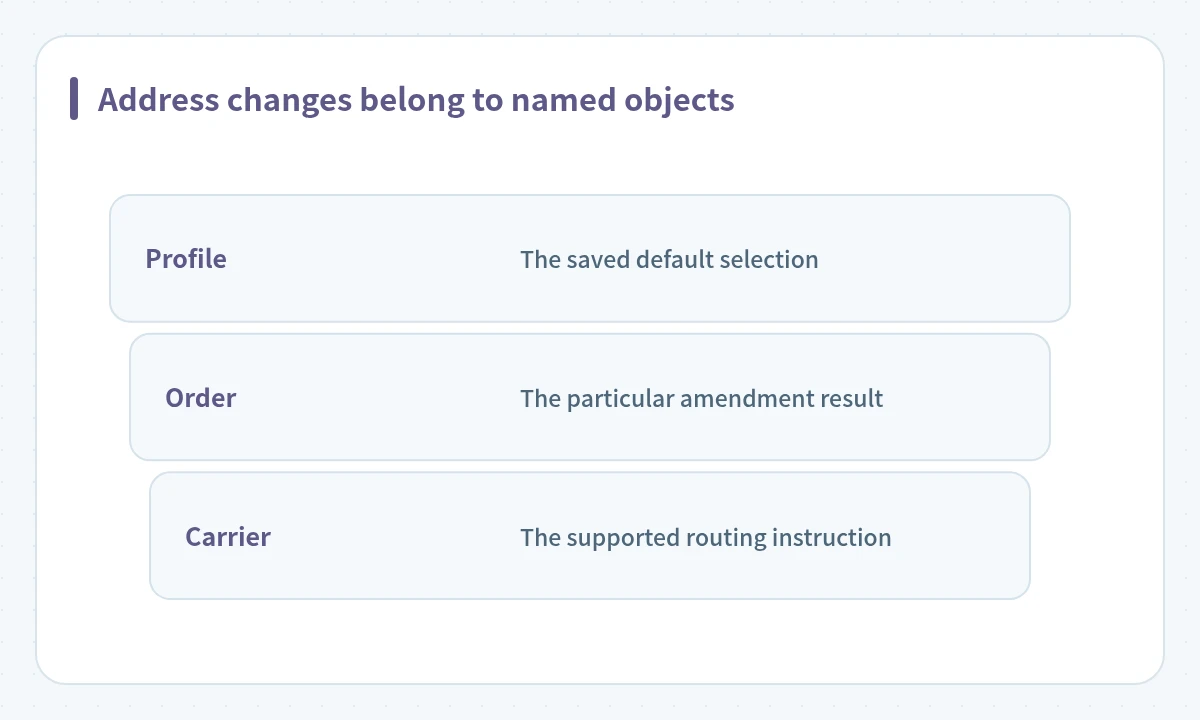
An address-change confirmation can refer to a saved profile, an unfulfilled order or an active delivery instruction. Establish which object changed before concluding that a parcel will travel to a different destination.
Read the scope of the confirmation
Open the merchant's known account page and locate the relevant record. A default address is commonly used for a future selection under the store's process; it should not be treated as proof of an amendment to an existing order. Examine the particular order separately and follow the merchant's instructions for changes at its current stage.
When a no sim sms inbox online receives the notice, verify that the message belongs to the account and delivery you are checking. The inbox location is not the authoritative address record. Use a permitted contact arrangement and avoid copying a full delivery address into a general shared work note.
Separate the merchant request from the delivery result
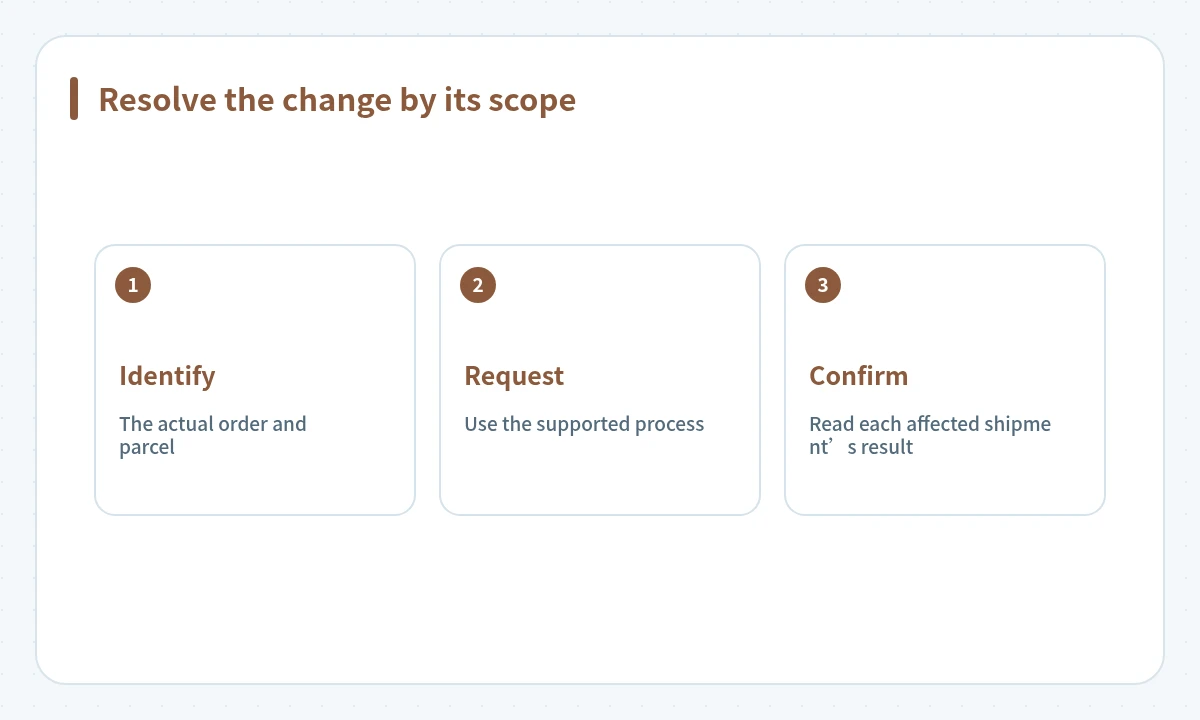
A merchant may record a request without being able to amend a shipment that is already with a carrier. Check the supported change process for that shipment. Carrier restrictions and possible outcomes depend on the actual service; do not assume that changing the shop account edits the carrier's route automatically.
| Changed object | Useful verification |
|---|---|
| Profile address | The saved default and its intended future use |
| Existing order | The order's current address and amendment result |
| Carrier instruction | The supported request and current tracking detail |
If an instruction is pending, keep it described as pending. The notice may confirm submission rather than acceptance or execution. Read the exact result before telling another person to wait at the new destination. Where the merchant and carrier records differ, ask which party is currently able to act rather than repeatedly changing both records.
Use event time to explain delayed messages
A confirmation can arrive after a later amendment. Compare the event described in the message with the current object and its recorded change time. Keep the latest authorised instruction visible in the work record. Arrival order alone is a poor way to reconstruct the sequence when several requests were made close together.
For an order with multiple dispatches, inspect each shipment affected by the proposed change. One parcel may still be with the merchant while another has already entered a different process. Record the confirmed outcome for each relevant reference. An order-level response can be too broad to explain that mixed situation. Ask the responsible party to identify which shipment the amendment covers before assuming that the same destination now applies across the whole purchase.
Close the request with a specific outcome
Record whether the intended result was a profile update, an order amendment or a carrier-approved change. Keep the reference and decision available to the person awaiting the delivery. If the change was declined, follow the merchant's or carrier's supported alternatives rather than inventing an address workaround in a message reply.
For an unexpected address-change notice, inspect the account through the known route and use its security or support process if the change was unauthorised. Do not use a link in an unverified message as the sole route for correcting it. The same scope check helps both ordinary delivery questions and potentially suspicious changes: establish which record actually moved, who authorised it and what remains to happen.
