
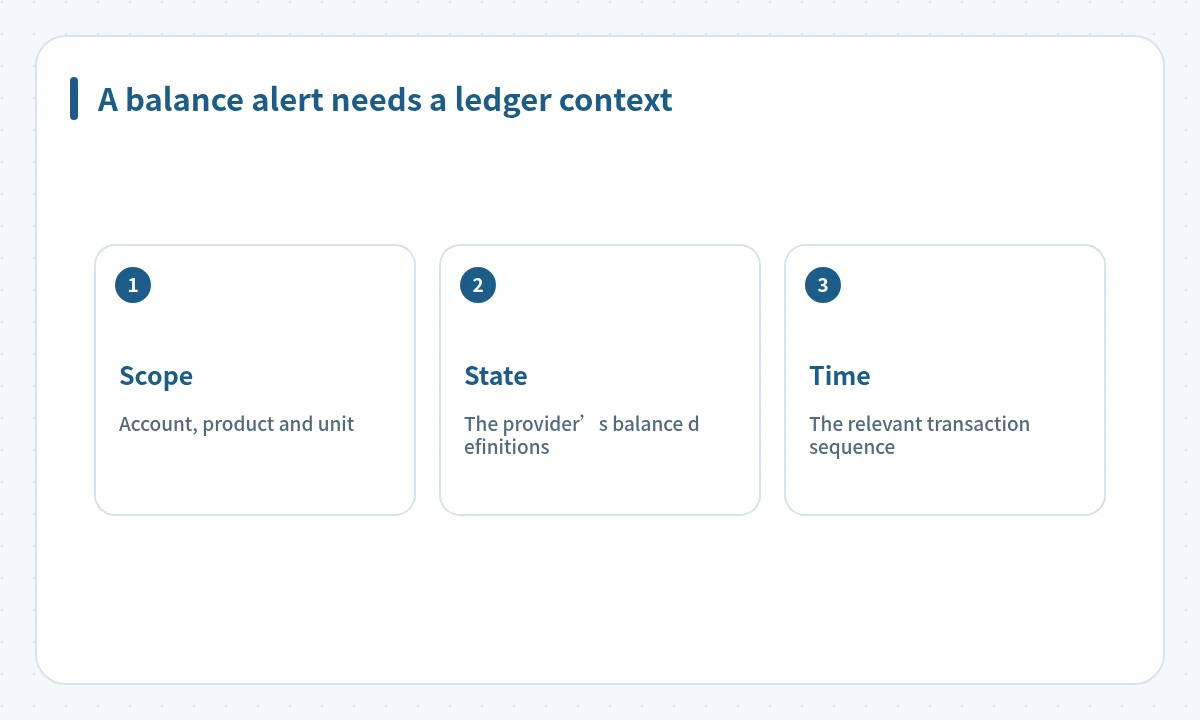
A low-balance text points to an account measure at a particular time. Check which balance it names before interpreting it as the amount currently available for the next operation.
Identify the ledger and unit
Use the provider's known account interface and locate the relevant ledger. Confirm the product, account, currency or non-monetary unit, and the time of the observation. Credits, usage allowances and currency amounts are different measures. Keep them in their stated units rather than combining them into a single informal total.
A simple sms code receiver can display a notification when the sender supports that arrangement. It cannot establish the live ledger state. Keep the actual account accessible through the approved route, and do not submit passwords or verification codes to a person offering to correct a balance in response to the text.
Use the provider's definitions for balance states
Available, pending and reserved can describe different conditions under a provider's system. Read that system's explanation instead of assuming that a positive total is fully usable. Stripe's balance documentation is one concrete example of product and currency scopes with available and pending states; those definitions should not be imposed on an unrelated service.
| Check | Reason |
|---|---|
| Account and product | Avoid reading another ledger's balance |
| Unit or currency | Keep quantities comparable |
| State | Distinguish usable amounts from other categories |
| Observation time | Place the alert in the transaction sequence |
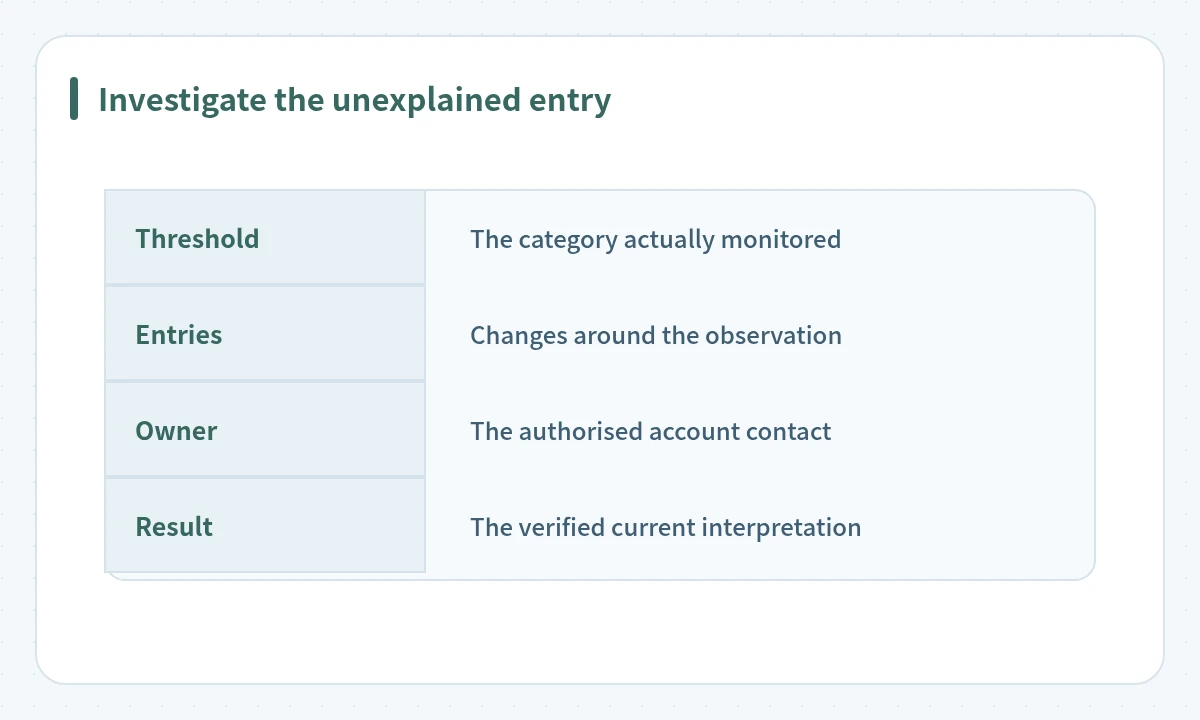
If the text and current dashboard differ, inspect the intervening ledger entries. A later credit, charge or other recorded adjustment can explain the difference without either snapshot being erroneous. Use the provider's actual entry descriptions. Do not invent settlement timing or a release promise to fill a gap in the account history.
Check what triggered the threshold
A threshold may monitor one balance category, currency or service allocation. Find that setting and compare it with the alert wording. If a team changed the threshold recently, keep its effective configuration with the investigation. Two alerts using different settings should not be treated as duplicate measurements of one fixed condition.
A team using more than one account should nominate the ledger owner who will investigate the alert. Sending the text to several colleagues can otherwise produce parallel, conflicting inquiries. Record the account reference and the unresolved entry in the approved work system, then let that owner coordinate the response. Keep any action requiring authorisation within the existing approval process; receiving a low-balance alert should not itself grant a person new account privileges.
Ask about the unexplained entry, not an assumed total
When contacting support, identify the ledger, relevant time and entry reference through the approved private channel. State the expected interpretation and the part you cannot reconcile. Share only the material needed for that account question, rather than forwarding a broad history to an unverified address from a notification.
After resolving the issue, review whether the threshold still serves the intended operational purpose. Keep any internal action tied to the verified current measure and the organisation's own approval process. The text remains an alert to inspect; the ledger and the provider's definitions are the basis for understanding what the balance actually means.
