
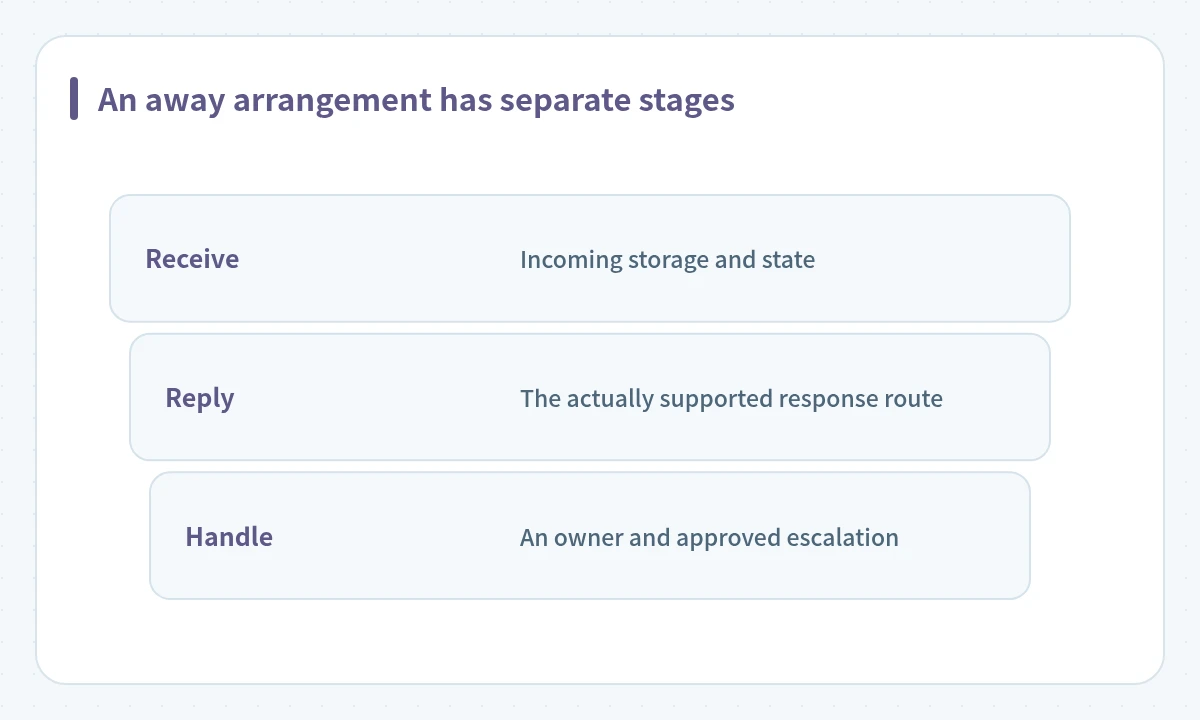
An away reply changes only the behaviour the product actually associates with that setting. Automatic responses, staff coverage and incoming-message storage are separate stages that need their own arrangements.
Inspect the setting's real effect
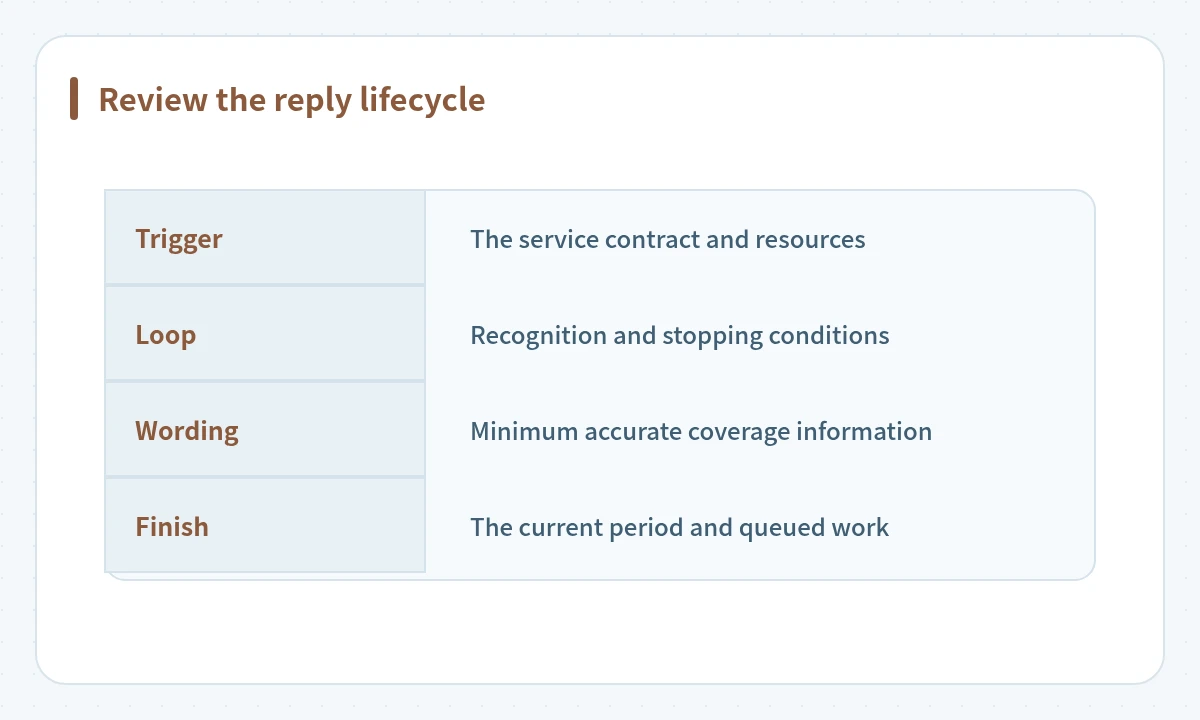
A convenient sms code receiver may or may not support replying through its receiving route. Read the service's actual trigger, channel and effective-period instructions. A setting name is not proof that every sender can receive an automatic text back or that the receiving number stops collecting messages.
Keep the wording consistent with the genuine coverage plan. State when and through which approved route a task will be reviewed where that is known. Do not promise an unsupported response deadline or publish a staff member's private travel details merely to explain an absence.
Assign the incoming work
Confirm whether messages continue to be stored and who owns pending tasks or escalation. An away response being sent does not complete the original issue. A successful interface response also cannot automatically close the related business work.
- Verify incoming storage and receiving state.
- Assign responsibility during the uncovered period.
- Retain an approved escalation route where actually needed.
- Keep the reply result separate from task completion.
For a shared resource, establish who may change the response. One person's absence should not casually replace a whole team's formal contact arrangement. The configuration needs the scope intended by the service owner, not just the preference of whoever last opened the inbox.
Prevent uncontrolled response loops
Automatic systems can trigger each other under some workflows. Use the actual protocol and design to define recognition, attempt bounds or stopping conditions. Do not generate an unlimited external response for every incoming item. Exercise any supported reply route with controlled resources.
Keep a reply associated with its triggering event and defined purpose. This makes repeated or delayed input interpretable and avoids treating another automated response as a new request for the same action without review.
Check how an incoming message that is itself an automated response is classified under the supported design. A reply loop can look like a conversation even when no person is participating. Keep recognition and stopping behaviour tied to the protocol rather than use a guess based on one familiar phrase in the body. Review the away text for unnecessary account details as well. A general sender does not need to learn which person controls a private number or how their account is recovered. Use the minimum accurate coverage information, and keep any task-specific reply within the current resource authority. This makes the arrangement useful without turning an absence notice into a directory of private operational details.
Verify the end of the arrangement
Check the effective period, time zone and supported resumption method. Queued work should follow the defined rule for current applicability so an old away message does not continue after coverage returns. Closing the editor is not a stop condition for background tasks.
Record the setting version, trigger reference and limited outcome without using genuine verification codes as samples. A useful away arrangement explains receiving, storage, replying and human ownership individually. It should provide real coordination instead of concealing a queue of messages that nobody was actually assigned to handle.
