
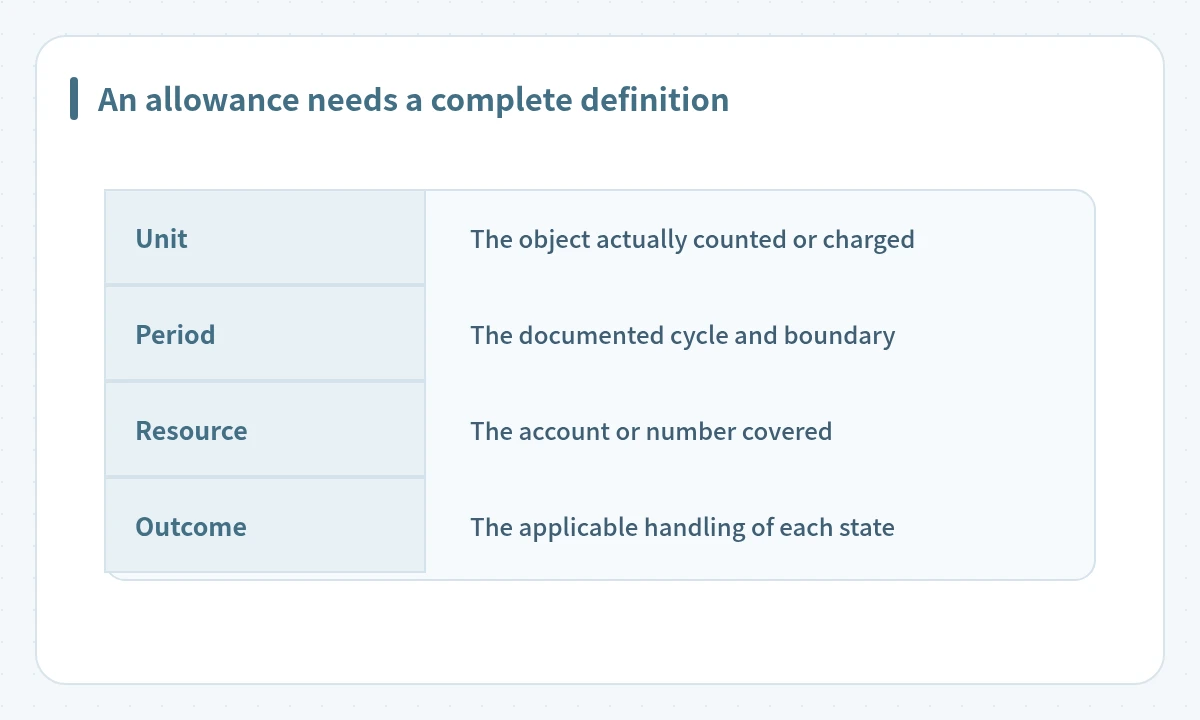
An allowance may count requests, messages or segments, while number rental has a separate term. Confirm the unit, resource scope, period and excess-use rules before estimating task coverage.
Ask for the unit, not just the headline quantity
A provider may describe time-based access, individual received messages, a defined verification task or another documented service unit. These are possible commercial arrangements, not a claim that any particular platform sells them. Read the actual offer, current terms and relevant resource description.
A visible inbox row is not automatically the billable object. The same business event could produce several messages, or the product could define a task independently of the displayed message count. Do not calculate a financial result from list rows unless the provider’s terms establish that correspondence.
Check the rules that can change the total
Confirm the applicable resource and destination scope. Then ask how successful, failed, pending, retried or expired attempts are treated under the actual product rules. A label such as “failed” in one technical system may not define the provider’s billing decision.
Find out whether the allowance is shared across numbers or restricted to a resource. Check the period, reset boundary and time zone where they matter. Do unused units carry forward? Can an unfinished task reserve a unit? These are questions to resolve through the provider, not features to assume.
Keep browser connectivity costs separate too. A carrier’s data charge and a receiving service’s balance refer to different services; one number on a phone bill cannot explain a deduction inside an unrelated provider account.
Compare records over the same scope
| Property | What the comparison needs |
|---|---|
| Unit | The documented object counted or charged |
| Period | The stated start, end and reset definition |
| Resource | The account, number or pool covered |
| Outcome rule | How the provider treats each relevant state |
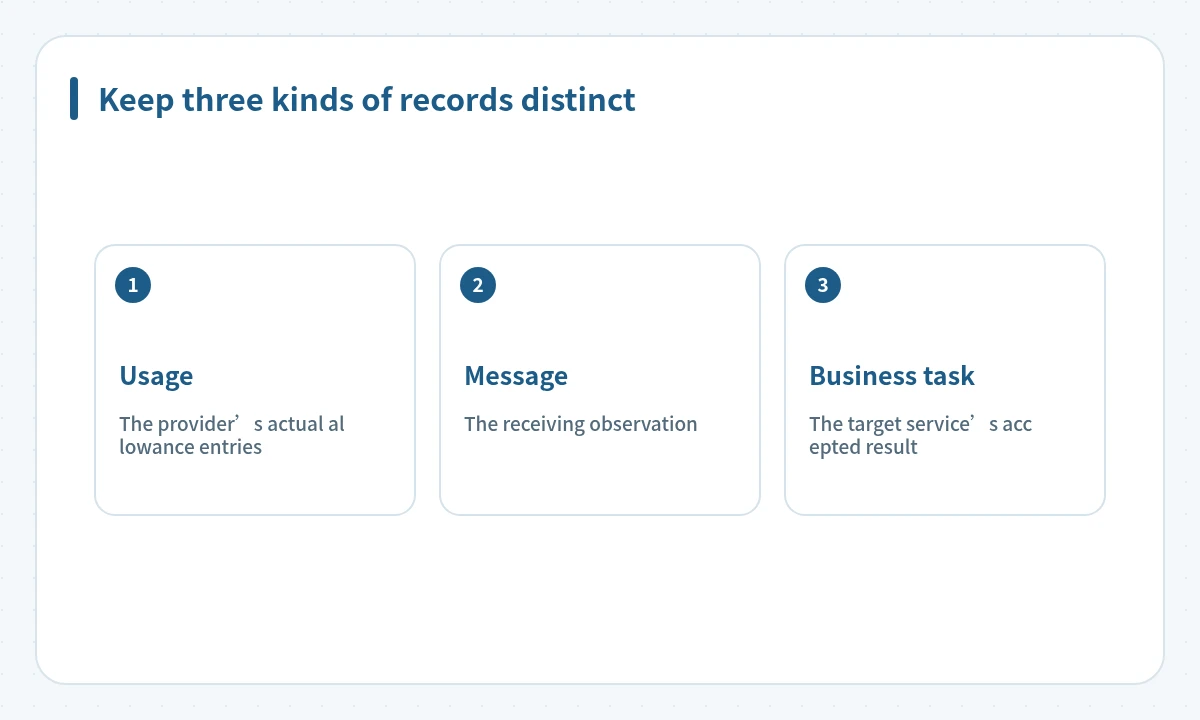
Use the provider’s actual usage or order records where available. Keep them distinct from the SMS content and the target business’s verification result. A code arriving does not, by itself, explain whether a reserved unit has settled, while an unsuccessful business login does not independently establish a refund entitlement.
If the service provides both reserved and available amounts, preserve those field labels when comparing observations. Do not merge them into one unexplained balance or assume a pending reservation is a settled charge.
Report a discrepancy as a defined question
State the allowance or order reference, the unit you understood, the relevant interval and the provider entries you are comparing. Mask private details and use the official support channel. There is usually no need to supply a whole inbox or an active code to explain an apparent balance difference.
If the terms do not define the unit or a deduction cannot be reconciled, ask for clarification before relying on your estimate for further work. Do not invent a price or infer a policy from a similar service’s product page.
Once the rule is confirmed, retain a short explanation with the comparison. Someone checking the same period later should know why a count differs from the number of messages currently displayed, without needing to repeat the original assumptions.
