
A released number may have a documented recovery process, but regaining it should not be assumed. Distinguish release, expiry and reassignment, then ask the original provider which recovery rules apply.
For the complete workflow around this question, continue with Number Rental Guide: Selection, Renewal, Handover and Exit. The link opens the relevant section.
Establish what happened to the resource
Check the official account record: was the number deliberately released, did a rental end, was the account restricted, or is access merely failing? A missing inbox view is not enough to decide which event occurred. Use the resource identifier and last confirmed account state when asking support.
Twilio’s help documentation describes a limited restoration process for previously released numbers in a specified console environment. It also notes that a restored number receives a new resource identifier. This is a concrete provider rule, not a universal grace period that applies to every rented or temporary number.
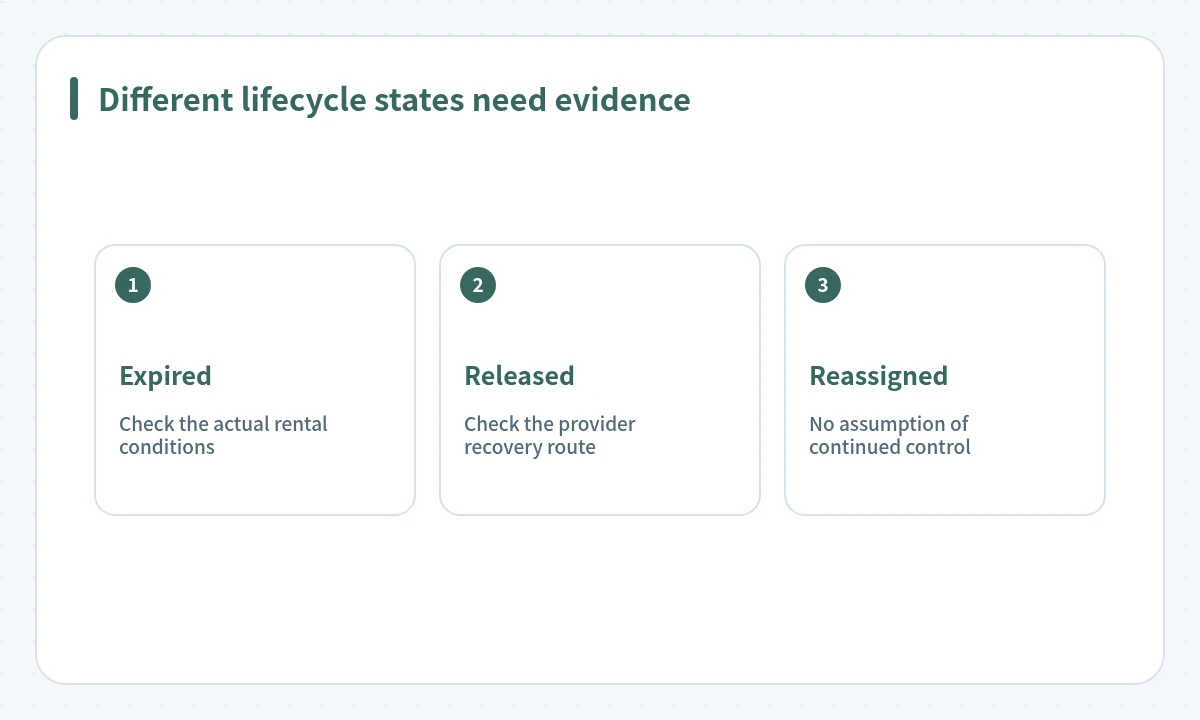
Do not keep trying to acquire the same digits through unrelated public listings. Even if a number appears somewhere again, that does not establish your authority over its prior account associations or grant access to another person’s messages. Use the original provider’s documented recovery route.
Account recovery is a separate problem
If the lost number was bound to an important account, inspect that account’s legitimate alternative methods. A supported passkey, recovery code or official identity-recovery flow may be relevant. Old SMS codes do not become permanent recovery credentials when receiving access ends.
Keep any existing authorised session usable while reading the recovery requirements. Avoid removing the last working method just because a number-restoration request has been submitted. A request in progress is not confirmation that the receiving path has returned.
| Question | Evidence to seek |
|---|---|
| Can the number be restored? | The provider’s explicit eligibility and current resource state |
| Can the target account be recovered? | That service’s authorised recovery options |
| Will old history return? | The receiving service’s separate data-retention rules |
| Will integrations work again? | Current identifiers, routing and tested configuration |
Restoration needs an acceptance check
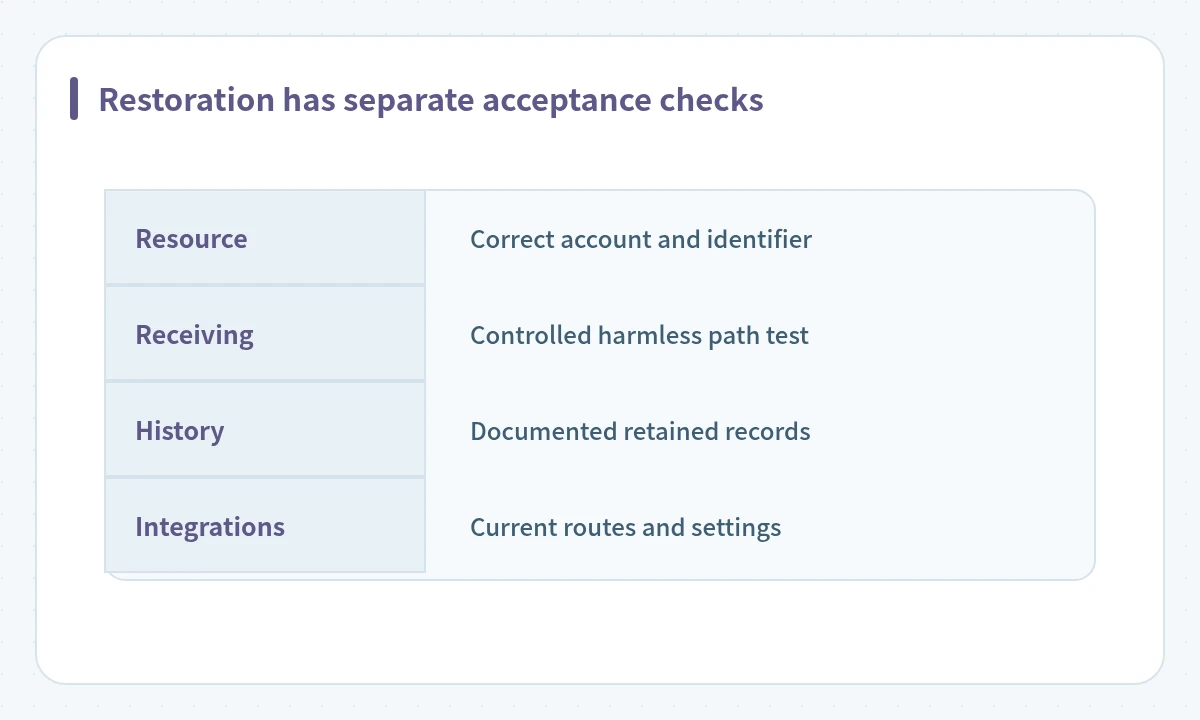
If the provider confirms restoration, inspect the correct account, resource status and receiving configuration. Where authorised, use a harmless ordinary message to check the intended path. Compare resource identifiers and integration settings, especially if the provider creates a new object for the same number.
History, team access and notification settings need their own checks. Do not assume the reappearance of the digits also reconstructs every prior application state. If a required setting is absent, follow the supported configuration process rather than copying credentials from an obsolete export.
If restoration is unavailable, focus on changing account dependencies through their official recovery procedures. Record which services have been updated and which remain unresolved. That produces a usable continuity plan instead of a repeated hope that the old number will eventually return.
Before any future release, complete the dependency check first. The lowest-risk time to remove an obsolete phone binding is while the existing authorised receiving and recovery paths still work, not after the resource has entered an uncertain lifecycle state.
Provider example: Twilio: restoring a previously released number.
