
Ozon verification codes delivered through a telephone flow are not always spoken values. The official account guide distinguishes using the last six digits of an incoming caller's number from calling a displayed number and hearing a code. Read the active instruction before deciding which digits belong in the field.
Establish who initiates the call
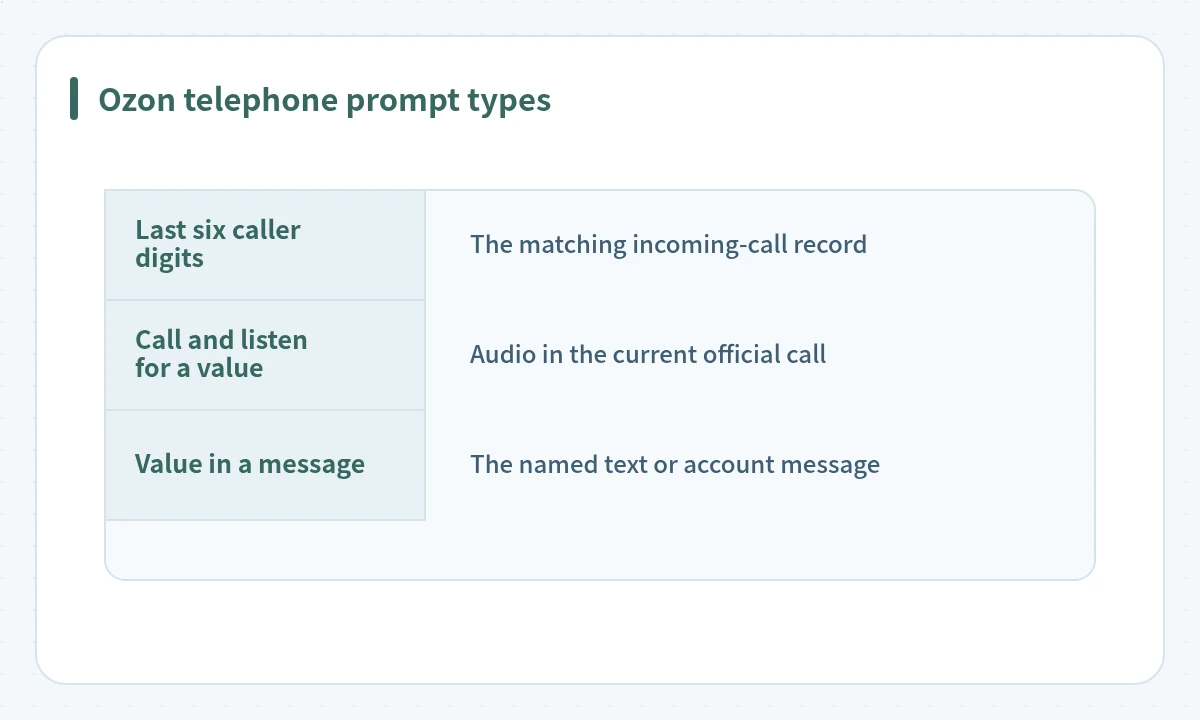
One documented prompt uses the end of the incoming caller number. Another asks you to place a call and listen. The first concerns a matching call record; the second concerns the audio in the official call. Do not substitute one because you remember it from an earlier session.
If several missed calls are visible, compare the current request time rather than choosing an arbitrary ending. If the task requires an outgoing call, read its destination on the official page you opened yourself. A number supplied by a stranger in chat does not belong to that verified task.
| Page instruction | Resource to inspect |
|---|---|
| Last six caller digits | The matching incoming-call record |
| Call and listen for a value | Audio in the current official call |
| Value in a message | The named text or account message |
Entering a phone number does not promise an SMS
Ozon's guide also describes security-chat, text, and email-related routes. Follow the channel named on your screen rather than waiting only in the text inbox because the entry form asked for a phone number. Where an existing session remains available, inspect the relevant notice there only for your own request.
Different language pages and older screenshots can emphasize different procedures. The current task and relevant current help should guide diagnosis. Do not turn a method used once into a permanent rule for every account or promise a universal delivery time.
On a phone with several lines, keep the account target separate from the default outgoing-call line. The number typed on a page does not automatically change which SIM a device uses for a call. Inspect the actual selection before acting on an outgoing instruction.
Preserve the rejection instead of mixing values
If submission fails, note whether the issue concerns caller digits, a spoken value, or an attempt restriction. Trying every kind of number in succession does not clarify the failure. Follow a displayed restriction rather than assuming another browser has removed it.
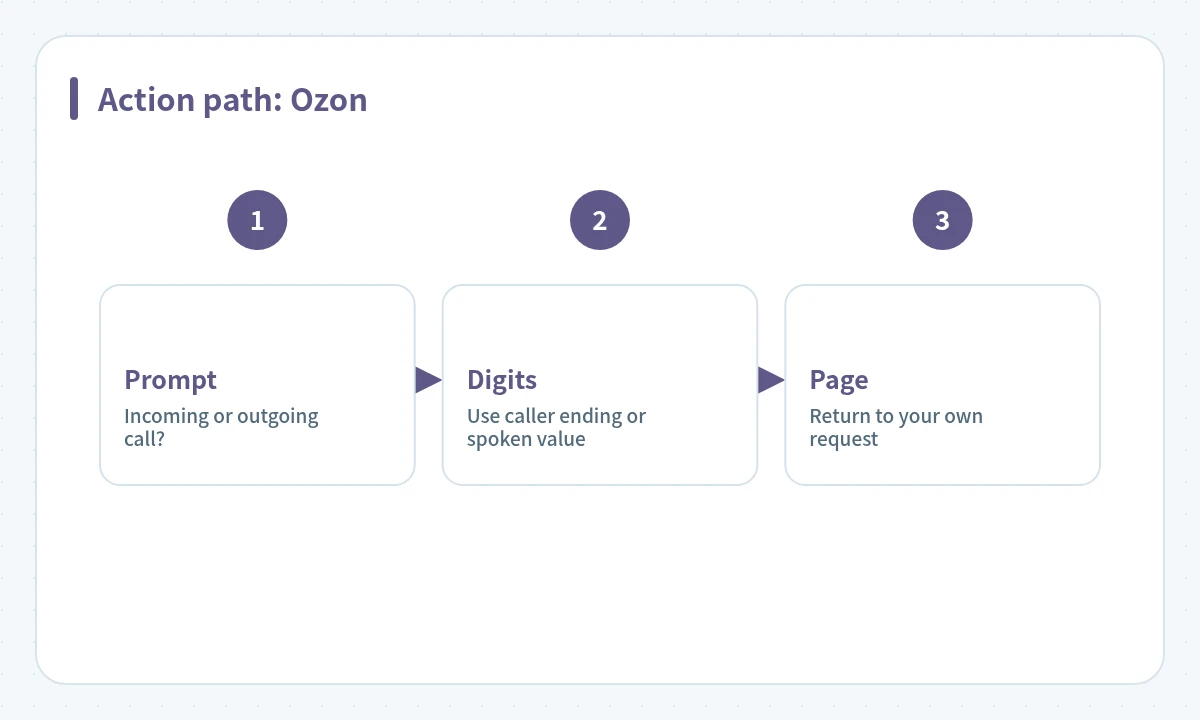
After acceptance, inspect the original account and expected records. A phone receiving a call does not establish that the page holds the intended identity or orders. An empty profile is a reason to check the identifier before making more changes.
For official support, name the channel, request time, and kind of value you used without revealing it. Distinguishing caller endings, spoken content, and message codes avoids searching the wrong location even though the requested telephone event already occurred.
A private note can record the prompt wording and result. Keep that explanation instead of storing a live code in a public screenshot, especially when the call history also displays unrelated personal numbers.
References
Ozon: Account settings and different telephone access routes
