
Hinge verification codes may be the wrong starting point if an attempted login opens account creation instead of the original profile. Check the signup method before continuing. A text sent through a different entry does not necessarily restore the identity you previously used.
Begin with the original sign-in route
Hinge's official login help recommends the method used at registration, such as the original phone, Google or Apple route. A creation prompt can indicate a different method. Pause before supplying new profile information and treating another identity as a recovery result.
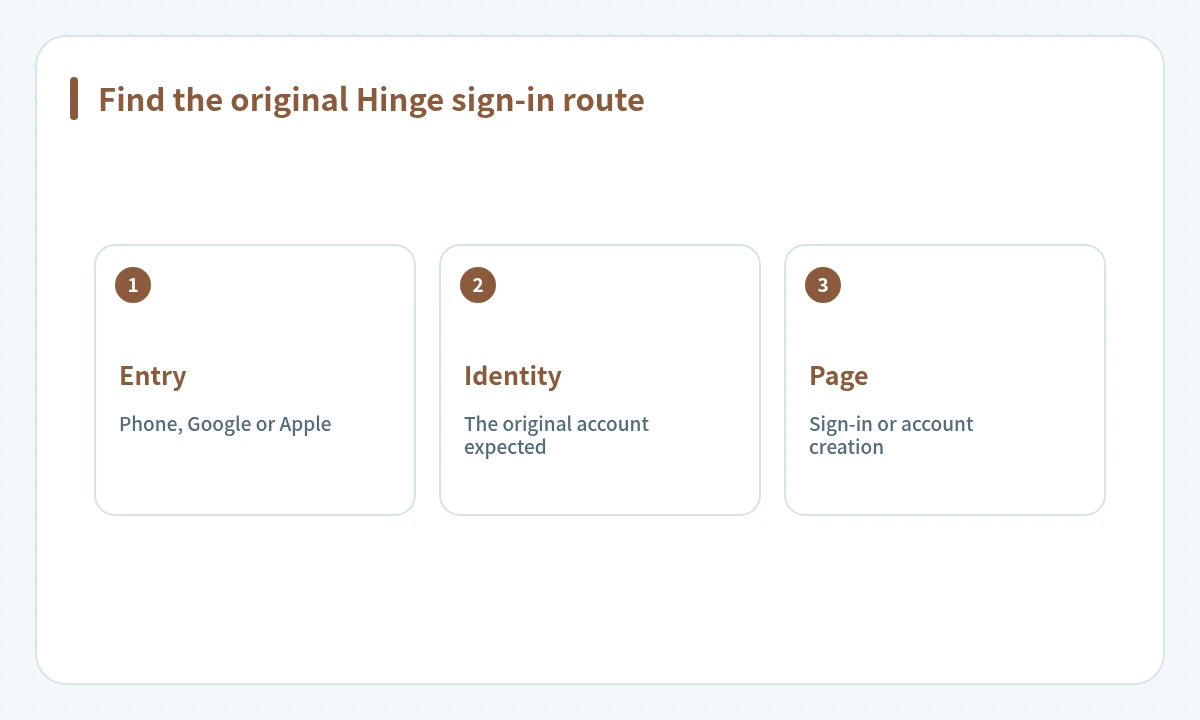
Inspect your own account records, a still-signed-in device or earlier official messages to establish the route. Do not use a stranger's credentials as your own or create identities repeatedly to investigate where the old material went. The initial question is correspondence, not merely whether some phone can receive a code.
Decide whether this is an identity or reception problem
| Current page | First check |
|---|---|
| Account creation requested | The original signup method and current identity |
| A code sent to a named number | Number, country code and line reception |
| A retry restriction | The displayed limit and official guidance |
Only after the page genuinely requests a message to your correct line should you investigate filtering and carrier restrictions. An ordinary contact's text arriving does not identify the result of the service-message request. Retain its approximate time and exact response for a focused investigation.
If you use several browser or app entries, keep one attempt identifiable while checking. Overlapping requests can leave you trying a late message against a field for another action. A support note should preserve the method and stage without storing the live value.
Use formal help for an inaccessible original number
Hinge's text-verification guidance explains that support cannot simply perform number validation or override the security restriction on demand. Inspect the current official access route when old information is unavailable. Outside offers of forced codes or guaranteed verification are not a dependable recovery process.
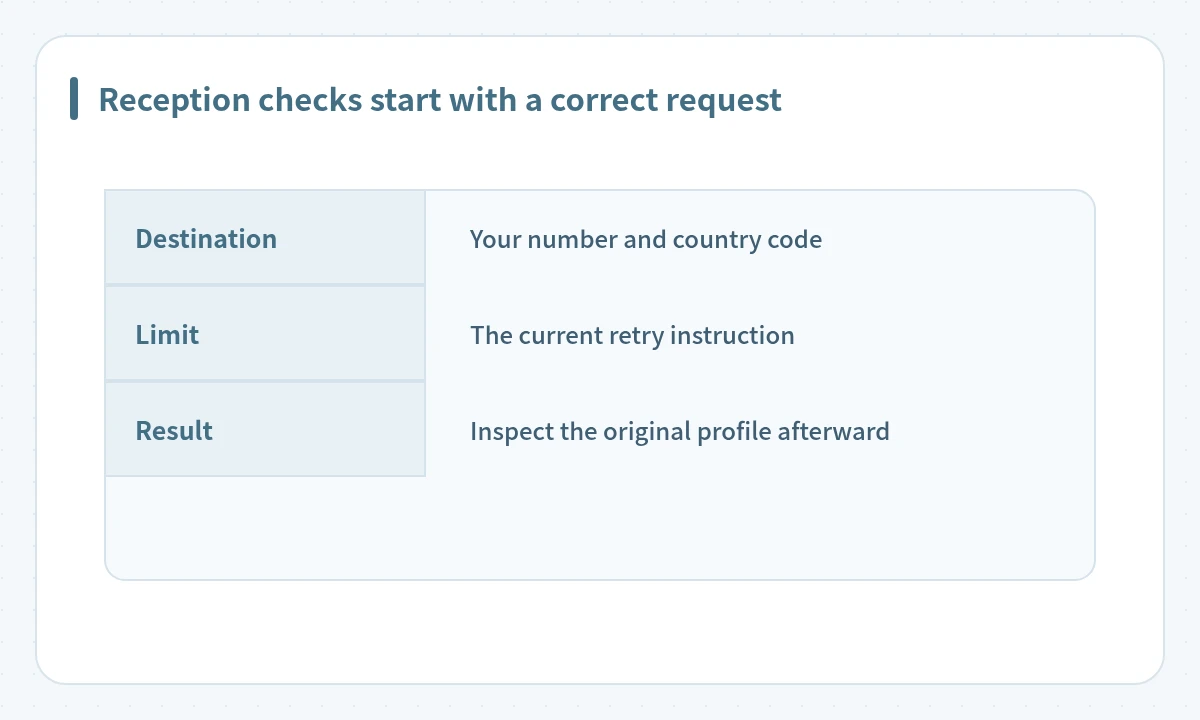
Follow any waiting instruction on the page rather than switching through numbers, devices or accounts to defeat it. A code should be used only for your own current official request, not sent to someone claiming to restore conversations remotely.
Confirm the identity after entry
Once login completes, inspect the profile and expected material. Acceptance of a code does not establish that the original identity was selected. If a blank new profile appears, compare the current and original methods before deleting or modifying accounts as an experiment.
Tell support the app, entry, stage, exact error and approximate time. Hide complete contact details and private conversations. Preserve a working old device if one remains available, since it can help identify the account without exposing its secrets.
Keeping an account mismatch distinct from an accepted request with no incoming message gives the problem a clear next step. It avoids making every interruption a repeated SMS test while the original sign-in relationship remains unresolved.
References
Hinge: Original sign-in method and account correspondence; Hinge: Text reception and retry restrictions.
