
Blizzard verification codes can relate to account-change notifications, a recovery step or the configured Battle.net Authenticator. These all concern security, but a normal notification arriving does not establish that every authentication route is available.
Phone notifications have a defined scope
Blizzard's official phone-notification help describes security-change alerts and supported account-recovery uses, with country and number-type conditions. This is not a feature that converts arbitrary chat-app messages into SMS. Follow the current mobile-line requirements rather than assuming a VoIP destination is equivalent.
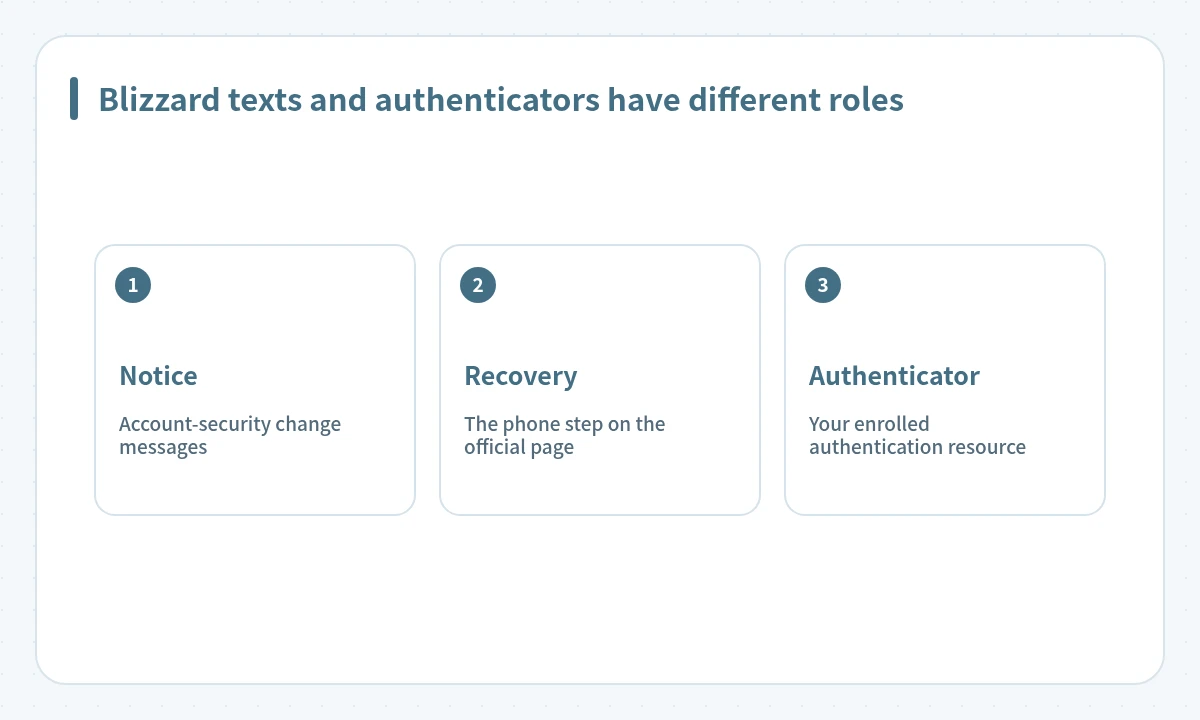
A number rejected during submission needs a requirements check. An accepted request without a message needs a destination, filtering and line-status check. Reformatting an unsupported number or cycling through temporary lines does not resolve the service's eligibility condition.
Inventory the line and authenticator separately
| Resource | What to know before replacement |
|---|---|
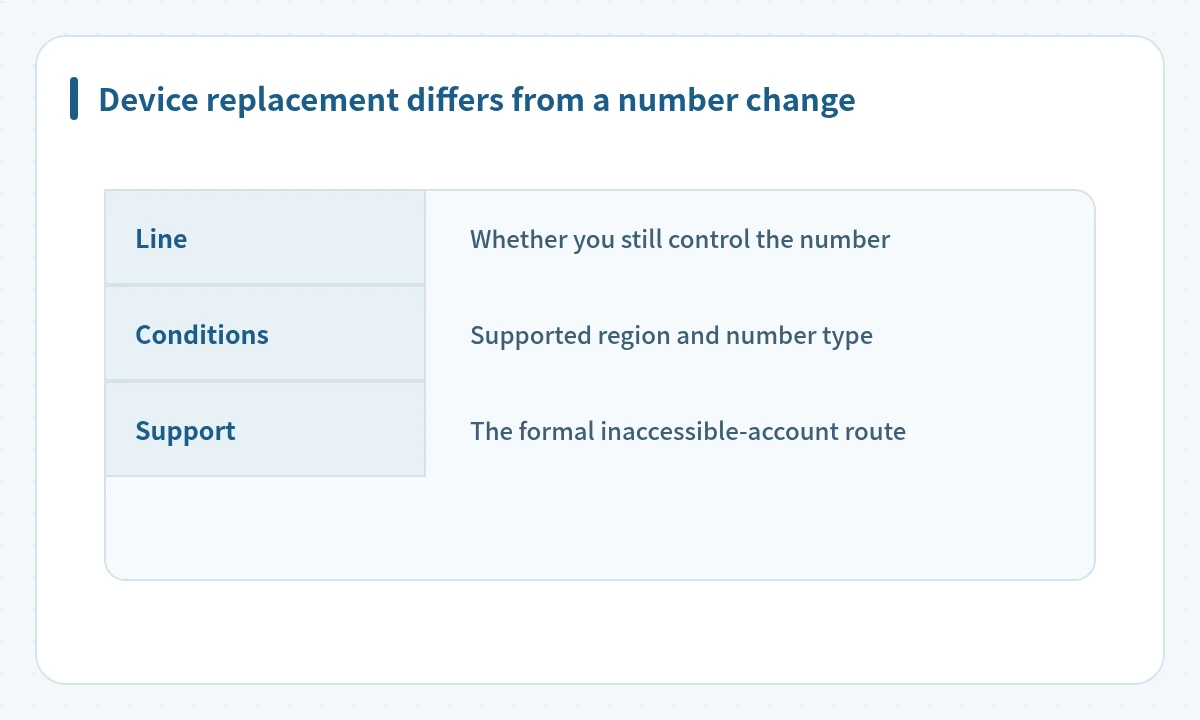
| Phone number | Whether you retain control of the same line |
| Phone notifications | The recorded destination and service conditions |
| Authenticator | Your configuration and its supported transfer or recovery |
| Account access | The official routes that remain usable |
Blizzard explains that phone notifications are associated with the number, so replacing a device while keeping that line differs from abandoning the number. That does not establish that authenticator information moves with the SIM. A phone-change checklist should name both resources rather than saying only that the phone was backed up.
Inspect the applicable official authenticator instructions before clearing the previous device. If an unexpected stage appears, preserve what still works and identify the missing resource. Losing the line and authentication setup simultaneously creates a more complicated recovery situation.
Use each value only for its requested action
When the formal recovery page asks for phone verification, use the code only for the process you initiated. A person offering to remove an authenticator or deliver a game reward should not receive it. Recovery-related texts can authorise sensitive changes and should not be forwarded like routine status notices.
For a rejected authenticator code, inspect the selected account and the corresponding official help. Copying an ordinary notification into another field does not create a substitute credential. After login succeeds, any game-specific entitlement or account-state problem needs its own product message and investigation.
Keep support information focused after device loss
Describe whether you retain the number, whether a session remains available, the method requested and the approximate time of the error. Provide ownership material only through Blizzard's trusted support process. Hide passwords, changing codes, complete numbers and private details in public screenshots.
After recovery, inspect contact information and the authenticator arrangement before retiring old devices or lines. Confirm the intended resource is usable rather than assuming a text's arrival completed every part of the change.
This sequence keeps device replacement from turning into three unidentified problems at once: number access, authenticator availability and account entry. Each has a named check and an appropriate official process, without handing security secrets to an outside helper.
A notice reporting an unexpected password or security-setting change deserves a security review of its own. Open Battle.net independently and inspect the account situation instead of treating that alert merely as proof that an incoming-text test succeeded.
References
Blizzard: Battle.net phone-notification purposes and requirements.
