
BLIBLI verification codes should not be disclosed to someone offering a reward in a private message. Blibli's official impersonation warning says it does not ask for OTPs or passwords through private messages. Check a claimed offer inside the official service rather than letting a stranger rename an access credential as a reward requirement.
Connect the message with an action you initiated
Consider whether you just requested login or confirmation through the official account. If not, keep the value private and inspect the account independently. A received text does not establish that a reward exists or that the person contacting you is authorized to process it.
A familiar logo, username, or fragment of an order is insufficient evidence of source. Do not send the value back as a test of authenticity. That would change an uncertain communication into actual disclosure of the resource used for account access.
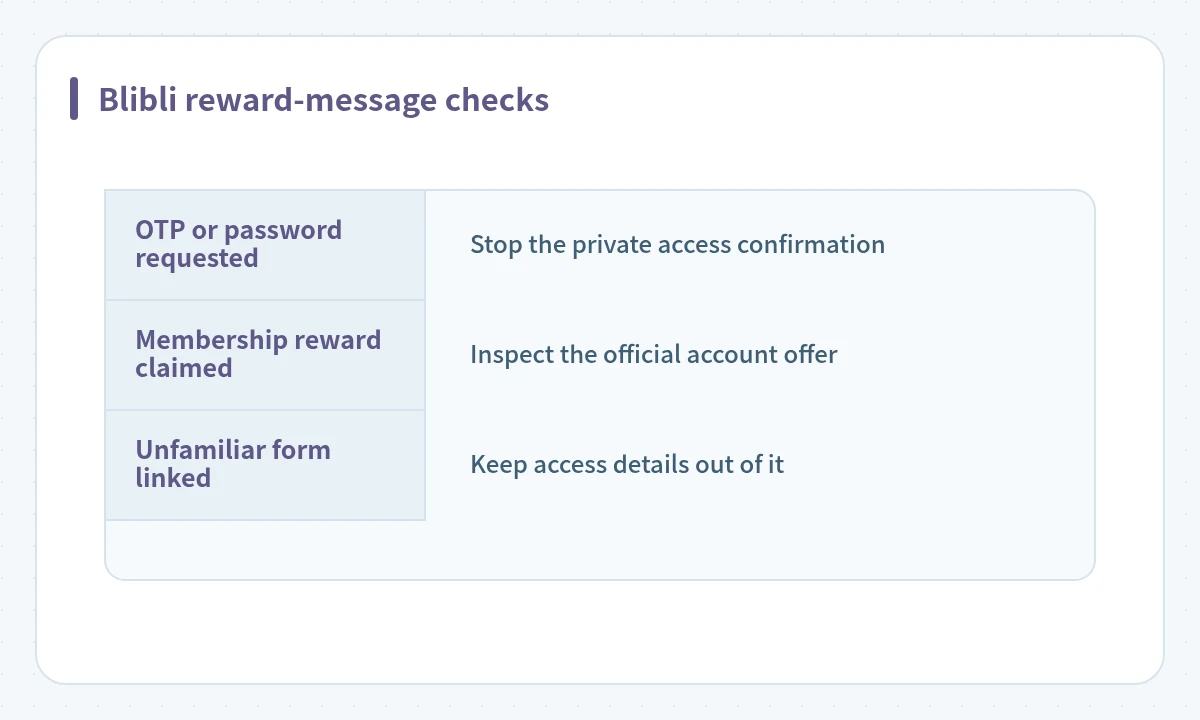
| Message content | Relevant response |
|---|---|
| OTP or password requested | Stop the private access confirmation |
| Membership reward claimed | Inspect the official account offer |
| Unfamiliar form linked | Keep access details out of it |
A public promotion and a private value serve different tasks
An offer can have a public name or promotion text while an account OTP remains tied to a private operation. Calling it a redemption value in a chat does not change its purpose. Read the actual message and official page rather than adopting the contact's explanation.
Do not judge safety by the number of digits or assume an older value is harmless to circulate. The practical boundary is use within your own identified official task. Another person does not need to complete it for you in a conversation.
If you are taking a screenshot to ask a question, review its contents before sharing. A cropped view can still contain a complete value, link, or personal detail in the remaining area. Show the non-sensitive wording needed to explain the offer without publishing the credential itself.
Report the contact you actually received
Blibli's warning points users to official channels for suspicious approaches. Preserve the sender account, time, offer name, and a redacted image. Complete passwords, OTPs, and unrelated information do not belong in a public report.
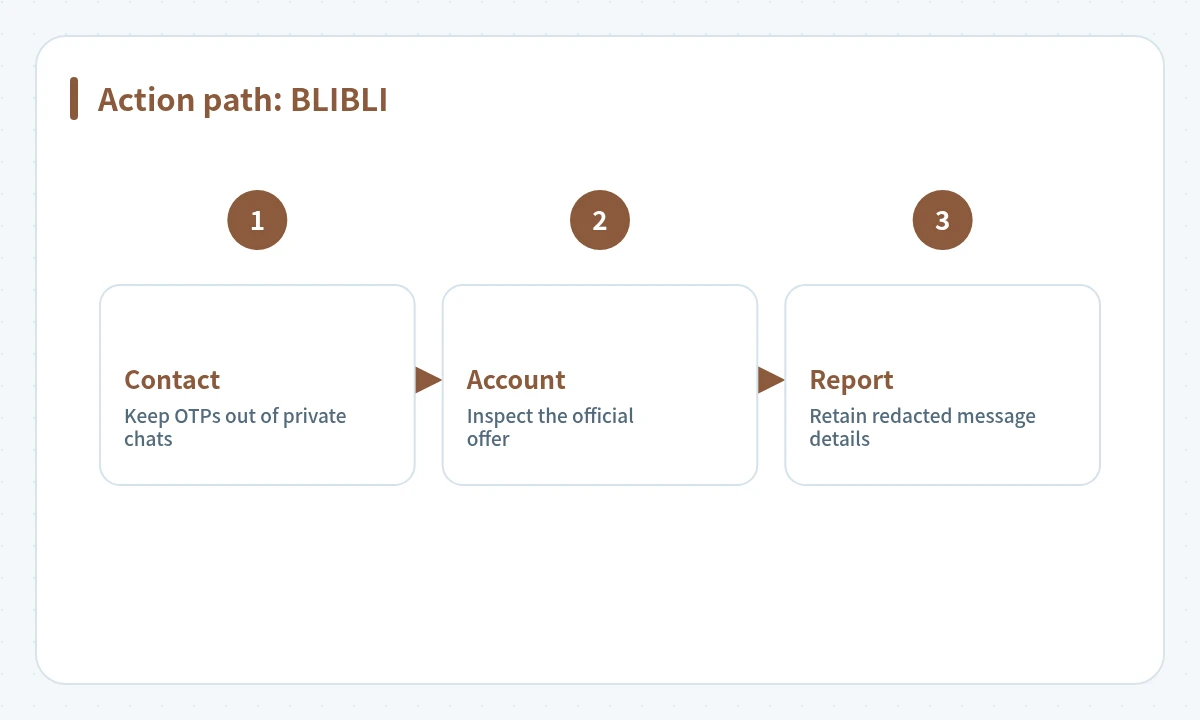
If you already opened an unfamiliar link, stop supplying further information there and inspect the official account. Describe what you did rather than immediately declaring that a takeover definitely happened. A clear sequence helps the actual support team identify the appropriate account action.
Judge the outcome through the original account, legitimate offer records, and security details, not whether the stranger continues replying. This article promises no reward or eligibility and does not treat a telephone confirmation as transaction assurance. Offer verification and account protection should each proceed through their actual official route.
If the official account contains no matching offer, retain that observation in your report. It is more useful than repeatedly asking the same private sender to certify their own message, which does not provide independent confirmation of the claim.
References
Blibli: Impersonation, reward messages, and requests for OTPs
