
Band verification codes can succeed while the resulting account shows none of the groups previously joined. First investigate the identity rather than assuming the groups were deleted. BAND's recovery help explicitly warns that a user may accidentally create a new account while trying to log in. Confirming that replacement identity again will not automatically restore the original Bands.
Preserve the current login context before switching
Inspect the active account's recognizable information and login method. Save a masked record where useful before leaving it. This makes it possible to identify an accidentally created profile later, instead of adding another account whose origin is unclear. Avoid collecting live codes or complete recovery links in that record.
For example, someone who previously used a mobile number might choose a different social entry after changing phones. If the app opens with an empty group list, compare identities first. This is a diagnostic possibility, not evidence that every missing group has the same cause or that any particular account was deleted.
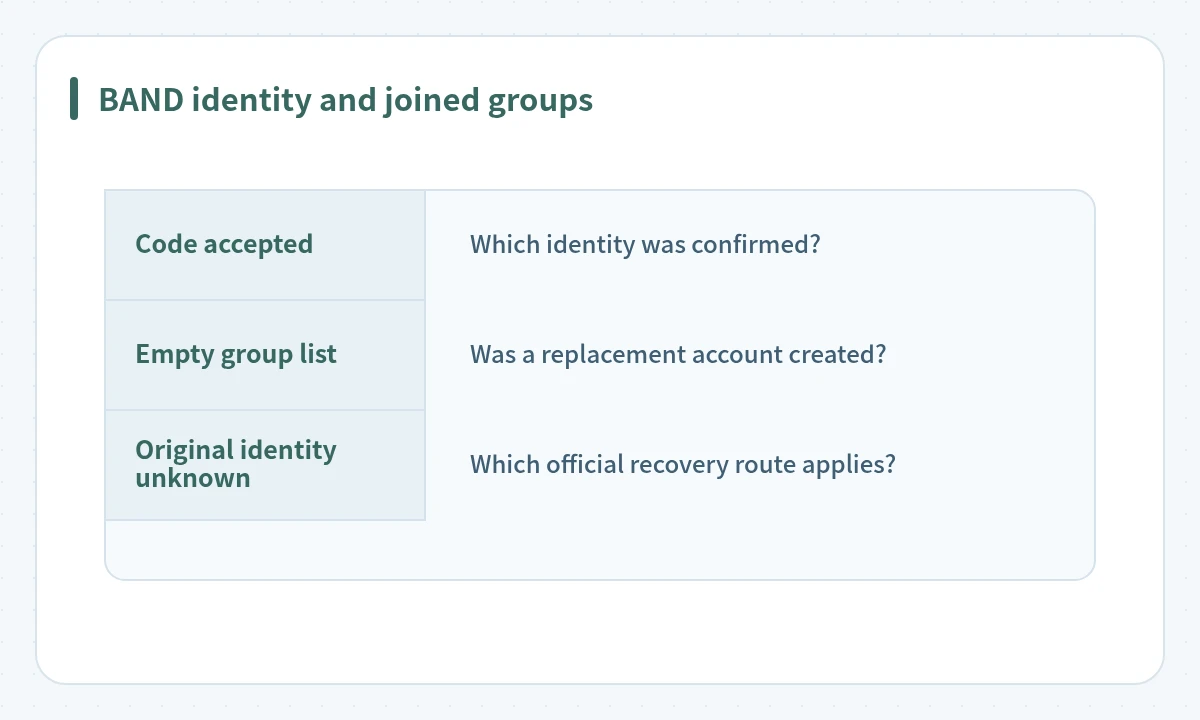
Interpret each observed result separately
| Observed result | Question to check |
|---|---|
| Code accepted | Which identity was confirmed? |
| Empty group list | Was a replacement account created? |
| Original identity unknown | Which official recovery route applies? |
Where the number has not changed, official help suggests trying the original phone login. Other entry methods need their own established relationship with the old account. The availability of several login buttons does not prove that all of them open the same identity for a particular person.
Investigate delivery only when that is the blocked stage
BAND's help reminds users to enter the country code and phone fields correctly, without repeating the country code in the phone-number field. Messages can also be filtered, and email can reach a folder other than the main inbox. Apply those checks when the request really is waiting for delivery.
If the challenge already passed but the groups are absent, state that result clearly. Another code request would confirm the current entry again; it would not identify the owner of the missing group history. Keep the completed authentication step separate from the unresolved account-identification question.
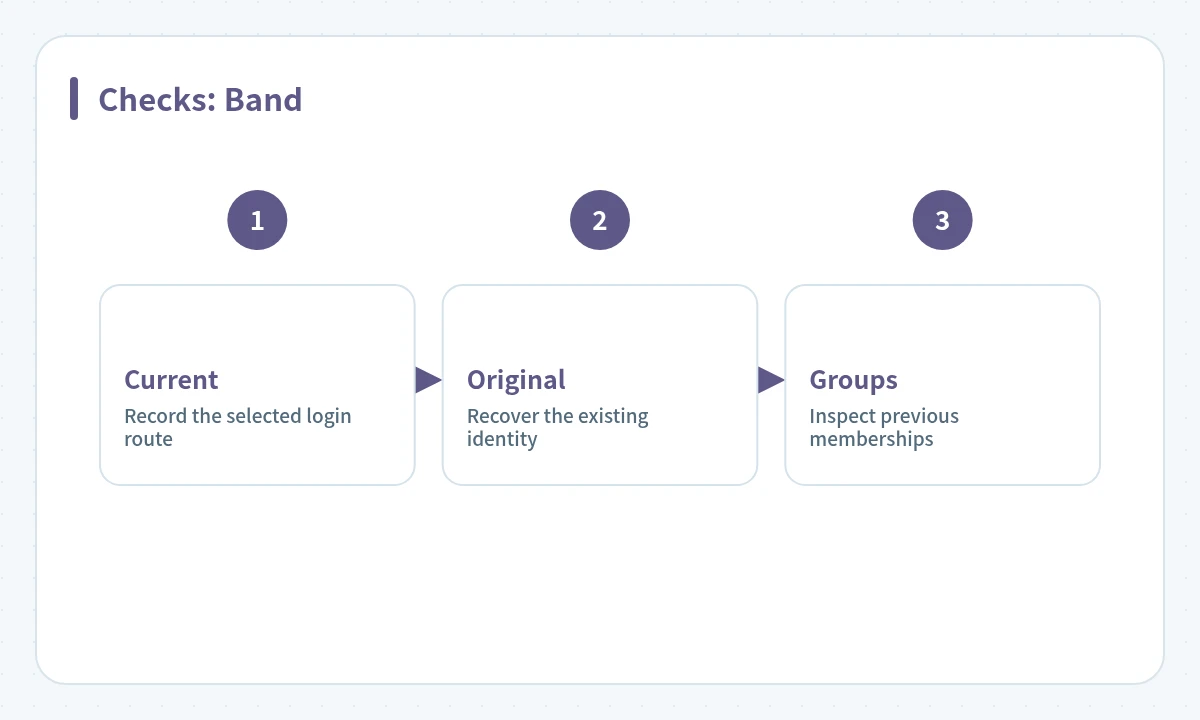
Recover the old identity before deciding what to do with the new one
Follow the official account-finding guidance and use reliable clues, such as the relevant profile and Band names where requested. Do not invent historical details or ask another group member to provide their login value. Group familiarity does not transfer ownership of someone else's account.
After the expected identity opens, inspect the original groups, profile and relevant records. If only one group remains missing, investigate whether its own membership or access state changed. That is a more focused question than treating every missing item as another general sign-in failure.
Decide what to do with an accidental replacement account only after the original relationship is clear. Deleting an unidentified account as an experiment can make the investigation harder. A useful final record identifies which login method restores the original identity and which specific group issue, if any, remains unresolved. It does not need to preserve any authentication secret.
References
BAND: finding an original account and missing groups; BAND: SMS, email and login help.
